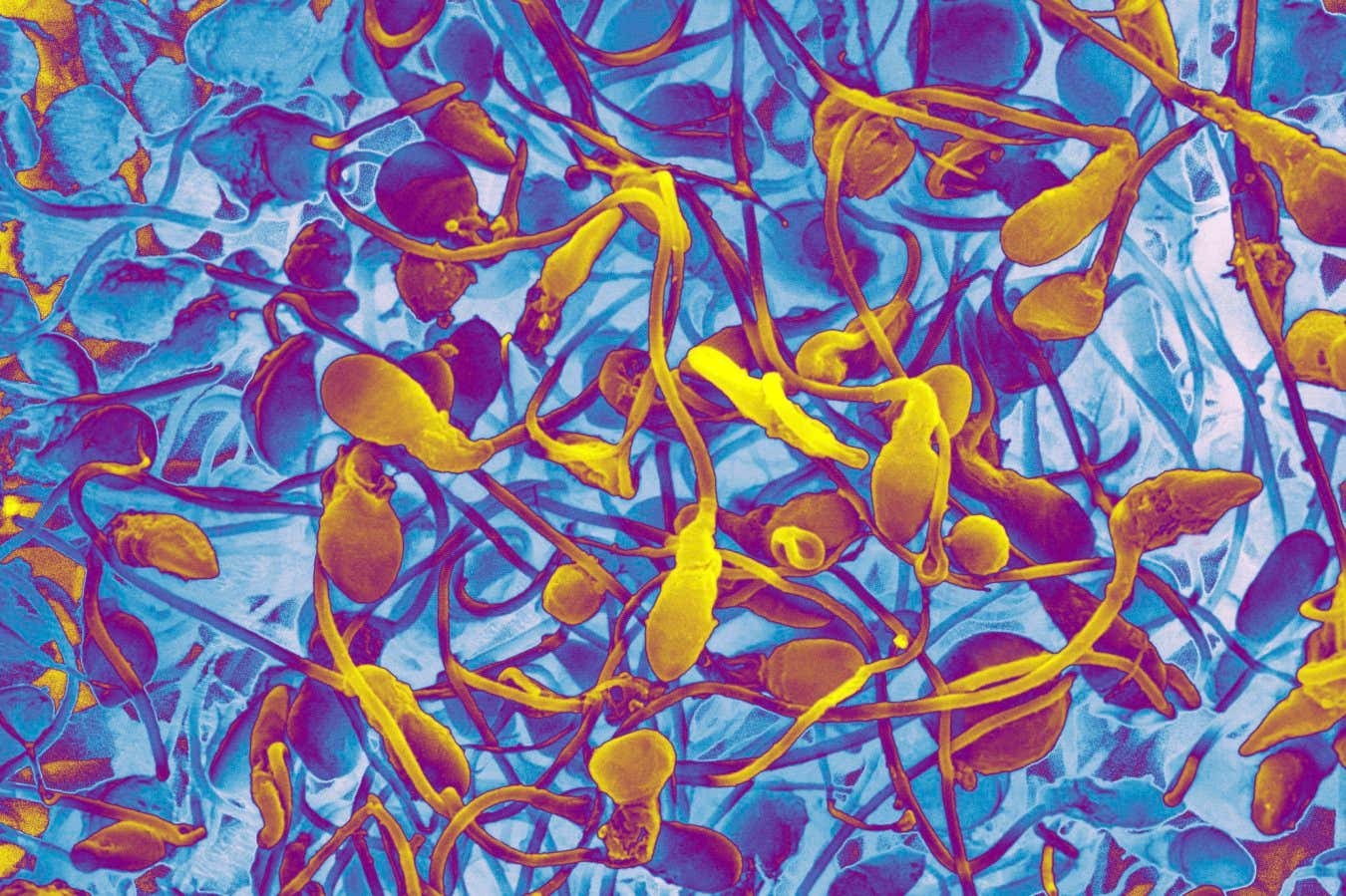
Men hate talking about it. That makes infertility even sadder, because it is everywhere. Roughly one in ten couples struggle to conceive. Half of those cases blame sperm.
Existing treatments often hit a wall. When IVF fails, there isn’t much left on the table. Until Paterna Biosciences stepped in.
They make bold claims. They want to turn stem cells from the testicles into viable sperm in a petri dish. Almost all infertile men could become fathers.
Nice try. But scientists are squinting hard. They say this might barely work at all. Unless you add gene editing. Which brings us to designer babies. Let’s back up.
Why It Breaks Down
Infertility isn’t just one thing. Low counts happen. Bad swimmers happen. Some sperm just refuse to enter an egg. In these cases, we shove a sperm directly into the egg. This is ICSI. It works. Most of the time.
Then there is the harder problem. About one percent of men have zero sperm in their semen. That statistic might be old. With male fertility apparently crashing, the real number could be much higher.
Sometimes the road is just blocked. An obstruction keeps sperm from reaching the outside. Surgeons fix this. They bypass the block.
But often the factory itself has stopped producing. No sperm at all comes out of the testicles.
This is where Paterna enters. Their leader, Alex Pastuszak, says he can take tiny bits of testicular tissue. He says one small piece yields tens of thousands of sperm.
They found the right chemical signals to start the process. It takes about a month.
The big problem? There is no proof yet. Pastuszak calls it intellectual property protection. He won’t publish data until he secures the patent.
We have seen this movie before. Kallistem, a French firm, claimed similar breakthroughs in 2015. They published later. Critics pounced. Nothing ever materialized.
Paterna insists they went further. They say the lab-sperm actually fertilized eggs. They claim early embryos developed.
“If they’ve done what they say, it’s an enormous breakthrough.” — Geert Hamer
He holds judgment. No paper, no trust.
The Genetic Gamble
Assume Paterna is telling the truth. Is it safe?
Sperm creation is messy. Stem cells split. One stays a stem cell. The others divide to make four sperm. Chromosomes swap DNA during meiosis. It’s volatile.
Miles Wilkinson calls it “a very dangerous situation.” Break the DNA chain wrong during the swap? Bad results. Lab conditions might trigger these errors.
There are also imprinting issues. Genes get turned off by chemical tags during development. If the tagging fails, you get severe birth defects. Mouse studies show this happens frequently when growing sperm from body cells.
Paterna uses existing testicular stem cells. Hamer thinks the risk there is low.
Pastuszak swears the sperm look normal.
“We’ve shown that the sperm… look molecularly exactly like” natural ones.
He sounds confident. Maybe even arrogant. The company aims for human trials soon. Probably abroad. Regulators move slower than hype.
What proportion of men can they actually help?
Those with no stem cells? Forget it. The machine is broken.
Those with mutated stem cells? Tricky. Mutations block sperm production. Hamer doubts the lab can override biology. If meiosis fails in the body, it likely fails in the dish too.
Who wins then? Boys who survived cancer treatment as kids. They have frozen testicular tissue from before chemo wrecked them. Paterna’s method could rescue those samples.
“If they’ve really achieved this, it’d be great news.” — Hamer
Also, men with tiny traces of production. Currently, doctors cut them open to hunt for sperm. Microdissection testicular sperm extraction sounds like torture. It is. Avoiding invasive surgery has real appeal.
Pastuszak claims more. He says they grow sperm from men with zero production. He blames a signaling failure, not a genetic defect.
I hope he’s right. Many families need him to be. But Wilkinson points out the catch. If the mutation stays, any sons might be infertile too. They inherit the flaw.
ICSI carries similar risks. Recent data suggests it isn’t a catastrophe, but lab-grown sperm might be worse.
Screening embryos exists. You can test for bad mutations. Pastuszak admits this might be necessary. “Maybe.”
The CRISPR Exit Strategy
What if Paterna fails? What if most genetic mutations still block sperm production?
One path remains. Edit the gene. Use CRISPR to fix the mutation in the stem cell.
Suddenly the sperm can grow. The resulting child has no mutation. They are born edited.
This is easy to say. Hard to do. We rarely know which gene is actually responsible. The associations are vague.
Wilkinson is skeptical. “There’s really very little proof.”
But consider the ethics. If we know the exact mutation? Germline editing makes sense here. It is perhaps the only justifiable use case for CRISPR.
Paterna won’t close that door. Pastuszak sees technology moving forward. The goal is helping people. Not playing God necessarily.
It is just science. Moving fast. Leaving us wondering.
What do we want? Children at any cost? Or a cleaner start? We might not have the luxury of picking.