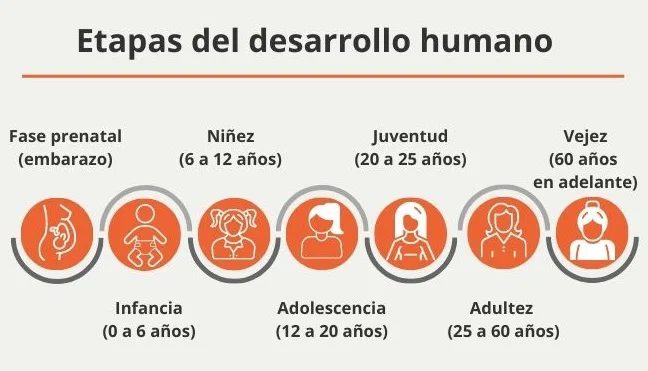
Human growth is not just aging. It is a chaotic biological, emotional and social change that takes place in different stages. Most people think that life is a straight line. it is not. It consists of seven special stages, each with its own rules and challenges.
You can trace the entire trajectory of a person from the womb to old age. If you want to understand where you fit or how others are doing, you need to look at the timeline. This is the breakdown.
Prenatal Foundation
The clock starts before you take your first breath.
Stage 1: Prenatal (Conception to Birth)
It all starts here. Basically, you are a collection of cells that decide what you want to become. An important feature here is formation. Organs are building themselves. An embryo becomes a fetus. The brain is wiring itself. If something goes wrong at this point, the rest of the timeline is distorted. This is the plan.
Early days
Next is the time to learn as a person.
Stage 2: Infancy (0–6 Years)
This is the most important data collection step. Your brain absorbs everything. This is where psychomotor skills develop. Learn to walk first and then talk. You are forming social bonds for the first time. Very confusing. It’s noisy. This is the foundation of your emotional security.
Stage 3: Childhood (6-12 years)
Now you are going to school. The world is more than your family. You start thinking logically. Improves cognitive abilities. You can make friends who are not family members. Learn the social rules here. Integration is more important than survival.
Turbulent Middle
This is where things get complicated. Hormones disrupt and renew identity.
Stage 4: Adolescence (12-20 years)
Puberty is approaching. Hormones are out of control. You’re sexually mature, but that doesn’t mean you’re ready. This is a search for identity. Who are you besides your parents? This is a time of dramatic changes. Physically you are like an adult, but mentally you have not yet understood.
Stage 5: Young people (20-25 years old)
You’re technically an adult, but you’re still finding your feet. Emancipation happens here. You are making the first big decision of your life. Are you going to college? Are you moving to a new city? Do you live with your parents? Your identity is confirmed. It is a bridge between the chaos of adolescence and the structure of adulthood.
Production core
This is most of life. The part that builds things.
Stage 6: Adulthood (25-60 years)
You have worked productively for 35 years. You support your family. You face progressive physical changes. Hormonal changes occur again, often in the form of menopause or andropause. It’s a grind. This period is also a time of great influence on society. You’re holding the wheels on the bus.
The last chapter
Then the decline begins.
Stage 7: Old Age (60+ Years)
Physical and cognitive decline is progressive. It may not happen suddenly, but it is inevitable. Start rethinking everything. What did it all mean
Blueprint Before Birth
The story of human development does not begin with the first breath. It begins in the dark, quiet, warm womb. The prenatal period or pregnancy is a time of very rapid growth. Cell division. Formation of organs. The foundations are created even before the world comes into contact with the body.
This step is important. It’s not just about growing bigger. This creates complexity out of simplicity. Each change here sets the trajectory for what happens next.
Why this step is important
You may think of pregnancy as a passive waiting game. it is not. This is an active design project. The body is working overtime to create a new organism. Nutrition, health and the environment play a big role. What happens here can have an impact for decades.
Let’s think about the brain. It started as a simple tube. By the second trimester, the brain forms gyri and sulci that increase the surface area for nerve connections. This is not random growth. It is precise, time-bound and fragile.
The most important milestones in development
- First trimester: The heart starts beating around the sixth week. Limb buds appear. The neural tube closes and serious defects are prevented. This is the most vulnerable time. Currently, teratogens (substances that cause malformations) have the greatest impact.
- Second trimester: Movement starts. The fetus kicks, swallows amniotic fluid and develops senses. Hearing development. The skin loses its transparency. This was the beginning of survival outside the womb, but technology still plays an important role.
- Third trimester: Rapid brain growth. Fat layers are formed to regulate body temperature. The lungs are mature. The fetus practices breathing movements. Assuming no complications, by week 36 most systems are functional enough to support life outside the womb.
Hidden Influences
It’s not just biology. It’s the environment. Maternal stress levels can affect fetal development through cortisol. Nutrition affects birth weight and brain size. Even the father’s lifestyle can have an effect through epigenetic changes in sperm.
These factors affect more than physical size. They can affect character, cognitive abilities and health risks later in life. The prenatal window is a sensitive period. Once missed, it’s hard to repeat.
Modern science and prenatal care
Technology has changed the way this step is monitored. Ultrasound enables movement and structure to be seen in real time. Genetic testing enables early detection of chromosomal abnormalities. The wearable device monitors the heart rate and movement patterns of the fetus.
However, technology cannot replace the basics. Check the situation regularly. Proper nutrition. Avoiding toxins. These are still the cornerstones of healthy prenatal care. Science provides us with tools. However, its use involves human responsibility.
The prenatal phase is invisible to most people. You can’t see any changes from week to week. But they are there. Building. Adapting. We are getting ready. When a child is born, the hard work is not done yet. This is just the beginning.

Prenatal development is more than just growth. This is a crazy and precise design project.
Where everything starts. A fetus transforms into a fully formed human child before it emerges. But this is not a single process. It is divided into three different high-risk sub-phases.
If one of them goes wrong, the whole system collapses.
Initial stage: the beginning of the journey
An idea is just a spark.
This is the embryonic stage. Egg and sperm meet. Fertilization takes place. But the work is just beginning. The resulting cells do not remain intact. Immigration begins. It travels along the fallopian tubes towards the uterus.
Why is this move important? Because implantation is a checkpoint. The embryo must attach to the uterine wall to survive. Without transfer, development stops immediately. There is no other option at this point. This is a binary result. The pregnancy is either successful or aborted.
Early stage: Building the plan
Once the implant is ready, construction begins in earnest.
This is the embryonic period. Cells begin to divide. They just don’t multiply. they focus. This is differentiation. Each cell cluster has a specific role. Some have turned to bones. Some become muscles. Others began to form the basis of organs.
It was chaotic activity. At some point, a cluster of cells is formed. Then the specified structure is ready. The heart starts beating early at this point. The neural tube closes. These are not small details. These are the basic structures of human life. Damage here can cause serious structural failure. Therefore, early prenatal care is non-negotiable for many expectant parents.
Embryo stage: Finalize the hardware
After 12 weeks, the label will change.
The embryo is now a fetus. But the work did not stop. From creation to maturity. Previously formed organs begin to function. they stepped up. Adapts to the intrauterine environment.
This stage lasts from 12 weeks of age until birth. This era was a time of rapid growth and development. The fetus just doesn’t grow. It gets more and more complicated. Neural connections light up. limb movements. The senses are tuned to the outside world. Here, the baby prepares for the shock of birth.
Childhood: Postnatal reality (0-6 years)
The umbilical cord broke. The environment has completely changed.
Early childhood marks the next big leap. The first six years of life are not a break. These are continuations of the intensities observed in the womb, only with different variables.

Early childhood: a sprint towards motor and linguistic independence
This stage of development is defined by the rapid acquisition of psychomotor skills and language. This is not a passive growing season. Children actively draw their own world.
Key milestones define this phase.
- Transition to solid food.
- Autonomous movement starts with crawling, then walking.
- Pronunciation of the first word.
- Introduction to the basic concepts of literacy (reading and writing).
- Physical interaction with the environment (climbing stairs, sitting in a chair) occurs simultaneously with social interaction (playing with peers).
“The transition from dependence to independent movement changes the child’s view of space and safety.”
This period lays the foundation for all subsequent learning. The brain prunes and combines at breakneck speed. Every step taken, every word spoken strengthens neural pathways. Children are no longer just observers of the world. They are testing its limits.
Niñes (ages 6-12)

For many experts, childhood is more than just a transition period. This is the basics. This is where you develop the psychosocial and emotional skills that define who you will become.
Think about it. Things that happened when I was younger will always stay with me. Model an adult in the mirror.
The logic of childhood
The concrete operational stage (a term coined by psychologist Jean Piaget) is the key here. It starts around the age of 7 and continues until the age of 12. Children don’t just play during this time. They learn to think logically about real objects and situations.
Before this stage, the child’s world is abstract and often self-centered. Suddenly they grasp cause and effect. If you drop a glass, it will break. This is not magic. This is logic.
This is not just an academic matter. This is very practical.
Children also learn the basics of reading, writing and counting at this stage. They expand their vocabulary. They start writing sentences that actually make sense. The brain is wiring itself to enable complex communication.
Social connections outside the family
Home is safe. School is the frontier.
During these years, children form real bonds outside their family for the first time. Playgrounds. Classrooms. Recreational activities. These are the testing grounds of social interaction.
This is where self-esteem takes root. It’s influenced heavily by your teachers and peers, but your family sets the tone. Children begin to understand their own identity. They ask, “Who am I?” and “Where do I fit in?”
Morality and rules
Another big change is moral development. The line between right and wrong becomes clearer. It’s not just about avoiding punishment anymore. It’s about internalizing the norm.
Children begin to differentiate between acceptable and unacceptable behavior. This is the birth of conscience, which is formed by the home and school environment.
Adolescence and Puberty (ages 12–20)
Then comes the next jump. The world gets messier. It’s even more complicated.
Puberty kicks the door open between the ages of 12 and 20. bringing physical changes to physical changes that reflect inner turmoil.
The logical thinking of childhood never disappears. It evolves. But now abstract thinking has entered the conversation. Teenagers begin to question authority. They challenge previously accepted norms.
These are turbulent times. A necessary one.
The foundation laid in early childhood will determine whether these young people will navigate the storm. The transition will be smoother If the logical and emotional foundations are solid. If not? Chaos.
We often don’t realize how important the “boring” years of middle childhood really are. They are not downtime. They are setup time.

Biomechanics of early adolescence
Puberty is not just about mood swings. This is a fundamental biological change.
At the age of 12-15, the body begins to grow rapidly. I’ve grown taller. Weight transfer. My clothes looked different during the night. The onset of facial and body hair indicates the beginning of sexual maturity.
The development of women’s breasts begins here. My period came soon after. Both men and women experience increased sexual desire.
This change is not only physical. This is psychological.
Teenagers move out of the family unit. Not out of malice. Out of necessity. They are looking for a personal identity. When peer groups take center stage, the importance of the nuclear family diminishes.
Late adolescence: a bridge to adulthood
At the age of 15, the first growth spurt is complete. Sexual maturity ends.
The focus shifts to the future. High school is over. Your academic and professional interests will be tested.
This is the period when individuals prepare to live as independent adults. It’s not just about graduating from school. It’s about defining their identity outside of their family structure. This is where the transition from teenager to young adult begins.
Setting boundaries for young people
Where does youth end?
The scientific age limit is around 20-25 years. This is called “Juventud” (youth).
The difference is important. Puberty is defined by hormonal changes and physical maturation. Youth is defined by the application of maturity.
The brain is still developing. But the body has arrived. The transition from growth to stability is the last step before an adult becomes independent.

The 25-year-old brain: why it matters
For years, we thought of late adolescence as the last hurdle before adulthood. This is a misunderstanding. Young adulthood is more than just a waiting room. This is a biologically and psychologically specific stage.
Although the body appears fully formed, the brain is still being built.
Neuroscience shows that the prefrontal cortex (the brain’s director of impulse control and complex decision-making) is fully wired by around age 25. Until then, you’re working with a half-finished dashboard. This explains why the general risk-taking behavior of teenagers doesn’t just vanish at the age of 18.
This biological timeline creates a certain instability. You have the physical autonomy of an adult, but you also have the neurological hardware of a teenager.
Independence and risk trap
The gap between physical ability and mental maturity determines the experiences of young people.
Now is the time for liberation. For many people, this is the first time they have an independent income. Building a life from scratch requires clarity. Start categorizing your interests. The goals you set are not borrowed from your parents or peers.
But autonomy works both ways.
With independence comes exposure to high-stakes consequences. Road accident. Substance abuse. These are not just bad habits. These are the statistical realities of this population. The brain’s reward system is very sensitive, but the braking system is still adjusting.
“The purpose of this education is not to scare them. It is to provide missing data to brains that are still learning how to calculate risks.”
That is why preventive education during this period is isn’t just helpful. It’s urgent. You are trying to install safeguards before the car hits the wall.
Settling Into Identity
When the frontal lobe is fully mature, young people is usually deep in the process of solidifying who they are.
This is the professional crucible. Decisions made here have consequences for decades. Do you pursue higher education? Do you want to enter the job market soon? The choice is not just about money. It’s about identity integration.
At the same time, social landscape shifts.
Early relationships begin to become established. The fleeting hooks of adolescence gives way to a committed partnership. These aren’t just about romance. These are practice for long-term in emotional regulation and compromise.
The adult years, around the age of 25-60, is built on the foundations created during this tumultuous transition period. The decisions you make during these years about your career, health, and relationships will determine your trajectory for the next 40 years.
This is a precarious balance.

An adult is not just one thing. This is the longest stage in human development. Depending on where you are on your timeline, you will change, expand and contract physically, emotionally and psychologically. It is not a static block of time. There are different stages.
before we even hit old age, we divide it into three main categories.
Peak: Young Adulthood (25-40 years old)
This is the time when your vitality is at its highest. When it comes to productivity, this is the sweet spot. You may have completed a university degree. Your career is taking shape. You are moving
Ideally, this period is also a time when people reproduce. Fertility is at its peak. Finally, the emotional maturity to handle the chaos of parenting. It is a time of building.
But then the clock starts ticking visibly.
Transition: middle age (40-50 years)
Hit 40. Things have changed. In particular, your hormonal situation changes. Women reach menopause. Men face andropause. These are not minor tweaks. They are systemic changes.
What does this look like on the ground?
- Hormonal fluctuations disrupt daily stability.
- Mood swings become stronger.
- Weight and shape changes, often stubbornly.
- Libido drops.
- Appearance of gray hair. Expression lines deepen.
- Muscle mass and bone density begin to decrease.
This is a biological reset. The body is no longer running on the same fuel as 10 years ago. Be careful with maintenance.
Transition: Late Adulthood (50–60)
The physical changes compared to the last decade are undeniable. But social dynamics are also changing dramatically. This is the area most affected by “empty nests”.
The children leave home. For many parents, this triggers a sudden and intense feeling of loneliness. The house goes quiet.
Then comes retirement planning. Priorities get rewritten. Skills, hobbies and social relationships stop being background noise and become central to survival. If you haven’t established a life outside of work and raising children, this stage can feel lonely.
Sexual health is also affected. Lubrication problems for women. Erectile dysfunction in men. Both men’s and women’s motivation decreases. It is not just about pleasure anymore. It’s about connection, but it’s harder to maintain.
Final stage: old age (over 60 years)
After the age of 60, the focus shifts entirely to preservation and reflection. The physical decline accelerates. Social circles shrink. The question is not “what happens next?” but “what remains?”
You have to ask yourself, what have you built in your 30s? What can you sustain when you are 60?
The answer is often found in the hobbies and friends you maintain during your busy middle years. Or it doesn’t.
This is the reality of the timeline. It doesn’t pause for anyone.

What is aging really like in later life?
The last stage of human development. This is the reality of old age. This is not an isolated incident. This is the process. You can tell by looking at your body. You see it in the mind.
Impairment of physical and cognitive functions. This is not sudden. This is gradual. This decline occurs over time.
Your social circle shrinks. Isolation is becoming more common. Why is this happening? It is often caused by illness. Sometimes a friend dies. The social world has shrunk.
The aging process accelerates significantly. The skin loses its elasticity. Wrinkles become deeper. Hair falls out. Bones lose mass. Your muscles will weaken. This is the biological cost of time.
The senses also weaken. Impaired vision. Hearing loss. The world loses its clarity.
However, this is not a fixed fate. Habits are important. Quality of life is important. The conditions set in earlier years determine this stage. Healthy adults face aging with a better perspective. Healthy habits create resilience.
“Healthy adults are able to age better into old age, so it is important to create the conditions and habits for this as early as possible.”
Aging cannot be stopped. you can influence it. The choices you make now will affect you later. Form good habits early. They pay dividends at the last stage.
The end is not a cliff. This is a slope. Your preparation determines its steepness.