


This August feels different. The weather is throwing tantrums, and the bookshelves are surprisingly bare. But don’t panic. The shelves aren’t empty. They are just quieter.
We have recommendations here. From octopus ethics to designing the universe. From endometriosis advocacy to the philosophy of talking to computers. Whatever you are doing to recharge in this strange heat, we have a book for you.
Fed Up by Daniel Lieberman
Diet culture is exhausting. Paleo? Vegan? Mediterranean? Intermittent fasting? Low carb? High carb? Stop before we lose our minds.
Enter Daniel Lieberman. He is an evolutionary anthropologist at Harvard. His book, Fed Up, tackles the confusion. The publisher calls it “lively storytelling and myth-busting science.” That sounds about right.
Lieberman looks at biology. Anthropology. Physiology. He asks how we went so wrong. He starts with what humans evolved to eat. Then he tracks fire. Farming. Industrialization. He takes us to today, where we mix deep history with rigorous medical science.
Chris Simms from New Scientist will review this shortly. Expect his verdict on whether this evolutionary lens actually cuts through the noise.
Life Story by Jonathan Loh
To know where we are going, you need to know where you came from.
Jonathan Loh thinks so. He is an independent scholar. His book, Life Story, is a “panoramic history of life.” It reveals the forces that shaped our world. And the forces that might shape it again.
We move through the rise of Homo sapiens. Foragers turn to farmers. Bronze Age gives way to industrial revolution. Loh finds hidden patterns. Genetics links to language. Organisms to states. Ecosystems to economies. Mass extinctions to civilizational collapse.
Humans dominate the planet. But machine intelligence is gathering pace. Is human supremacy just a phase? Loh worked for the UN Environment Programme and WWF. He consults on biological and cultural diversity. He is well placed to build this chronicle. His big idea? Culture is a form of life.
What does that mean for an AI future? We will see.
Divination Engines by Xiaochang Li
We want to talk to machines. It is an enduring fantasy.
Divination Engines is a wild card. Author Xiaochang Li is an assistant professor in communication at Stanford University. She shows how this dream “fueled the demand for data.” It set the stage for today’s generative artificial intelligence.
The book is not an easy read. Brace yourself for technical details. Li explains the origins of natural language processing. She covers the 20th-century debates. Computer scientists. Linguists. Communication engineers. They shaped our technology.
Her point? Computer speech recognition advanced tech by de-emphasizing meaning. It favored statistical prediction. Researchers abandoned systems that tried to understand language. They chose workarounds. Workarounds that predicted patterns in data.
The rest is history. Before you know it, you have search engines. Spam filters. Content managers. All this comes at a cost. We need more and more new data. Forever.
It is tough. But worth it. Kate Crawford, author of Atlas of AI, calls it “a landmark in the critical history of artificial intelligence.”
How to Design a Universe by Catherine Heymans
No small ambition here.
Catherine Heymans is an astrophysicist. Her latest book looks at the “science of real and virtual worlds.” At its heart is a death-defying question. Could we be living in a computer simulation? How would we even know?
Heymans, the astronomer royal for Scotland, takes us on a humorous journey. A mind-bending one. She explores the science of reality itself.
Subatomic particles. Dark matter. The secrets of human senses. We ask whether humanity could ever create a virtual universe as rich and diverse as our own. And what that means for self, free will, and consciousness.
Not much going on there. Then.
The Ghost of the Mountains by Kulbhuishansingh Suryawanshi
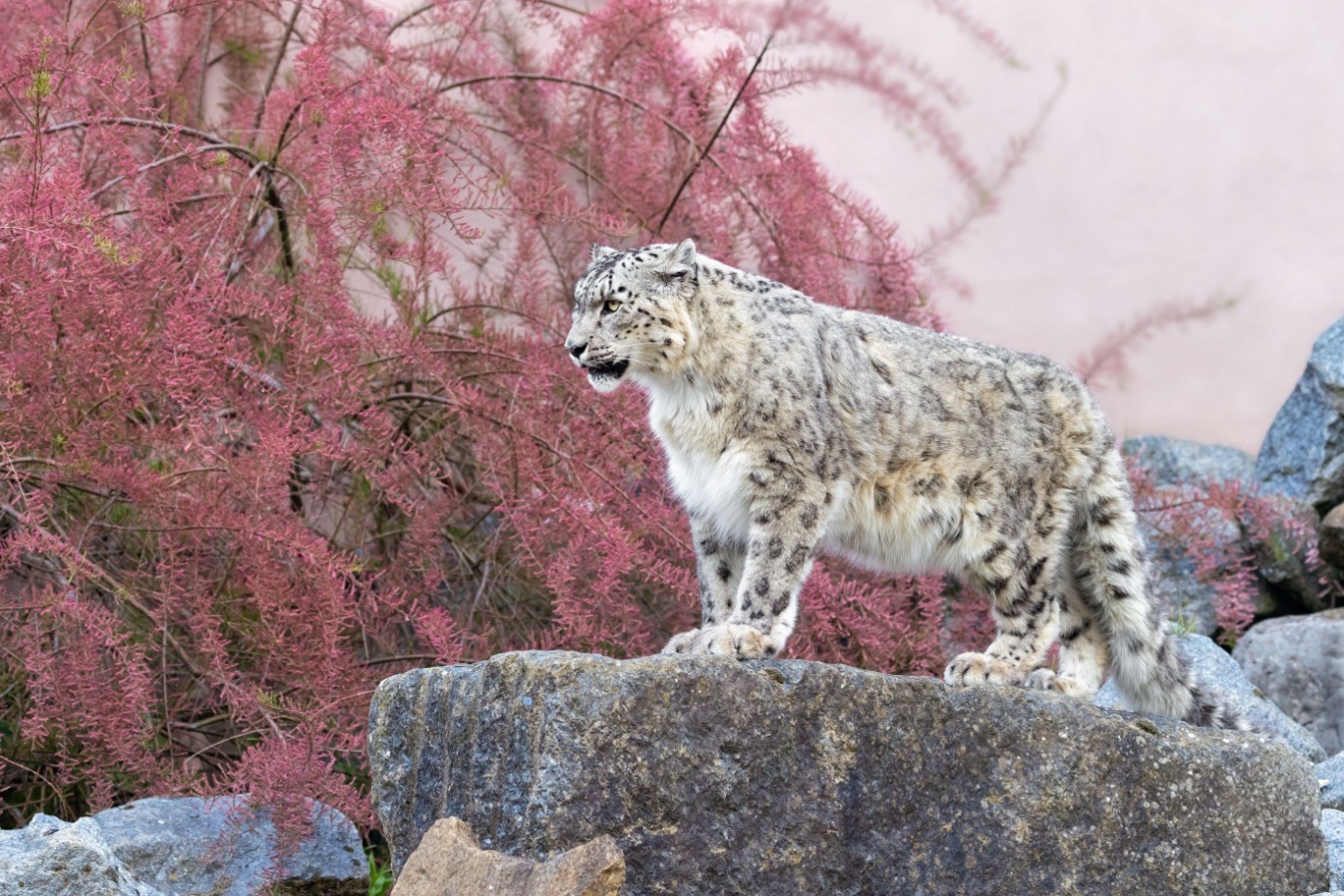
Love silver-grey snow leopards?
They are fabulous. Elusive. They live in the rugged mountains of central Asia. Camouflaged against rocks.
For 20 years, Kulbhuishansingh (Kullu) has studied them. He is a scientist. A conservationist. A mountaineer. He explores their lives. Habitat. Prey. Population. He lived for months in the world’s harshest environments.
Suryawanshi has pioneered new research. It shines light on these charismatic animals. Their fate is entangled with local people. Their survival preserves an austere, delicate ecosystem.
Q by Lani Watson
Single letter titles have charm.
Q is about the hidden power of questions. In a world that wants answers. Lani Watson argues that asking questions is the only creaturely trait we do formally.
But we are trained to look for answers. Not how to ask questions. We live in an answer-rich. Question-poor world. Watson makes this clear.
Ask better questions. It is powerful. From doctor’s surgeries to courtrooms to dating. Your ability to ask determines your experience.
Watson is a philosopher. An honorary fellow at the University of Edinburgh. Former research fellow at the University of Oxford. She offers a captivating narrative. From Socrates to the AI age. You will learn to think about the questions you ask. And the ones you avoid.
Life on the Octopus Farm by Richard Schweij
Octopus blooms are appearing everywhere. Suddenly.
Richard Schweid, a journalist, takes on this provocative subject. The book is an on-the-ground investigation. The global race to farm octopuses. The ethical firestorm it ignited.
It explores the ethics of growing the world’s most intelligent invertebrate.
A key issue? Pain. In 2021, the London School of Economics recognized cephalopods. Octopuses. Cuttlefish. Squid. They feel pain. Distress. Happiness. High-welfare farming might be impossible.
Demand for octopus meat grows. Wild populations decline. In the UK’s south-west, fishers face problems. Octopuses eat high-value catches. Adult lobsters. Brown edible crabs. Scallops.
What to do? Eat them? Recipes are proliferating. It is a dilemma indeed.
A Bloody Scandal by Evelyn Scott
This is an exposé of medical misogyny.
A Bloody Scandal focuses on endometriosis. “How medicine fails women in pain.” It should be a huge market. 1 in 10 women have it. The real figure is higher. Many suffer in silence. For decades.
Evelyn Scott shares her experience. She was a teenager when symptoms started. For 15 years, she endured agonizing pain. And hopeless ineptitude from doctors. Dismissals. Diagnoses of hysteria.
She felt isolated. Then she found other women. Same condition. Powerful stuff. Many argue it is long overdue.
You might find the right book for the strange August ahead. Or you might not. The weather will change. The shelves will refill. But the questions remain.


