
Remember the old days? You’re driving in circles. The air is thick with exhaust. The concrete pillars look like prison bars. You’re navigating a maze that feels designed to confuse. Enge Parkgassen. Düstere Treppenhäuser. Unübersichtliche Parkdecks. That was the standard for decades. It wasn’t just inconvenient. It was depressing.
But things have changed. Fast.
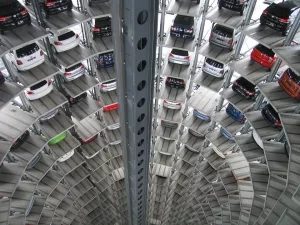
Digitalization didn’t just touch your phone or your bank account. It touched your car’s resting place. Modern parking facilities are no longer just concrete boxes. They are smart ecosystems. They offer comfort that older structures simply couldn’t imagine. This isn’t a fleeting trend. It’s a structural shift. A parking garage today is no longer just a place to park. It is Parkhaus Plus.
More Than Just Asphalt
The definition of a parking house has expanded. You might walk into a facility expecting a cold, empty space. Instead, you find services. Real ones. These extra perks are designed to make your daily life easier. Delivery lockers. Charging stations. Concierge services. The infrastructure is adapting to human needs, not just vehicle storage.
Why does this matter? Because time is the one thing we can’t get back. A smart parking system saves you minutes. Maybe hours. Over a year, that adds up. It reduces stress. It turns a chore into a seamless part of your routine.
The Digital Backbone
What makes this possible? Technology. Sensors track availability. Apps guide you to an open spot. Payment is automatic. No more fumbling for change. No more waiting in line at a kiosk. The backend is digital. The frontend is smooth.
This shift is visible in cities worldwide. From Tokyo to Berlin, the new standard is clear. Efficiency. Convenience. Integration. The old model of isolated concrete structures is dying. The new model is connected. It talks to your car. It talks to your phone. It talks to the city grid.
Is a parking garage just a building anymore? Hardly. It’s a node in a larger network. A place where your car recharges while you live your life. A place where your packages are waiting. A place that adapts to you.
The future isn’t about more space. It’s about better space. Smarter. Cleaner. More useful. The concrete jungle is getting a software update. And the results are already here. You just have to drive through the gate to see it.
How airport parking apps save money and stress before you leave home
The days of circling airport garages for forty-five minutes are ending. For years, travelers were at the mercy of outdated guidance systems that pointed them to distant lots. The cost was high, the walk was long, and the price was fixed. You paid what they asked. If you were unlucky, that bill could run into the hundreds of euros just for the privilege of parking for a holiday.
Now, the solution exists before you even start the car. Platforms like easyairportparking.de have turned the chaotic hunt for a spot into a simple digital transaction. You can book a space from your sofa. The process is straightforward. Select the airport. Input your arrival and departure dates. The database returns a list of options. You see prices. You see conditions.
Comparison is no longer a guess. You can instantly see if a lot is covered or open-air. You can check the distance to the terminal. Security features are listed clearly. Is it a fenced area? Does it have 24/7 video surveillance? Is it a secured underground garage? These details matter. They determine whether your car is safe while you are gone. Once you choose a tariff, the payment happens online. No cash. No uncertainty.
Transparency changes the game. Review systems allow users to share real experiences. This public feedback loop holds operators accountable. New customers can read these reviews before booking. It is a massive leap from the opaque pricing models of the past. But this is just the tip of the digital iceberg. What happens when the physical infrastructure of parking evolves further?
The future of automated valet parking
Cities are pushing for better mobility. The goal is clear: optimize local parking while hitting sustainability targets. To get there, we need more than just apps. We need deeper integration. The first step is contactless entry. No more ripping paper tickets. No more walking to a machine. You check in with an app. Payment is automatic. The friction disappears.
But the real revolution is coming for the cars themselves. Imagine driving into a garage and simply stepping out. The vehicle finds the empty spot on its own. It parks itself. This concept is known as automated valet parking. It is currently in the testing phase. Pilot projects are proving the technology works. Commercial rollout is just around the corner.
The benefits are immediate. Time is saved. Stress is eliminated. Most importantly, emissions drop. Cars stop circling aimlessly in search of space. They go straight to their assigned spot. Sensors, apps, and data streams combine to create this efficient system. Humans are beginning to trust the process. The result is a cleaner, smarter parking culture. The infrastructure is adapting. The question remains whether we are ready to let the machine take the wheel entirely.
Centralized Parking Intelligence
The search for a spot in the city center is usually a recipe for wasted fuel and heightened irritation. A centralized parking monitoring system changes the math. It funnels data on every open and occupied space into a single hub. Drivers receive real-time updates on availability. They navigate directly to an empty bay. The result is less circling. Less idling. A significant drop in local emissions and a faster commute for everyone involved.
Multi-Functional Garage Use
Park garages sit empty for large chunks of the day. Peak hours create shortages, but the baseline utilization is often low. Planners in Mönchengladbach are tackling this inefficiency head-on. Their goal is simple: clear the streets of parked cars while offering residents better storage options.
Residents could park in neighborhood garages instead of blocking curbs. This clears street space for movement. These structures could also host shared mobility hubs. Car-sharing slots. E-bike stations. These amenities match how people actually move today, rather than how they moved ten years ago.
There is also the issue of urban logistics. Opening garages to delivery traffic allows trucks to unload onto cargo bikes for the “last mile.” It is slower for the truck, but kinder to the neighborhood. Some proposals even suggest direct delivery into the trunk of a resident’s car. It sounds convenient for the recipient. It saves time, CO2, and money for the delivery service.
Volocopter: The Sky Taxi Experiment
Dubai hosted the first Volocopter flight in 2017. The aircraft, an electric air taxi with two seats, flew for eight minutes through the urban airspace. It was a prototype test. No passengers were on board. The maiden flight was accident-free, but it was just the beginning. This moment marked the potential start of a new urban air mobility network.
Solar-Powered EV Infrastructure
Electric vehicle charging in parking structures is no longer a novelty. Adapting existing buildings for this purpose is the hard part. Nuremberg is setting the standard. New construction rules there mandate that more than 30% of spaces include charging stations. The power does not come from the grid alone. It comes from photovoltaic panels installed on the roof.
In Berlin, a company called UFODrive has taken it a step further. They offer Tesla electric rental cars inside a parking garage. Each vehicle has its own dedicated charging column. They are pioneering this model in Germany, though London already has three locations doing similar work.
The next logical step is wireless charging. Imagine parking pads that charge your car through induction while you shop or work. You plug in by simply parking. The technology exists. The infrastructure is just catching up.