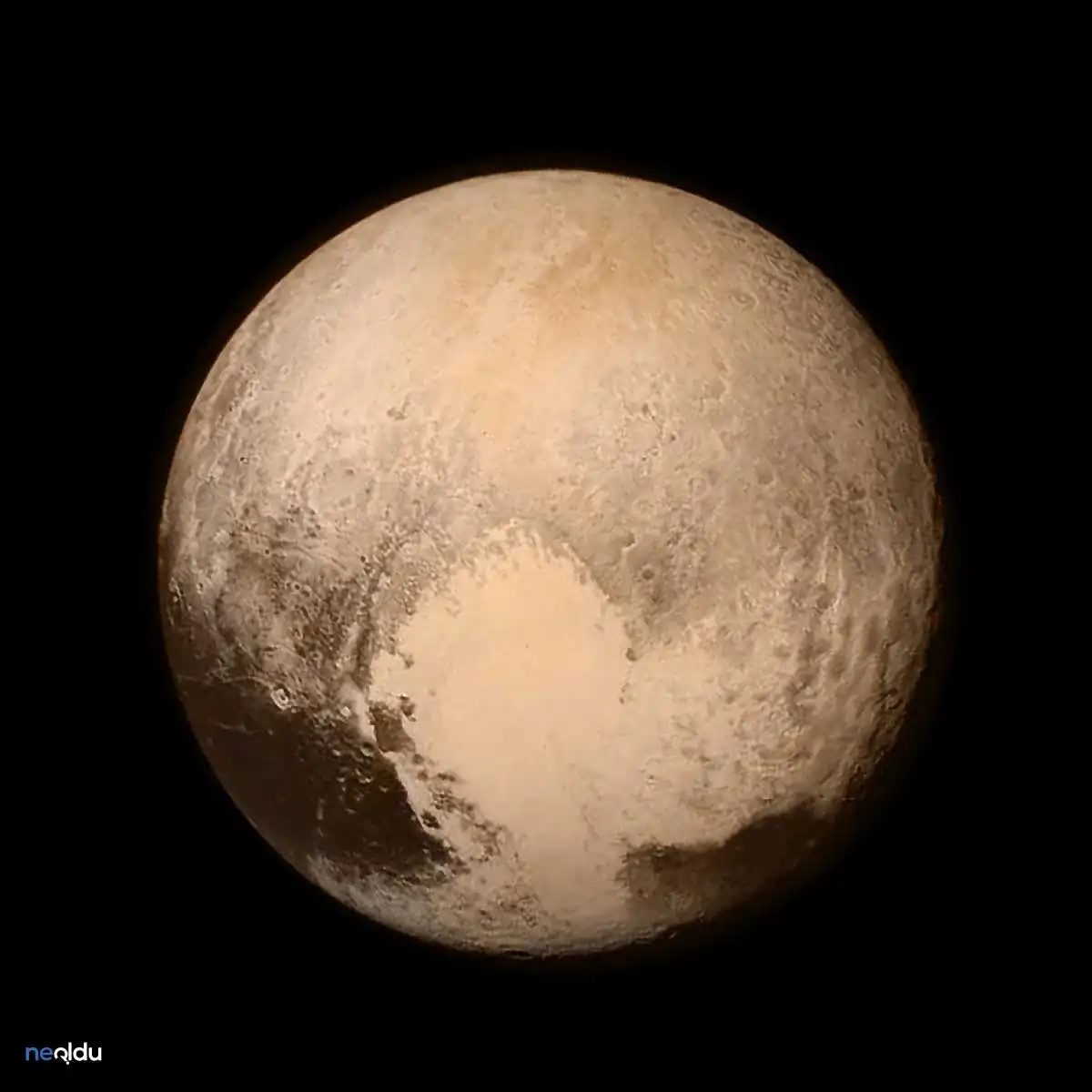
Pluto is a small celestial body orbiting in an ellipse in one of the outer reaches of the Solar System, whose identity is still a matter of debate. Once listed as the ninth planet, it is now classified as a dwarf planet. This classification change triggered one of the biggest debates in astronomy and gave Pluto a special place even in popular culture.
Why did Pluto’s planet status change?
In 2006, the International Astronomical Union (IAU) established three criteria for an object to be considered a planet. Pluto meets two of these criteria but not the third. It orbits the Sun and assumes an approximately circular form due to its own weight. However, it cannot clear the space in its orbit from the impact of asteroids and other small objects. Pluto, which orbits in the same orbital region as Neptune and is in the shadow of a large ice giant, lost its status because it could not meet this “cleaning” condition.
What does the dwarf planet designation mean?
Since the IAU’s decision in 2006, objects such as Eris, Ceres and Haumea, including Pluto, have been classified as dwarf planets. This definition states that the object has a round shape with sufficient gravitational attraction, but cannot clear its orbit of other objects. Pluto remains one of the best-known and largest objects in this group.
Why is Pluto still popular?
Some scientists and the public find the IAU’s definition rigid. The fact that Pluto has its own moon Charon and a complex surface structure makes it feel like a “real” planet. The debate also raises the question of how flexible or rigid scientific classifications should be.
“We want to get Pluto back.” – An opinion still held by many astronomers.
Pluto’s story also shows how little the outer edges of the Solar System have been explored. The complexity of its orbit and the ice sheets still make it a mysterious object of research.
Pluto’s status: Why did it fall off the “planet”?
When Pluto was discovered in 1930, it was recorded as the ninth and outermost planet of the solar system. However, in 2006, the International Astronomical Union (IAU) rolled up its sleeves and deleted Pluto from the “planet” category. Instead it formed a new subset called “plutonia”. This decision is directly related to Pluto’s location in the Kuiper Belt beyond the orbit of Neptune and its similarity to other objects in that region.
Technically, Pluto is a celestial body that orbits the Sun, in an orbit that is not cleared of its own moons, and has enough gravity to assume a spherical shape. Its diameter is approximately 2,377 kilometers. This size distinguishes it from other dwarf planets in the Solar System; Because even though it has similar features, its size and physical structure make it special. Its surface is dominated by ice and rock materials with low density.
New Horizons: That critical crossover in 2015
In terms of space exploration, Pluto is an extremely difficult target to reach as it is located at the farthest point of the Solar System. Light delay and distance slow down data flow and complicate mission planning.
However, in 2015, NASA’s New Horizons spacecraft overcame this obstacle. The craft’s approach to Pluto radically changed the information available to astronomers. The mission mapped the planet’s surface topography and chemical composition in detail. This data set turned predictions about Pluto into precise data.
Hidden geology of the surface: Icebergs and volcanic scars
Pluto’s surface is much more complex than a simple ball of ice. Under the huge ice cap there are traces of active geological processes. Among the structures imaged by New Horizons:
- Mountains
- Potholes
- Craters
- Iceberg-like formations
- Volcanic areas
This diversity indicates that Pluto’s internal structure may still be dynamic. These forms on the surface can be interpreted as the result of underlying meltwater layers and outgassing, not just a frozen crust.
What does the Plutonia category mean?
The IAU’s 2006 decision removed Pluto from being a stand-alone “planet” and replaced it with the Kuiper planet.
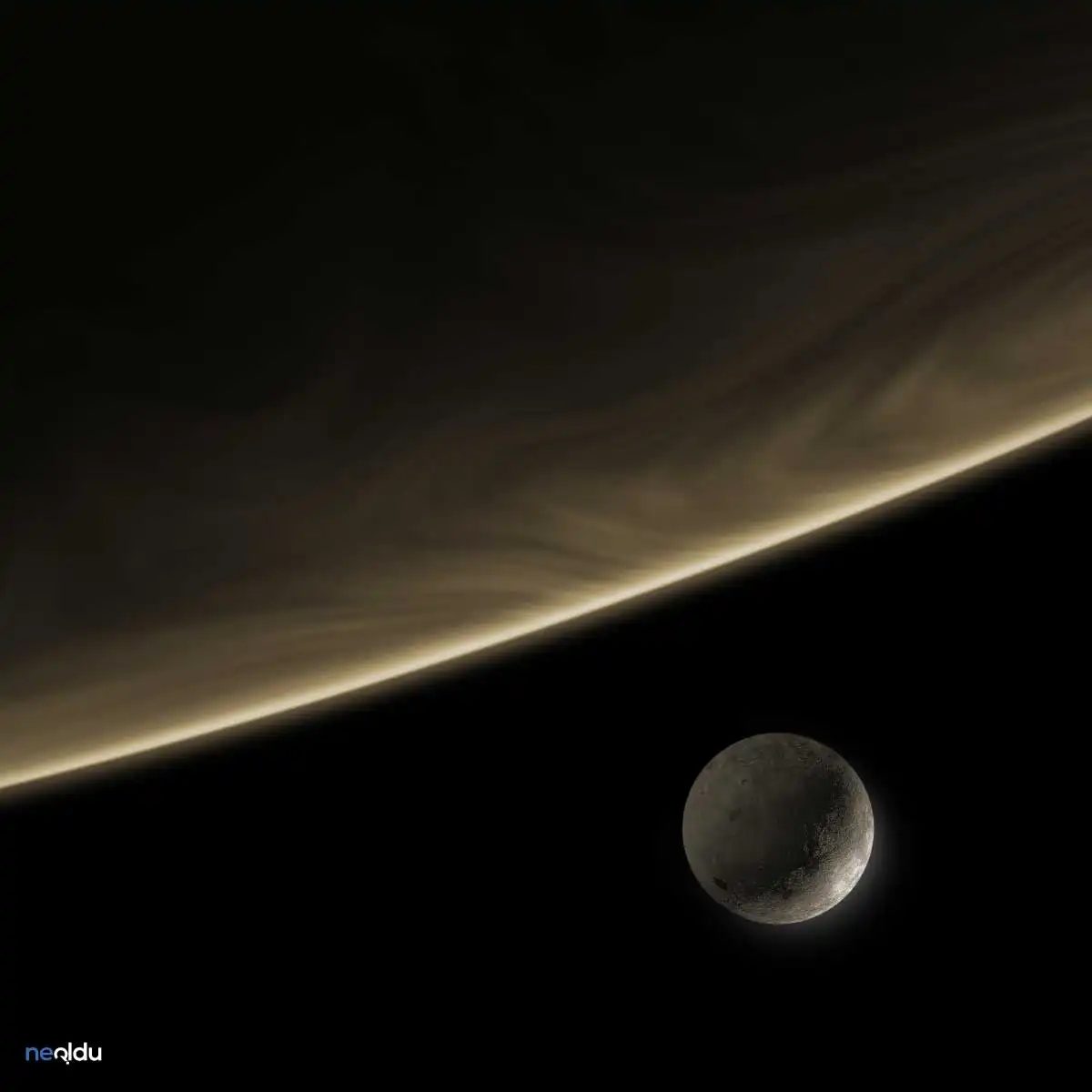
Pluto’s Status and Scientific Importance in the Solar System
Pluto was in the ninth place in the table we have been reading for years. In 2006, the International Astronomical Union (IAU) deleted that order. There were three main reasons behind the decision: its inability to clear its orbit with enough gravity, the presence of other objects around it, and its size being below the criteria. These technical details lead to the question “Is Pluto a planet?” brought the question to popular discussion topics.
Some scientists still object. They want to classify it as a planet based on its surface features, spherical shape and size. The other group remains true to the IAU definition; According to them, Pluto is in the dwarf planet category. The debate is not over and different views remain on the table.
But whatever the label, Pluto’s scientific value remains unchanged. Discovering it remains a critical key to understanding the outer layers of the Solar System. The classification argument trumps the potential for discovery.
New Horizons Mission and Data Flow
NASA’s New Horizons spacecraft has produced concrete results beyond this debate. During its transit in 2015, it captured details about Pluto that we did not know before. This data set covered a wide range from surface structure to atmospheric composition.
The mission didn’t just take a photo and leave. It laid the foundation for long-term observations. Research on Pluto will continue in the coming years. New telescopes and developing space technology will open new windows to unravel the mysteries of the dwarf planet.
“Whether Pluto is named or not does not change the fact that it contributes to the understanding of the Solar System.”
This approach reflects the consensus in the astronomy world. The name may be controversial. Knowledge, accumulated. Pluto is not just a point. An archive containing clues to the early stages of the formation of the Solar System. To read those clues, it is necessary to go beyond the name debate.
Dwarf Planet Designation and Other Candidates
The framework drawn by the IAU did not leave Pluto alone. Other objects that fall into the same category, such as Eris, Haumeya, and Makemake, also carry the same “dwarf planet” label. These objects are the keystones of the Kuiper Belt. Pluto’s situation affects this entire group.
Planet definition, Solar System’
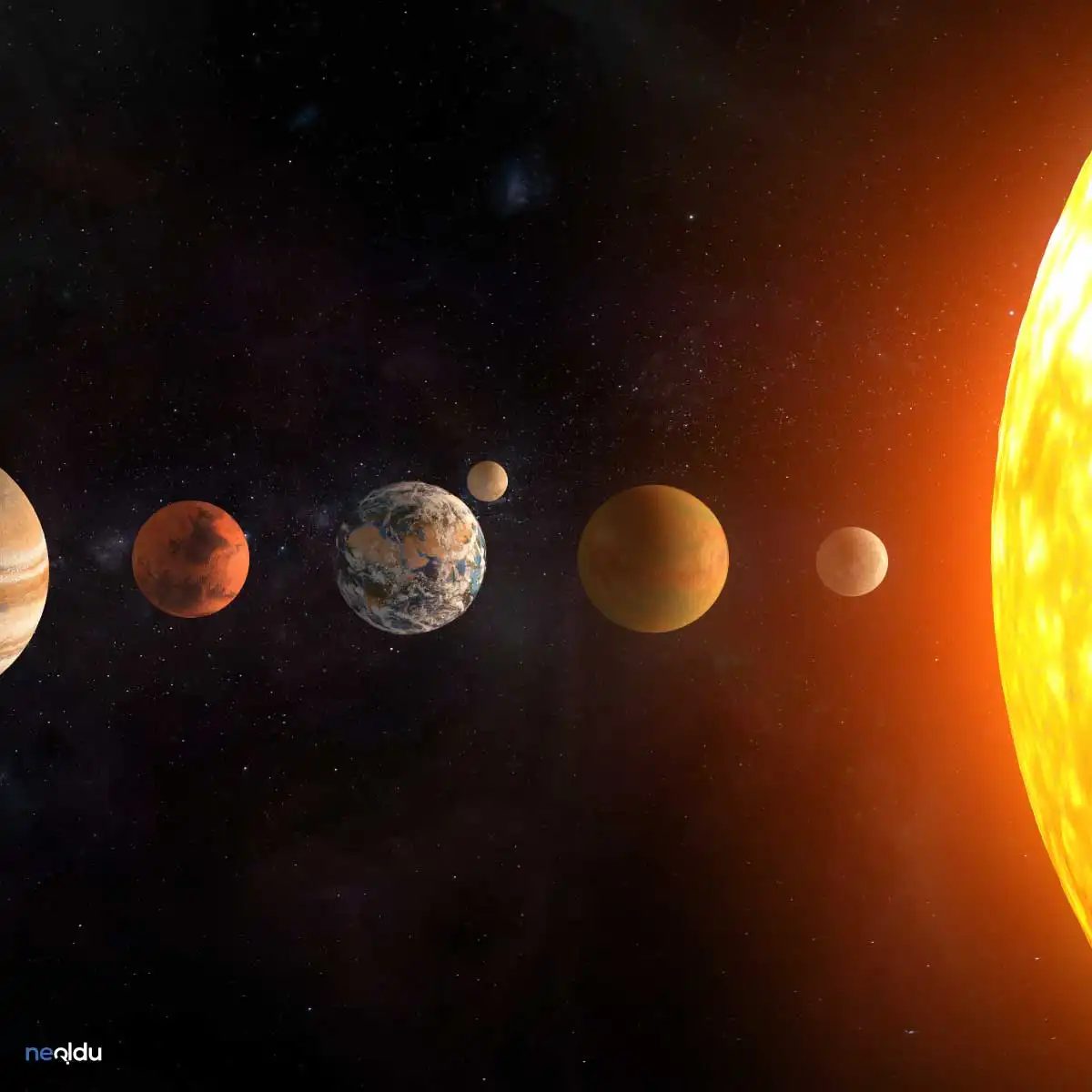
Pluto is a dwarf planet floating beyond the orbit of Neptune, in one of the outermost corners of the Solar System. This massive ice sphere requires 248 Earth years for a single complete rotation. So Pluto’s calendar lasts almost a lifetime compared to ours. This is a long and cold journey.
Dimensions and physical properties
Pluto is one of the smallest dwarf planets in the Solar System. Its diameter is approximately 2,377 kilometers. This figure is approximately 18% of the Earth’s diameter. So if you have a marble and an orange, Pluto looks like a marble and Earth looks like an orange. Although small, this icy world has a very complex surface.
Its surface has been shaped by collisions and bombardments from other objects in the Kuiper Belt. It contains icy mountains, plains, craters and cliffs. It is thought that there are ruins made of ice in some areas. Pluto’s surface is not static; It is an area that changes over time and has its own dynamics.
Atmosphere and chemical structure
Pluto’s atmosphere is extremely thin. Its main component is nitrogen. However, other gases such as methane and carbon monoxide are also found in the air. The thickness of the atmosphere is not constant. As the surface glaciers are warmed by energy from the Sun, the atmosphere expands. As it cools, it shrinks. This cycle ensures that Pluto is constantly changing as it moves closer and further away from the Sun.
Moons: Charon and younger siblings
Pluto is not alone. It has five moons. The largest is Charon, and they seem almost connected to Pluto. The rest are Nix, Hydra, Kerberos and Styx. The presence of these moons may have affected movements on Pluto’s surface and past collisions. The small satellite system dances with the mass effect of the main body.
Discovery process and New Horizons
Pluto was discovered in 1930. However, its true face was revealed with the close pass of NASA’s New Horizons spacecraft in 2015. This flight provided quite a bit of data about the planet. New information about Pluto’s surface details, atmospheric structure and satellite system
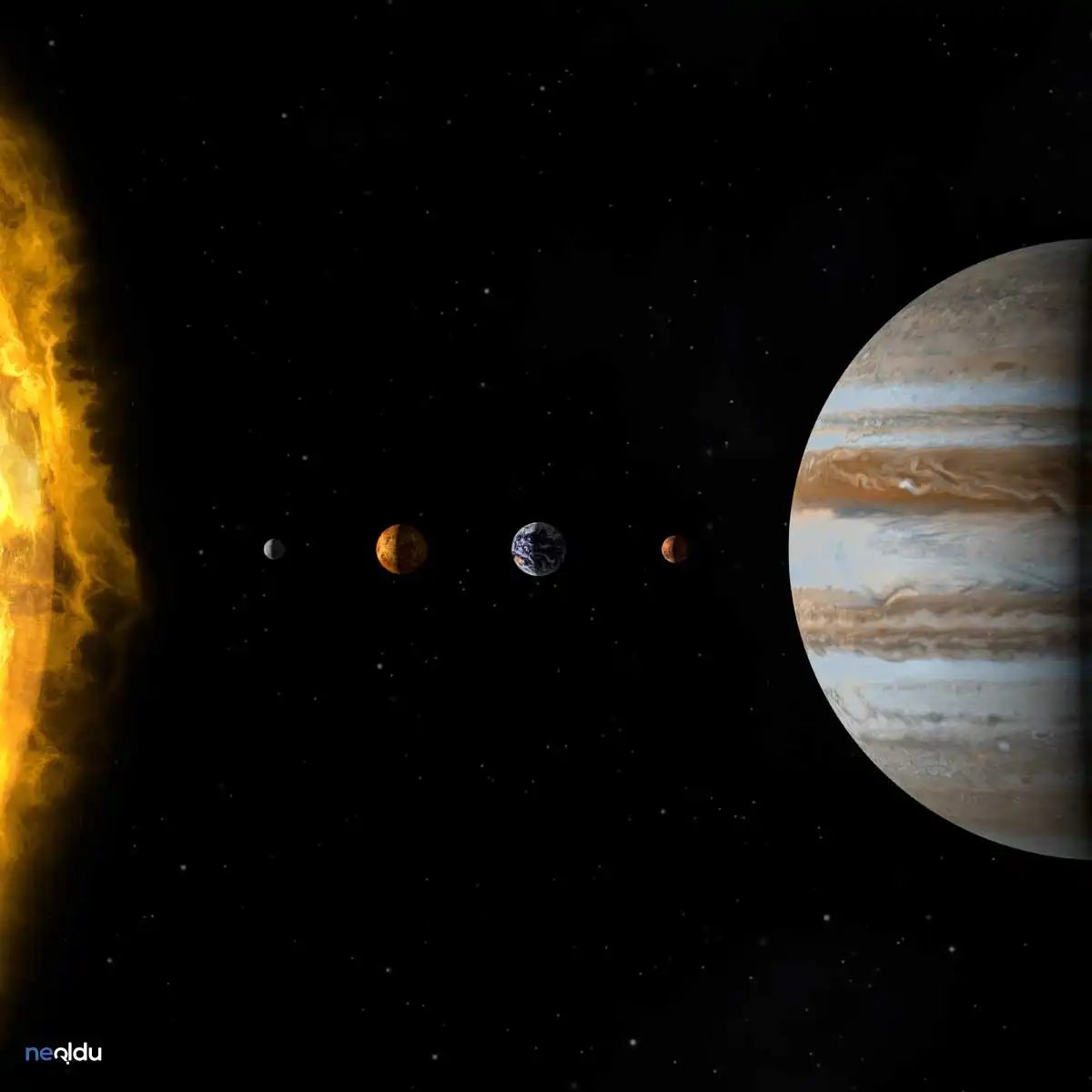
Pluto’s Elliptical Orbit and Distance from the Sun
Pluto doesn’t travel in a neat circle. Its path is a stretched ellipse, swinging wildly between 4.4 billion and 7.5 billion kilometers from the Sun. Because of this extreme variation, Pluto actually crosses inside Neptune’s orbit for a significant portion of its year. It takes 248 years to complete one full lap around the Sun. That is a long time to spend in the dark, cold void of the outer solar system.
The Kuiper Belt Connection
Pluto sits in the Kuiper Belt. This is a vast, donut-shaped region of icy debris that starts just beyond Neptune. It is home to Pluto, Eris, Makemake, and thousands of other small bodies. Pluto is the largest object in this belt. Think of it as the king of a dusty, frozen neighborhood that extends billions of kilometers outward.
Why Pluto Is a Dwarf Planet
Is Pluto a planet? The International Astronomical Union says no. Not since 2006. They reclassified it as a dwarf planet. Why? Two main reasons. First, Pluto is significantly smaller than the other eight planets. Second, it has not “cleared the neighborhood” around its orbit. It shares its path with other objects in the Kuiper Belt. That distinction matters for how we categorize our solar system. It changes the rules of what we call a planet.
Discovery and the New Horizons Mission
Clyde Tombaugh found Pluto in 1930. For most of the next 85 years, it was just a smudge in our telescopes. Then NASA sent the New Horizons spacecraft. It flew past Pluto in 2015. That flew by changed everything. We finally saw surface details, a thin atmosphere, and geological features that looked surprisingly active. New Horizons turned a distant point of light into a complex world with a name, a landscape, and a story.

Why is Pluto’s Atmosphere So Dense?
Despite its small size and freezing cold temperature, Pluto’s atmosphere is much denser than expected. This is one of the main features that distinguishes Pluto among the dwarf planets of the solar system. Most of the atmosphere, over 98 percent, consists of nitrogen gas. The rest contains methane, carbon monoxide and water vapor. As solar radiation and winds constantly change this layer, dynamic processes are triggered that lead to significant effects on the surface.
Temperature Layers and Gas Density
Pluto’s atmosphere is divided into layers by heating and cooling effects. At the lowest level, the temperature hovers around -235°C. A mixture of methane and nitrogen dominates this region.
As you ascend to a higher layer, the temperature rises to -200°C. Here the density of nitrogen increases. In the uppermost layer, the temperature reaches -180°C and this is where the atmosphere is most dense. These temperature differences directly affect the behavior and distribution of gases.
How Is the Atmosphere Formed and Expanded?
The main mechanism for the formation of this layer is related to the behavior of glaciers on the surface. As the sun’s rays break down the molecules, they interact with the volatile components of the ice on the surface. The heated ice turns into gas and mixes with the atmosphere.
That is, as Pluto approaches the sun, the ice on its surface melts or sublimates, injecting gas into the atmosphere. This process is the main reason why the atmosphere expands and becomes denser. This balance is constantly changing as Pluto’s orbital position changes.
Why is helium so scarce?
helium is also detected in Pluto’s atmosphere. This gas, which can generally be formed by the effect of solar radiation, is also found on other planets in the solar system. But the amount on Pluto is extremely low compared to other worlds. This may be related to the dwarf planet’s mass and its gravitational pull’s ability to trap heavy gases. This scarcity of helium provides an important clue to understanding the chemical balance and long-term evolution of the atmosphere.

Pluto’s Moon Family: From Charon to the Tiny Outsiders
Pluto isn’t just a lonely rock drifting in the dark. It’s a system. A chaotic, icy little solar system of its own.
The most famous member of the crew is Charon. It sits 19,640 kilometers from Pluto’s center. That is terrifyingly close. Close enough that Charon covers more than half of the visible surface area of the dwarf planet from Pluto’s perspective. They orbit each other so tightly that scientists often refer to them as a binary system or a double planet. They rotate on their own axes as they circle one another. It is a lockstep dance.
Charon’s surface is a mirror of its partner. Icy. Cratered. ancient
The Smaller Siblings: Nix, Hydra, Kerberos, and Styx
Beyond the giant Charon, four smaller moons orbit the dwarf planet. They were found much later than Charon.
Nix and Hydra arrived on the radar in 2005.
– Nix orbits at a distance of 48,700 kilometers.
– Hydra is a bit further out, at 64,800 kilometers.
These two have surfaces that look like a patchwork quilt. Bright areas of ice contrast with darker rocky regions. They are not smooth. They are messy.
Then came the smallest pair.
– Kerberos was discovered in 2011, orbiting at 58,000 kilometers.
– Styx was found in 2012, closer in at 42,700 kilometers.
We know almost nothing about Kerberos and Styx. They are small. They are dim. Current telescopes struggle to resolve their surfaces. They are shadows at the edge of our knowledge.
Why These Moons Matter
How did these moons form? The leading theory suggests they didn’t just fall out of the sky. They are likely debris.
Imagine a giant collision. A massive impactor hits Pluto. The debris flies out into space. Over time, gravity pulls the bits and pieces together. Charon forms from the bulk of the debris. The smaller moons, like Nix, Hydra, Kerberos, and Styx, form from the scattered fragments that ended up further out.
This matters because it tells us about Pluto’s history. If these moons are collision debris, they are fossils of a violent event that shaped the dwarf planet’s surface.
Quick Facts: Pluto and Its Neighbors
You might be asking for the basics. Here is the data, stripped of fluff.
What is Pluto?
It is a dwarf planet. It used to be called the ninth planet. Now it is classified as a dwarf. It is a world, just not a planet in the strict IAU definition.
When was Pluto discovered?
1930. An American astronomer named Clyde Tombaugh found it. He was searching for “Planet X.” He found something smaller and cooler instead.
How big is Pluto?
Its diameter is approximately 2,377 kilometers. It is small. It is less than the diameter of Earth’s Moon.
Where is Pluto’s orbit?