


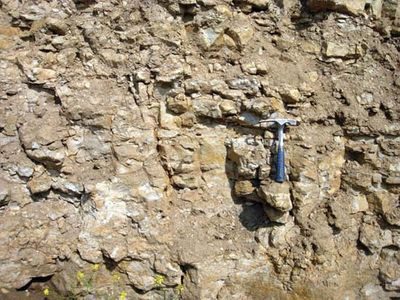
You heat it to over 575 degrees Fahrenheit. You cut off the oxygen. You wait for the rock to spit out liquid. This fluid is shale oil. It is a synthetic crude oil made from oil shale – sedimentary rock full of solid organic grime. Refine it and you have a diesel. You have gasoline. They have propane. It competes directly with conventional crude oil on the global market. The stone also provides sulphur, ammonia and soda. It even helps in making cement.
However, there is confusion in the terminology. People confuse the stone and the product. Until recently, “oil shale” meant raw rock. “Shale oil” means the liquid that is squeezed out of it. Then came the fracking boom. Now the same words are used for completely different things. They describe dense rocks that contain natural crude oil and from which the oil is extracted with high-pressure water jets. The line is blurred. The history is deep. Geology is complex.
How oil shale is formed and where it lives
These things just didn’t appear. It settled. Old lakes. Shallow sea. Swampy lagoons. The organic material sank. It mixed with mud. It was buried. Pressure and heat have done their work for millions of years. Result? Rock rich enough to give fuel when heated.
Not all deposits are equal. Shape is important. Depth is important. Location is important.
In large tectonic lakes, the layers thicken. Really thick. The Green River Formation in the western United States is a giant here. It dates back to the Eocene. Similar massive deposits are found in the Democratic Republic of the Congo, which were deposited during the Triassic period. Then there is the Albert Shale in New Brunswick, Canada, of Mississippian age. These lacustrine deposits are often marlstone or muddy mudstone. Sometimes volcanic tuff is mixed with it. Evaporites show up too.
Shallow marine environments tell a different story. The layers are thinner. But they continue to expand. You get clay and silica. There are also carbonates. Black shale from this area is everywhere. Northern Europe and Siberia saw them form in the Europe and Siberia during the Cambrian period. North America got theirs in the Silurian. There are Permian deposits in southern Brazil, Uruguay and Argentina. There are layers from the Jurassic period in Western Europe. Miocene versions exist in Italy, Sicily and California.
Small lakes and moors? They are awkward. They are often located right next to coal seams. You see this sequence in Western Europe from the Permian. There are early Cenozoic deposits in northeastern China that look similar.
Chemical mixture inside the stone
What’s inside the stone? It is a mixture of inorganic minerals and organic solids. The minerals are mainly silicon, calcium, aluminum, magnesium, iron, sodium and potassium. They hide in silicates, carbonates, oxides and sulfides.
The organic part? This is a money maker. It is a complex network of hydrogen and carbon. But heteroatoms change the game. Oxygen. Nitrogen. Sulfur. These factors determine how difficult it is to refine the oil. They force you to change the upgrading process. Different stones require different chemistry.
Take Estonia. Kukersite is rich in oxygen. It behaves differently from others. In the western United States, the Green River shales are located in former salt lakes. They are rich in nitrogen. Switch to Morocco, Egypt, Israel or Jordan. These marine shales are rich in sulfur. The source determines the sulfur content. The sulfur content determines the price.
Minerals are more important than you think
Rock is not just organic slime. It’s a geological mystery. Mineral content varies depending on how the sediment settles.
In Utah, the Garden Gulch Member of the Green River Formation consists of true shale. Clay minerals dominate. It is fine-grained. Coarse sand kills organic richness. If sandstone is found in the Wyoming section of the Green River, oil production will decrease. To preserve organic material, you need fine sediment.
Colorado’s Parachute Creek Member is different. It’s a marlstone. You get dolomite or calcite mixed with clay, quartz and feldspar. Some mined deposits are carbonate mudstone. All are finely divided. That is the requirement.
The Green River Formation itself is strangely rich in minerals. Salt minerals such as nahcolite, trona and dawsonite are common. How did they get there? The lake was stratified. Very salty. The lower layers lost oxygen. They were filled with carbon dioxide. This environment was a keeper. It kept the organic matter from rotting. It helped deposit the inorganic minerals. It broke down the clay that washed in. The chemistry of the water created a perfect trap for oil and strange minerals.
Why is this difference important now?
We live in a time when energy security is a topic of political discussion. Shale oil is a buzzword. But is it the same as shale oil from Estonia? No. One is refined from stone through pyrolysis. The other is pumped from tight stone via fracturing. The confusion is not just semantic. It affects policy. It affects investments. It affects how we look at the ecological footprint.
Pyrolysis uses heat. Solid waste is generated. It uses water. It emits carbon. Fracking uses water pressure. It endangers the groundwater. It disturbs land differently. When we talk about “shale oil”, we need to know which process we are discussing. The source stone is ancient. The removal method is modern. The confusion remains.
By-products are the second layer. Sulfur. Ammonia. Aluminum oxide. Nahcolite. This isn’t just a waste. They have value. They can be sold. Used shale can be processed into cement. It adds energy to the mix. It is a circular economy waiting to happen. But the environmental costs are real. Groundwater contamination. Land disturbance. Carbon emissions. The trade-off is stark.
We have the technology. We have geology. The Green River Formation alone contains billions of tons. Do we have the will? And wisdom? The stone is there. The heat awaits. The question is, what we choose to burn?
オイルシェールの有機主鎖はケロゲンであり、古代の植物や動物の残骸が細菌によって分解されて生成される固体残留物です。 液体石油とは異なり、ケロゲンは標準的な溶剤に溶けません。 本質的に、それは今日発見されているほぼすべての原油の原料です。
色は品質を物語ります。 最も豊富な堆積物は、茶色から濃い黒色までの範囲です。 これらの高級な石は軽量で可燃性が高く、燃やすと濃い煙のような炎が生成されます。 また、酸化にも強く、その構造が空気と接触した状態に保たれます。 断面を見ると積層されているのが分かります。 濃い帯と明るい帯(年縞と呼ばれます)が交互に重なっています。 これらのパターンは、堆積と蓄積の年間サイクルを表しています。
この層の感覚は穏やかな海を示しています。 湖や浅海がこれらの物質を堆積させました。 炭酸塩は水から直接沈殿するか、粘土鉱物やケイ酸塩鉱物が浮遊した微細な塵として到着します。
Algal Building Blocks
The composition of kerogen varies widely. In some samples, the organic matter was almost pure and traces of algae were detectable. The second type is a chaotic mixture of amorphous slime and scattered biological debris.
The record is dominated by three species of algae: Botryococcus, Tasmanites and Gloeocapsomorpha.
Botryococcus is a macroalgae that grows in salt or fresh water. The footprint is huge. Permian kerogen in France appears to be almost exclusively “staphylococcal” colonies. The same applies to coal and torbanites found in Scotland, Australia and South Africa. Even Holocene coorongites from Australia have this genetic lineage.
Tasmanitesns head to sea. The site contains almost all of the kerogen from the Permian Tasmanitesn rock of Australia and the Jurassic Cretaceous deposits of Alaska. It is also found in the Lower Toarcian shales of the Paris Basin and the Lower Silurian Shale of Algeria.
Then there is Gloeocapsomorpha prisca, a type of seaweed. Kerogen is formed in the kukersite oil shales in Estonia and has spread to neighboring Russia. In the state of Queensland, Australia, there is an oil shale containing kerogen derived from planktonic lake algae.
Amorphous majority
Detectable organic residues usually make up only a small fraction of kerogen. The rest is amorphous. Microorganisms may have altered the material during deposition, breaking down complex structures into homogenous ones.
This amorphous organic material is called sapropelic matter and can build up in thick layers. The Permian Iraty Shale of Brazil is a good example. The same is true for Eocene GRF.
Where does this sludge come from? It is probably a mixture of plankton (algae, copepods, ostracods) and microorganisms living in the sediment itself. Bacteria and algae work together to transform life into the solid fuel potential we see today.
Kerogen is a solid product from the modified remains of bacteria and is insoluble in conventional oil solvents.
Separating identifiable algae from amorphous sapropel material is important for extraction. One is structured and the other is microbial slurry. Both use the same machine. The varves tells about the quiet waters where it all started. The color indicates the density. This layer maps the annual rhythms of ancient oceans and lakes.
It’s not just rock. Time is compressed.
Oil shale sits in the ground across more than 30 countries. It has only ever been worth digging up during brief economic windows since the early 1900s. Development stays local. It happens where specific conditions make the math work.
The few places that actually ran large-scale operations were Estonia’s Kükert deposits (spilling into northwestern Russia), China’s Fushun fields, and Brazil’s Irati Formation. Then there is the Green River Formation (GRF) in the western United States. It is massive. It is rich. It attracts commercial interest whenever the price of conventional crude oil spikes, then disappears when prices fall.
The numbers behind the rock
The data tells a story of concentration. The top 12 countries hold 99 percent of the world’s total shale oil reserves and production. Look at the raw numbers in the table below. The United States sits at the top with over 4.2 trillion barrels in-place. China follows with 354 billion. Russia, Israel, and Jordan round out the heavy hitters.
| Country | In-place Resources (million barrels) | In-place Resources (million metric tons) | Production 2008 (thousand barrels/day) |
|---|---|---|---|
| United States | 4,291,363 | 617,956 | — |
| China | 354,430 | 47,600 | 13 |
| Israel | 250,000 | 36,000 | — |
| Russia | 247,883 | 35,470 | — |
| Jordan | 102,000 | 14,688 | — |
| DRC | 100,000 | 14,310 | — |
| Brazil | 82,000 | 11,734 | 3.8 |
| Italy | 73,000 | 10,446 | — |
| Morocco | 53,381 | 8,167 | — |
| Australia | 31,729 | 4,531 | — |
| Estonia | 16,286 | 2,494 | 9 |
| Canada | 15,241 | 2,192 | — |
| World Total | 5,684,497 | 815,198 | 25.8 |
Figures adapted from the World Energy Council, U.S. Geological Survey, and Colorado School of Mines Oil Shale Symposia.
These “in-place” figures are oil equivalents. They represent the theoretical barrel count contained within the rock. The standard for this guesswork is the Fischer assay. It is the benchmark for comparing retort efficiency.
In a Fischer assay, a rock sample heats up at 12°C per minute until it hits 500°C. It holds that temperature for 40 minutes. This mimics the pyrolytic conditions in some surface retorts. The test measures liquid oil yield. It ignores gas. That gas can be substantial.
The gap between potential and reality
In-place resources are not a promise. They are a ceiling. They do not account for recovery rates. Actual extraction depends on industrial technology, the specific geology of the deposit, and the local operational environment.
Total resource figures are almost always much larger than what can actually be pulled out of the ground.
Take the Green River Formation. Estimates put its oil content at over 4 trillion barrels. More than 600 million metric tons. Theoretically infinite compared to current consumption. But reality has a grade cutoff.
Current extraction technology and economic factors make it unlikely that rock yielding less than 15 gallons per short ton (63 liters per metric ton) can be processed profitably. Apply that cutoff. You wipe out 75 percent of the GRF’s resources. The viable amount drops to between 1 and 1.5 trillion barrels.
Push the cutoff to 25 gallons per short ton due to stricter market conditions or better tech requirements? The recoverable amount shrinks by over 90 percent. You are left with less than 500 billion barrels.
Because detailed data for other major basins is scarce, global resources remain listed based on estimated oil content from the Fischer assay. It is a theoretical number. A potential number. Not a liquid one.
Recovery of oil from oil shale
Organic threshold for viable shale oil
Oil shale is not pre-filled with liquid fuel. The substance inside the rock is kerogen, a waxy, solid precursor that stays there until heated. It is the same material that naturally breaks down into conventional crude oil under severe pressure elsewhere over millions of years. Pyrolysis only accelerates this geological accident in the retort. But here’s the catch: you have to put energy in to get energy out. If there is not enough fuel in the stone to start a fire, the whole operation fails.
This is where the minimum organic requirement becomes a hard financial floor.
The organic carbon content of conventional oil and gas source rocks is typically only 2 percent or more. That’s thin. For oil shale to be commercially interesting, the organic content must be significantly higher. Why? Because of energy balance. In a perfect world, kerogen will generate enough heat to process itself. In reality, heat escapes through the walls of the retort. Pumps need electricity. Transport vehicles burn diesel. The process is inefficient.
So what’s the number?
In a controlled lab environment, you might get by with about 3% kerogen by weight. Anything less will result in the stone’s own calorific value being used up just trying to heat the remaining stone to the required temperature. On paper, it’s the break-even point. But commercial mining is not a laboratory experiment. You need a surplus. Thus, viable deposits must contain significantly more than 3 percent organic matter to account for these actual losses.
The specific break-even point changes depending on where you dig and what you want to do.
Take the United States for example. The organic content of the western and eastern shale formations is similar, 7.5-15 percent. On the surface, this looks like a draw. If you dig deeper, the story changes. Organic matter in the West is “richer” in hydrogen. It is a higher quality raw material. This hydrogen content is equivalent to 20-40 gallons of oil per short ton. The eastern shale? It’s leaner. You’re only looking at 10-15 gallons per short ton for the same weight of stone.
However, it is not only the volume that is decisive. It’s all about chemistry.
Western shale oil is rich in paraffinic compounds. When you upgrade it, it becomes refinery darling. It produces huge amounts of diesel and jet fuel. Eastern shale oil is different. It contains more aromatic compounds. When processed, it is more suitable for catalytic cracking to produce gasoline. These final products hit the market at different prices. This means that the economic cut-off grade of a mine in the west may be lower than in the east, simply because the product sells for more.
The global economy adds another layer of complexity.
In regions with cheaper labor, different energy costs, or different oil prices, it may be possible to process leaner deposits that would not be profitable in the United States. Energy balance is still a decisive factor. Are you getting more energy than you use? If the answer is no, the stone stays on the ground.
Researchers are constantly trying to tighten this balance. Better insulation. More efficient retorts. New extraction methods. Every percentage point of organic matter saved or recovered changes the viability of the mine. It’s a tightrope walk between geology and economics. And the more difficult it is to reach the reserves, the shrinks.
Getting oil out of shale isn’t just about drilling deeper. It’s about cooking. The core technology relies on pyrolysis, a chemical breakdown driven by intense heat. When you apply heat to oil shale, you’re breaking the complex chemical bonds in kerogen, the organic precursor trapped inside the rock. This liberation releases small molecules: liquid hydrocarbons, gaseous fuels, and byproducts like nitrogen, sulfur, and oxygen compounds.
The question isn’t just whether it works, but how you apply that heat. The method changes the product, the timeline, and the logistics entirely.
The Three Ways to Cook Shale
You can heat the rock in three distinct ways. Each has a different rhythm.
Aboveground pyrolysis uses retorts — heavily engineered vessels designed to heat rock rapidly in an oxygen-free environment. This is ex situ processing. The temperature spike is sharp: 480–550 °C (900–1,020 °F). Under these aggressive conditions, the resulting oil carries a heavy load of olefins, diolefins, and sulfur. It’s potent, but it’s also chemically complex.
Underground heating, or in situ processing, is a slow burn. Rock is a terrible conductor of heat. To maximize production, you have to wait. The process takes months, sometimes years. Because the heating is so gradual, the pyrolytic reactions happen at lower temperatures, roughly 325–400 °C (620–750 °F). The result? A lighter crude oil and a higher gas-to-oil ratio. You trade speed for fluidity.
Then there’s the hybrid approach. Engineers dig a pit, line it with impermeable material, and fill it with mined shale. They bury heating pipes and sensors inside the mound, then cap it with soil. Hot gases circulate through the pipes. The products rise as vapor. It mimics in situ conditions but compresses the timeline. It’s a middle ground between the speed of surface retorts and the resource efficiency of underground heating.
Heating Methods That Define the Market
Regardless of where the heat comes from, most commercial processes fall into specific technical buckets. These aren’t minor variations; they dictate efficiency, cost, and environmental impact.
Internal-combustion methods burn gas or a portion of the shale itself to generate heat. The hot gas then transfers that energy to the ore. It’s direct. It’s aggressive.
* Kiviter: Used in Estonia.
* Fushun: Deployed in China.
* Paraho Direct: Designed in the United States.
Hot-recycled-solids systems circulate burned shale or inert materials as heat carriers. Here’s the clever part: spent shale still holds energy. The carbon-rich char left behind in the mineral ash can be burned to provide additional heat. This boosts effective resource utilization. These systems are exclusively aboveground.
* Galoter: Estonia.
* Enefit 280: Estonia.
* Taciuk Process: Canada.
Conduction through a wall transfers heat electrically or via external fuel burning outside the retort. It’s slower but cleaner.
* Pumpherston: The original. Used in Scotland since 1862. A historical baseline that evolved across continental Europe.
* Combustion Resources & Ecoshale In-Capsule: Modern American designs.
Externally generated hot gas injects remotely heated gas into the retort. It’s efficient but requires complex piping.
* Petrosix: Brazil’s flagship aboveground process.
* Paraho Indirect: American technology, also aboveground.
Reactive fluids use chemically active agents, like high-pressure hydrogen. This doesn’t just heat the rock; it upgrades the oil on the fly. The hydrogen removes sulfur and stabilizes reactive hydrocarbons. It’s a chemical intervention that simplifies downstream refining.
Volumetric heating is the outlier. Think microwave oven. It uses electromagnetic radiation or electric current to excite molecules directly. It’s fast. It’s precise. But it’s been designed only for in situ applications so far.
The Four Steps of Surface Processing
Once the rock is out of the ground, the workflow is rigid. There are four non-negotiable steps in aboveground processing:
- Mining: Extract the ore, whether via underground tunnels or open-pit methods.
- Crushing: Reduce the rock to a size the retort can handle.
- Retorting: Heat the crushed shale to pyrolysis temperatures.
- Upgrading: Refine the raw oil obtained from the organic content.
Not all retorts are built the same. Classification usually hinges on movement and particle size.
Some retorts move the reacting shale vertically through a stationary chamber. Gravity does the work. Others use a horizontal design, typically a rotating drum. The rotation keeps the material moving and ensures even heating.
Then there’s the matter of size. Retorts are engineered to handle either lumps or fines.
* Lumps: Pieces ranging from 15 to 70 mm (0.5 to 2.75 inches).
* Fines: Particles smaller than 10 mm (0.4 inch).
Mixing them up breaks the process. A retort designed for fines will choke on lumps. One built for lumps will let fines escape as dust or burn inefficiently. The engineering constraints are tight. The margin for error is small. And as the global appetite for unconventional energy grows, getting this balance right determines whether a project lives or dies.
Getting the Oil Out Where It Lies
Forget the mineshafts and the surface retorts. In in situ processing, the magic happens underground. The goal is simple: heat the rock in place to unlock the oil and gas, then pump it out using standard well techniques. No massive surface plants. No huge piles of shale rock. Just heat, pressure, and extraction.
Right now? Nothing is running commercially. But the interest is real. Companies are testing methods to heat massive volumes of rock without tearing the surface apart. The challenge isn’t drilling. It’s heating. And containment. You need to keep the reaction products from leaking into groundwater.
Two electric heat systems look most promising. One uses a dense grid of vertical or horizontal wells, each holding an electrical heater. Simple. Direct. The other is more complex. Drill parallel horizontal wells. Fracture the rock hydraulically. Inject a conductive propping medium into those fractures. Drill a single horizontal well at a right angle to connect them all. Pass electric current through this circuit. You’ve essentially built a giant, platelike heating element deep underground.
There are other ways, too. Downhole burners. Surface-heated gases like air or carbon dioxide injected directly into the rock. The method varies. The physics don’t.
Cleaning Up the Sludge
Surface retorts produce a crude mess. It’s dense. It’s full of large hydrocarbon molecules. It’s loaded with oxygen, sulfur, and nitrogen. These aren’t just impurities; they’re corrosion agents. They wreck refinery equipment. Burn them, and you get noxious pollution. If you want to use shale oil for anything other than bunker fuel or cheap heating, you have to upgrade it.
Take GRF shale oil. It fouls equipment with particulates and diolefins. Remove those. Hydrotreat the high paraffin content. Suddenly, you have high-quality oil. Jet fuel. Diesel. Things people actually want to put in their tanks.
Nitrogen removal is another upstream necessity. It kills refining catalysts. You can’t skip that step.
Yes, upgrading costs money. It takes effort. It requires significant infrastructure. But the technology exists. It’s not science fiction. It’s just expensive and chemically aggressive.
The In Situ Advantage? Lighter Oil. Still Dirty.
In situ oil is different. It’s lighter. Less upgrading is needed compared to surface-retorted crude. That’s the headline. The wellhead product has higher hydrogen content, which helps during hydrotreating.
But don’t cheer too early. It still needs work. The gas produced from in situ retorting is “sour.” That’s industry slang for loaded with hydrogen sulfide and carbon dioxide. Both must be removed. Sulfur is toxic. Carbon dioxide adds to emissions. You can’t just pump sour gas into the pipeline.
The difference is degree, not kind. Surface oil is a chemical nightmare. In situ oil is a manageable problem. But both require refining. Both require stripping away the impurities before they reach the pump.
Carbon costs of shale oil
Extracting oil from shale is not a clean process. The primary method is to heat the rock to extract the hydrocarbons. This heat usually comes from burning fossil fuels. This creates a direct link between shale oil production and greenhouse gas emissions.
The numbers are steep. In situ processes, where the rock is heated underground, release at least 10-20 percent more carbon dioxide (CO2) than traditional oil production. Aboveground retorting is even dirtier. These methods operate at higher temperatures and break down carbonate minerals, releasing potentially 50 percent more CO2 than conventional oil production.
“Shale processing inevitably results in CO2 emissions… [during surface processes]… [producing] 50 percent more CO2 than conventional oil processes.”
Industry leaders are not ignoring the problem. The proposals include capturing this carbon dioxide and pumping it back into previously depleted in situ blocks to sequester it. Others propose piping the gas into conventional oil fields to boost recovery by improving oil production. It’s a corrective strategy, not a solution, but it’s the only strategy currently under consideration.
Water: A limited resource in arid landscapes
It can be assumed that the process is dry because the oil is trapped in the rock. That’s only half the truth. The pyrolysis reaction itself does not use water. But the rest of the operation does.
Complete oil shale processing requires 0.7-1.2 liters of water per liter of oil produced. Why? Drilling, extracting and refining synthetic crude oil all need hydration. Site remediation adds to the tally.
Water cooling in electricity production can be a big additional need if conventional steam condensation is used. However, most developers opt for air cooling in water-constrained areas to avoid running out of local supplies. Despite this reduction, the industry is under pressure to reduce its footprint.
How does shale oil compare to other energy sources? It is actually less water intensive than many biofuels. The massive operation, producing 500,000 barrels a day, would still use less than 1 percent of Colorado’s total annual water use. The calculation works, but the local effects in dry areas remain a socio-political flash point.
Groundwater risks and surface damage
Pollution is the other side of the water coin. Mining and reprocessing operations can leak into surface or groundwater if industry best practices are not strictly followed. In-situ retort processing leaves behind organic compounds and by-products that threaten groundwater resources.
When the underlying rock heats up, its structure also changes. This change can make certain inorganic contaminants more mobile and spread more easily through the aquifer. Experiments show that these contaminants can be removed before the site is abandoned. However, the risks remain a key concern for regulators and residents.
Then there is the country itself. The manufacture of surface retorts requires huge open pits or underground mines. When so much rock is moved, it damages the integrity of the land. It interferes with grazing, damages agriculture and displaces local fauna and flora. Even in situ methods with boreholes leave a footprint on the surface, but it is usually more concentrated and smaller in size.
Reclamation is possible. Previous attempts to exploit oil shale have shown that mined areas can be restored. But it is expensive, technically demanding and requires water – creating a paradox in arid regions where water is already scarce.
Human costs of development
Oil shale does not only affect the soil. It changes the communities in which it is located. Development on an industrial scale inevitably affects rural areas.
Local governments often face service shortages. Before the royalties begin to flow, sudden population growth and industrial activity can strain infrastructure and public services. Developers must meet these immediate needs in order to maintain their social license.
There is also a layer of historical fear. Communities have seen oil shale booms rise and fall before. The fear of repeating this cycle is real. To move forward, developers must convince locals that this time is different. It’s not just about geology. It’s all about trust.
The story of oil shale isn’t just about digging up rock. It’s about who got there first, who could afford it, and why most early attempts vanished overnight.
The first recorded mention of shale oil dates back to 1596. Duke Frederick of Württemberg’s personal physician noted that mineral oil distilled from oil shale could heal ailments. Not exactly a blockbuster business plan, but an interesting start. Thirty years later, in 1694, the British Crown granted Patent No. 330 to three subjects who claimed to have found a way to extract pitch, tar, and oil from stone. Around the same time, enough oil was produced in Modena, Italy, to light its streets. It was niche. It was local. It worked.
By the 1830s, things were getting commercial. Autun, France, started producing lamp fuel from oil shale in 1839. Demand for lighting fuel was exploding. The whaling industry couldn’t keep up. Whale oil prices soared. The market was crying out for an alternative.
The American Boom and Bust
The United States jumped in. Retorts were built along the Ohio River in the 1850s. But the industry’s lifespan was brutally short. All those early American retorts disappeared by 1860.
Why? One year earlier, in 1859, E.L. Drake struck crude oil in Pennsylvania. Suddenly, the alternative was no longer needed. The economics collapsed. It happened again in Canada. Between 1859 and 1861, oil shale was retorted on the shores of Lake Huron. Then cheap crude was discovered nearby. The Canadian operation folded too.
North America had entered its first cycle of rapid development followed by immediate abandonment. Cheaper alternatives always won.
The Scottish Exception
Scotland didn’t follow that pattern. In 1862, a commercial oil shale industry began there. It didn’t end with a whimper; it lasted a century. The industry produced kerosene, ammonia, and paraffin wax for candles. It kept running until the resource itself was depleted. The last works in Pumpherston, West Lothian, finally closed in 1962. That’s a hundred years of steady operation.
Global Expansion and Collapse
Other countries tried their hands at it too. Australia in 1865. Brazil in 1881. New Zealand in 1900. Switzerland in 1915. Sweden in 1921. Spain in 1922. South Africa in 1935.
By 1966, every single one of those plants had closed. The pattern held. When cheap conventional oil became available globally, these smaller, local operations couldn’t compete. They lacked the scale or the necessity to survive.
The Survivors
But not all stories end in closure. Three significant operations founded in the 20th century are still running today, some even ramping up production. Why did these specific cases survive? They weren’t trying to beat the global market. They were filling a local niche. They didn’t have an inexpensive fuel alternative.
In Estonia, oil shale retorting was initiated in 1921 and continues to the present day, with a daily production of approximately 9,000 barrels of oil.
Estonia started in 1921. Today, it produces about 9,000 barrels of oil per day. Most of the mined shale there is burned for electricity, but the oil production side has grown significantly over time. The technology adapted. The demand remained local and specific.
China did something similar. An operation opened in Fushun, in northeastern China, in 1929. It is still producing. The retorts there and in other Chinese locations yield an estimated 14,000 barrels of oil per day.
Brazil’s story is more recent. In 1972, Petróleo Brasileiro (Petrobras) started a pilot plant in São Mateus do Sul, in the state of Paraná. The goal was to develop commercial extraction technology. It worked. Petrobras continues to operate an industrial retort at the site. It produces about 3,500 barrels of synthetic crude per day, along with by-products like liquefied petroleum gas (LPG), fuel gas, and sulfur.
Why They Lasted
These three continuous operations—Estonia, China, and Brazil—didn’t survive because they were more efficient than the global oil giants. They survived because they existed in the absence of a cheap alternative. They weren’t subject to the boom-and-bust cycles that battered the United States. When the price of conventional oil dropped, these operations didn’t fold because they weren’t trying to compete on price. They were solving a local energy security problem.
The first cycle in North America ended quickly. The global expansion in the 19th and early 20th centuries ended in closure by 1966. But these three specific cases show that oil shale isn’t just a historical footnote. It’s a persistent, localized industry. It waits. It waits for the moment when cheap oil is no longer an option. Or when the technology finally catches up to the economics.
The stone still holds the oil. The question is never whether it can be extracted, but whether it needs to be.
The Green River Formation isn’t just a geological curiosity. It stretches across Utah, Wyoming, and Colorado, holding vast deposits of oil shale that have drawn American eyes since the early 1900s.
People were burning this rock and distilling oil from it in Utah as far back as the 1850s. By the late 1800s, folks in Colorado were using the byproduct as “smudge” to protect orchards. But actual commercial output? That was non-existent for decades.
The first real spike came in the 1920s. A government plant in Rulison, Colorado, pumped out some 3,600 barrels. A private operator in Nevada added another 12,000. It felt like progress. Then the giant conventional oil fields in Texas, Oklahoma, and California were discovered. Suddenly, shale oil looked expensive and unnecessary. These early facilities closed by 1930. The first cycle ended.
Post-War Security Plays and Middle Eastern Oil
The industry woke up again right after World War II. This time, the driver wasn’t just profit. It was security. The military saw oil shale as a domestic fuel source that couldn’t be cut off by foreign powers.
Congress stepped in. The Synthetic Liquid Fuels Act of 1944 and the Defense Production Act of 1950 funded the U.S. Bureau of Mines to build retorts near Rifle, Colorado. The scale was tiny compared to modern expectations. These plants could only handle 350 to 1,500 barrels a day.
The cost was prohibitive. Mining and crushing the rock required too much labor. But the real killer was geopolitical. Giant oil fields were found in the Middle East before and after the war. The price of conventional oil dropped. The commercial interest in shale vanished almost overnight.
The 1970s Shock and the SFC Bubble
The 1970s changed the narrative again. Oil embargoes and price spikes sent shockwaves through the global economy. Countries scrambled to check their own shale deposits. Could they justify the massive investment needed to turn rock into fuel?
In the U.S., the federal government poured billions into the Synthetic Fuels Corporation (SFC). Major oil companies spent hundreds of millions more, betting that high prices would stick. They were wrong.
Prices rose briefly, then crashed in the 1980s. Interest collapsed. Projects were canceled. Communities in Colorado and Utah faced severe economic distress.
Only one project survived the purge. Unocal Corporation, running a site near Parachute, Colorado. They had a price guarantee from the SFC. This wasn’t their first rodeo. Unocal had been experimenting with shale oil since 1921.
They tested a direct internal combustion process in the 1940s. In the 1980s, they built a facility for their “Union B” process, which used externally generated hot gas. From 1986 to 1991, the plant produced five million barrels. Then Unocal shut it down. The fourth cycle of North American interest ended.
In Situ Methods and Global Expansion
A new chapter started in the early 2000s. Crude oil prices began climbing, driven largely by demand from emerging Asian economies. The financial sector, governments, and industry took another look at shale.
This era introduced a shift in technique. Developers started testing in situ methods—extracting oil from underground without mining the rock. Surface retort developers focused on efficiency and environmental performance, specifically carbon management.
No company immediately committed to full-scale economic production. But experiments began. Some were completed. Technical hurdles remained for surface retorting, yet companies still planned new systems. The locations were diverse: Estonia, Jordan, and the United States.
The Price Dependency Trap
The future of oil shale development hangs on a thin wire. It depends on solving technical constraints. But it hinges just as heavily on economic and political conditions globally.
The single most critical factor is the long-term price of conventional crude oil.
Capital costs for a commercial shale oil project are enormous. Shale oil will only be competitive if conventional oil stays expensive. If prices drop, the math stops working.
It remains to be seen whether commercial production can expand beyond the three countries that have previously done it on a large scale. The technology exists. The rock is there. But the economics are a moving target.


