After nearly a century of rocket launches, freelance space writer Roger Guillemette was present at NASA’s Kennedy Space Center for the Artemis II mission. The launch was unlike anything he’d previously witnessed, marking a pivotal moment in human spaceflight. The sheer energy and excitement surrounding the event were palpable, uniting both seasoned journalists and newcomers in anticipation of a return to lunar exploration.
The Return of a Familiar Dream
The atmosphere at KSC was electric. Major news networks deployed their top teams, broadcasting live from the iconic Vehicle Assembly Building, where the American flag and NASA logo served as a striking backdrop. For many older observers, like Guillemette, the launch stirred deep nostalgia for the Apollo era. He recalls vividly watching Apollo 11 fill his 10th birthday week and later camping out to witness Apollo 17, the last crewed lunar mission for half a century.
Echoes of the Past, Amplified by the Future
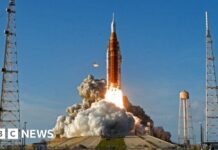
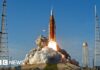
The Artemis II launch felt both old and new. The intensity of the Space Launch System’s ignition surpassed even the first flight of the Space Shuttle Columbia in 1981, which Guillemette also witnessed firsthand. The rocket’s brilliance was blinding, shaking the ground and reverberating through observers’ chests – a sensation that cannot be captured by photos or videos.
The Moon’s Unwavering Call
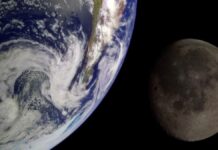
More than 50 years after Apollo 17’s departure from the moon, the United States is now reasserting its commitment to lunar exploration with international partners. The moon itself remains an ever-present beacon in the night sky, a familiar yet distant neighbor. The Artemis II mission signifies not just a technological feat but a continuation of an age-old human drive to reach for the stars, a goal that has never truly been out of sight.
The Artemis II launch wasn’t just a spectacle; it was a visceral reminder that the dream of space exploration is not just alive, but actively reignited.
The launch marks a new chapter in space exploration, driven by both technological advancement and the enduring human fascination with the cosmos.