Archaeologists in England have unearthed a disturbing Viking Age mass grave containing the dismembered remains of at least ten individuals, alongside a remarkably tall man who appears to have undergone ancient brain surgery. The discovery, made just outside Cambridge, provides a grim glimpse into the violent clashes between Saxons and Vikings during the ninth century.
A Pit of Dismemberment and Death
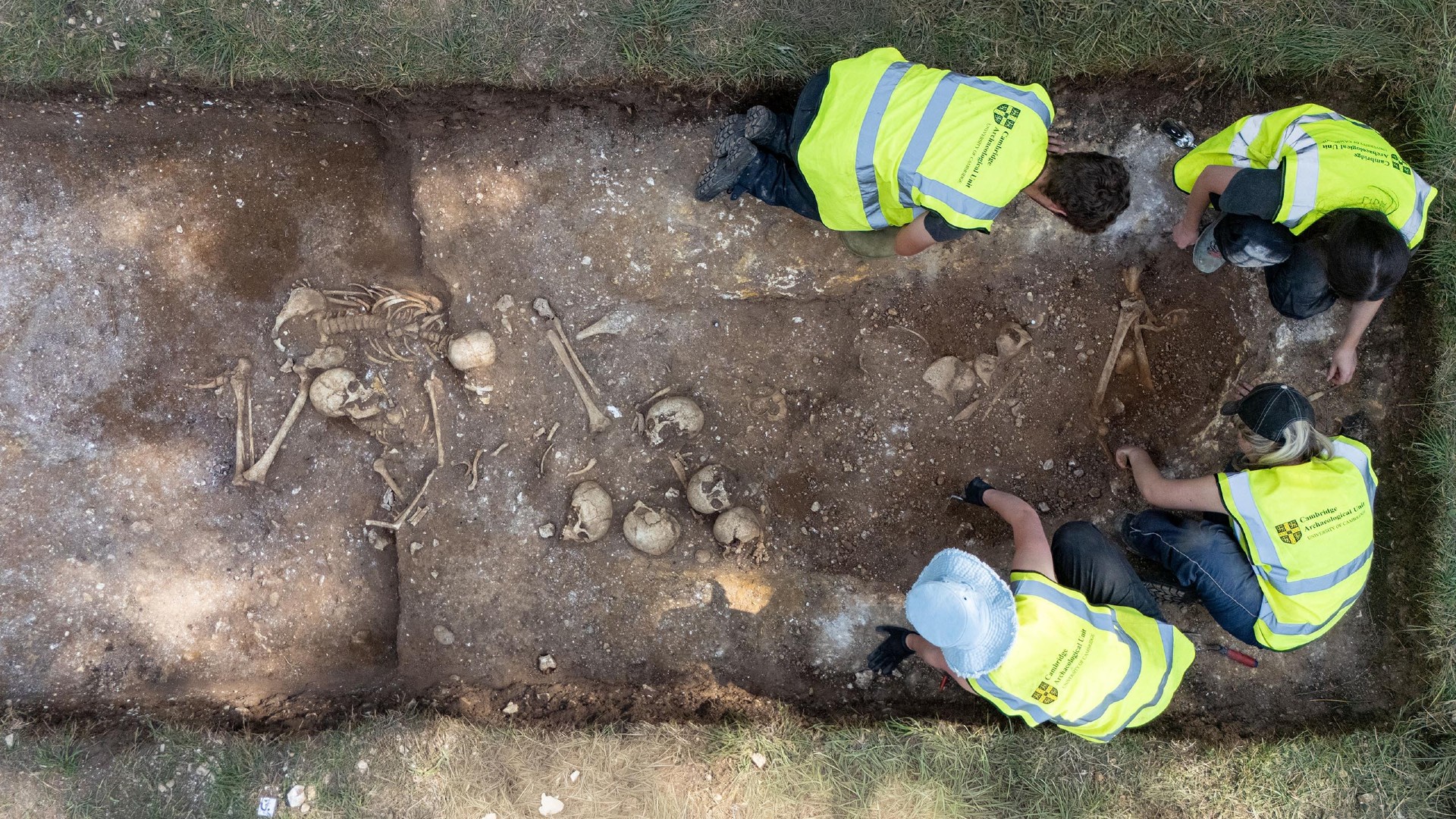
The site, excavated in the summer of 2025 at Wandlebury Country Park, contained a 13-by-3.3-foot pit filled with a gruesome mix of human remains: four intact skeletons, scattered skulls, and piles of severed limbs. According to Oscar Aldred, an archaeologist with the Cambridge Archaeological Unit, the fragmented nature of some bodies suggests possible trophy displays before burial. The presence of restraints also implies deliberate execution or slaughter.
The unusual combination of complete and dismembered bodies raises questions about the pit’s purpose. While some remains may have decomposed before interment, others were likely deliberately separated, potentially as a form of intimidation or ritualistic display. This level of brutality suggests a context beyond simple battlefield casualties.
Frontier Violence and Potential Punishment
The ninth century in the Cambridge region was a volatile period of conflict between Anglo-Saxons and invading Vikings. The pit’s age, confirmed through carbon dating between 772 and 891, strongly suggests a link to these wars. However, the lack of typical battle injuries indicates the victims were likely not killed in combat. Aldred posits that these individuals may have been subjected to corporal punishment, suggesting Wandlebury could have been a recognized meeting place where such acts occurred.
A “Giant” with a Hole in His Skull
Perhaps the most striking discovery was the skeleton of a man estimated to have stood around 6 feet, 5 inches tall – an exceptional height for the period when the average man was only 5 feet, 6 inches. The individual also bore a surgically created 1.2-inch hole in his skull, likely a desperate attempt to relieve pressure from a pituitary tumor.
This condition, known as pituitary gigantism, causes excessive growth hormone production and can lead to debilitating health issues. Trish Biers, an osteologist at the University of Cambridge, explains that the hole in the skull suggests ancient trepanation – a primitive form of brain surgery – may have been performed to alleviate the pressure. While risky, the procedure would have been a known, if brutal, way to address such conditions.
Further Investigation Needed
The University of Cambridge plans further DNA and chemical analyses of the remains. These tests will not only reveal the health and ancestry of those buried but may also determine whether they were Viking warriors, Saxon victims, or something else entirely. The discovery, recently featured on BBC Two’s “Digging for Britain,” underscores the brutality of life in early medieval England and the desperate measures people took to survive.
This mass grave is a stark reminder of the violence inherent in frontier conflicts and the medical practices of the time. The findings raise broader questions about the scale of brutality during the Viking Age and the lengths to which ancient peoples went to cope with disease and trauma.