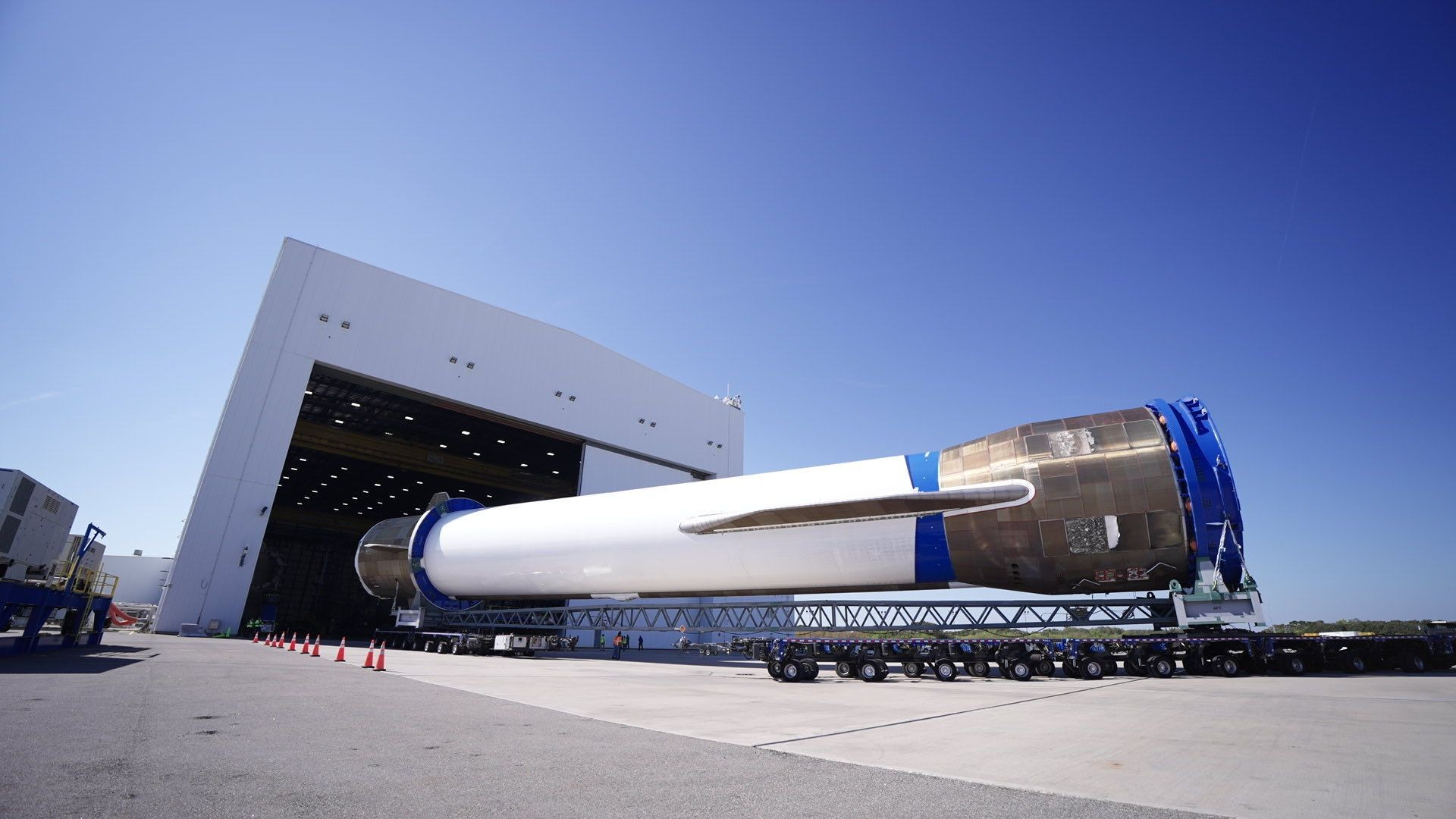
Blue Origin’s New Glenn rocket successfully completed its first landing last week, and unlike many other rockets, the booster returned in remarkably clean condition. This milestone, achieved during the launch of NASA’s ESCAPADE Mars probes on November 13th, raises a simple question: why does this matter, and why is this booster so clean?
The Landing and Its Significance
The New Glenn first stage touched down in the Atlantic Ocean roughly nine minutes after liftoff, landing on Blue Origin’s drone ship Jacklyn. Unlike the often-soot-streaked appearance of SpaceX’s Falcon 9 boosters, New Glenn’s white, gold, and blue livery remained sparkling. This isn’t just about aesthetics; it speaks to fundamental differences in rocket engine technology and fuel choices.
Propellant Matters: The Science Behind the Clean Return
The key difference lies in the propellants used. SpaceX’s Falcon 9 rockets use liquid oxygen and RP-1 (rocket-grade kerosene). Kerosene combustion inherently produces soot, which coats the boosters during reentry.
Blue Origin’s New Glenn, however, runs on liquid oxygen and liquid methane (methalox) for its first stage. Methane combustion is much cleaner, leaving minimal residue. This explains why the booster returned in such pristine condition. The upper stage of New Glenn uses liquid oxygen and hydrogen, another clean-burning combination.
SpaceX’s Methalox Path: The Raptor Engine and Mars Ambitions
SpaceX isn’t ignoring the benefits of methane. Its next-generation Starship rocket utilizes the Raptor engine, which also runs on methalox. This choice isn’t accidental: methane can potentially be produced on Mars from atmospheric resources, making it a crucial fuel for long-term colonization efforts. Elon Musk has openly discussed this advantage.
Refurbishment and Reusability: The Future of Rocketry
The landed New Glenn booster is currently back at Cape Canaveral Space Force Station’s Launch Complex 36 for inspection and refurbishment. Blue Origin intends to reuse this booster multiple times, a core goal of the New Glenn program.
Reusability is essential for reducing the cost of space access, and a cleaner booster means less maintenance between flights.
The condition of the booster after inspection will determine how quickly it can be returned to service. The ultimate test is whether this clean landing translates to reduced refurbishment time and costs, proving the efficiency of methalox propulsion in real-world operations.