


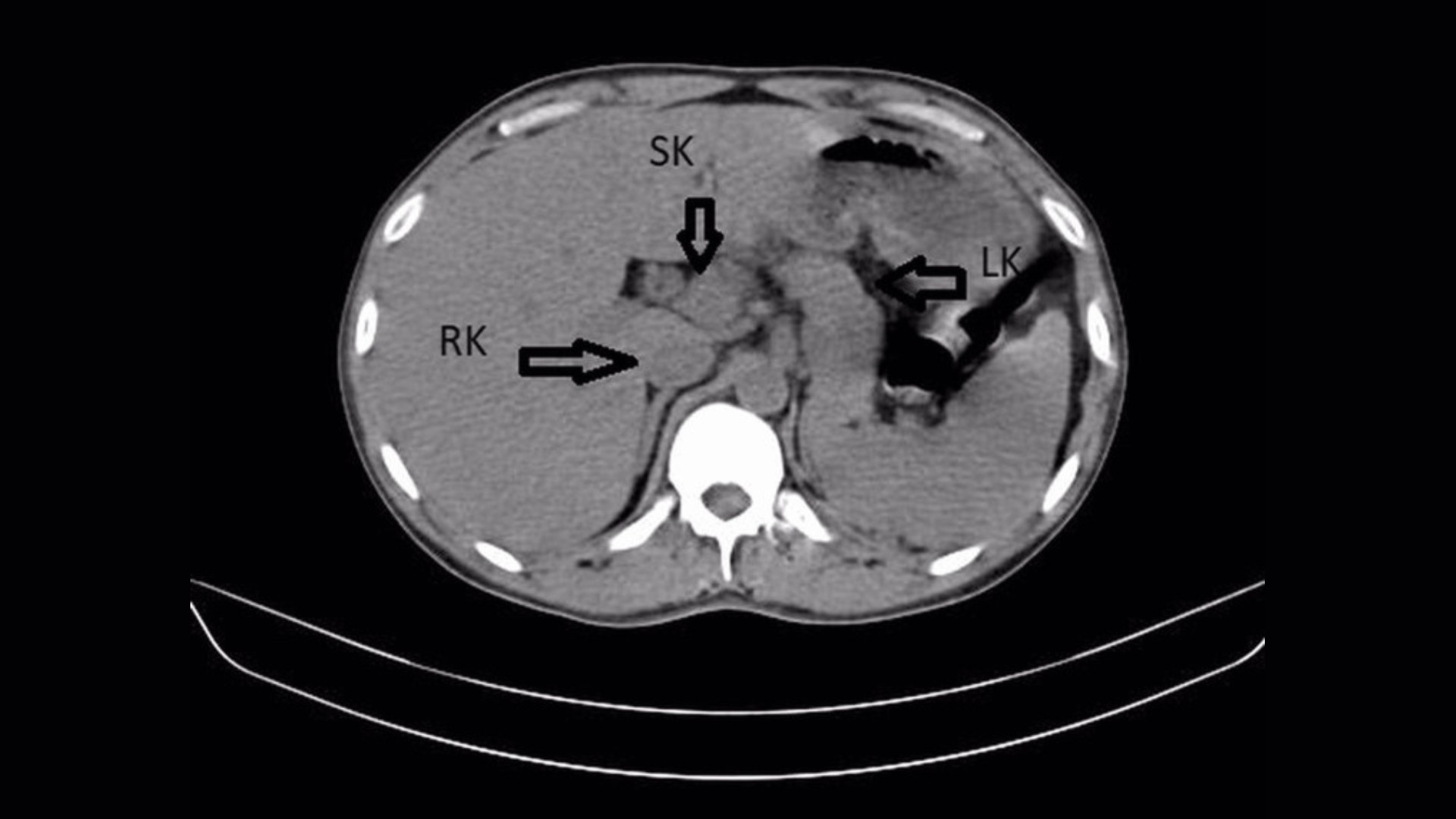
A 31-year-old man in Wardha, India, recently discovered he had an extra kidney while seeking medical attention for a severe urinary tract infection (UTI). The unexpected finding highlights the rarity of congenital anomalies and the importance of comprehensive diagnostic imaging.
Initial Symptoms and Diagnosis
The patient presented with five days of lower back pain, fever exceeding 102.2°F (39°C), and a burning sensation during urination. Initial examination revealed pain upon palpation of the right abdomen and cloudy urine, though vital signs were normal. Blood tests indicated elevated white blood cell counts, confirming an active infection caused by Klebsiella pneumoniae, a common UTI-inducing bacterium.
The Unexpected Discovery
Standard diagnostic procedures – an ultrasound and CT scan – revealed not only the infection but also a supernumerary kidney fused to his right kidney, forming a distinctive “horseshoe” shape. This congenital anomaly arises from abnormal cell division during fetal development, and while often asymptomatic, it can predispose individuals to kidney infections.
The patient’s kidneys were also found to have accumulations of calculus (mineral crystals), which can obstruct urine flow and exacerbate infection. The left kidney was particularly affected, with calculus buildup in the left ureter, the tube connecting the kidney to the bladder.
Treatment and Recovery
Doctors addressed the immediate infection by inserting a stent into the left ureter to aid drainage, coupled with intravenous antibiotics – piperacillin/tazobactam and levofloxacin – administered over 48 hours. The patient’s condition improved rapidly with hydration and medication. He was discharged with a follow-up appointment scheduled for stent removal and ongoing management of the kidney stones.
The Rarity of the Condition
Supernumerary kidneys are exceptionally rare, with fewer than 100 new cases reported annually worldwide. The “horseshoe” fusion configuration observed in this case is even less common, documented in only five prior scientific reports. While extra kidneys can exist as separate or loosely connected organs, this particular presentation underscores the diversity of human anatomical variation.
This case demonstrates the potential for unexpected discoveries during routine medical evaluations and the importance of advanced imaging techniques in uncovering rare anatomical anomalies. It also serves as a reminder that even seemingly straightforward infections can reveal underlying conditions previously unknown.


