
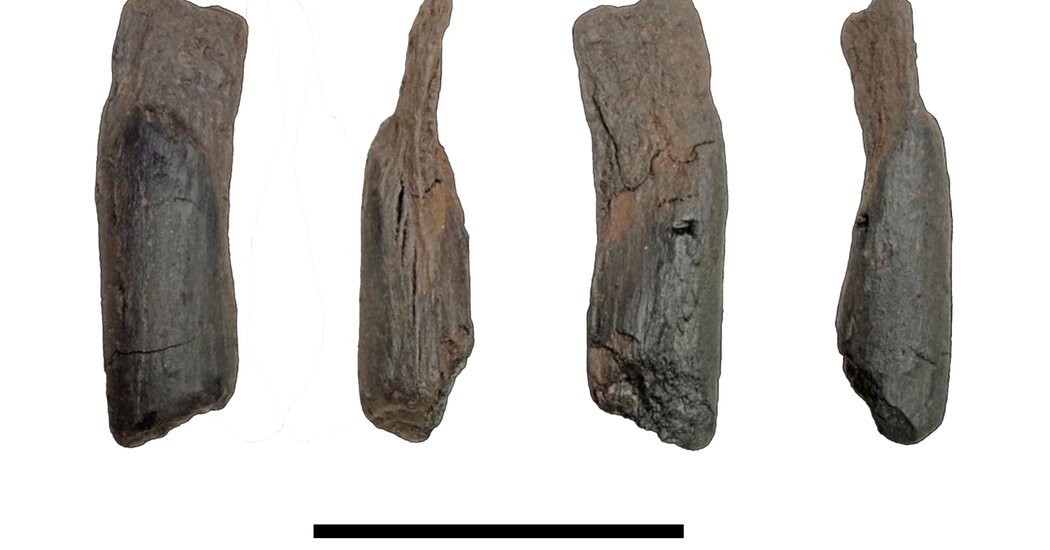
New archaeological evidence from Europe reveals that hominins—likely Neanderthals or their predecessors—were crafting tools from wood and bone hundreds of thousands of years before Homo sapiens arrived on the continent. The findings, detailed in two recent studies, challenge previous timelines for early human technological development.
Earlier Than Thought: Tools Found in Greece and England
Researchers have unearthed wooden tools dating back 430,000 years in southern Greece. These fragments, including a sharpened alder shard and a carved twig, represent the oldest known wooden tools ever discovered. Simultaneously, a 500,000-year-old hammer fashioned from elephant or mammoth bone was excavated in England.
These discoveries are significant because they prove early hominins had advanced skills in material processing long before modern humans evolved. Dr. Katerina Harvati, a lead author on the Greek study, explains that this demonstrates prehistoric intelligence was more sophisticated than previously assumed.
The Persistence of Early Hominins in Europe
The timeline is crucial: Homo sapiens emerged in Africa over 300,000 years ago, and the earliest evidence of them in Europe is only 210,000 years old. This means that other hominin species, such as Neanderthals or Homo heidelbergensis, occupied Europe for nearly a million years before our species even arrived. When Homo sapiens finally settled in Britain around 40,000 years ago, they were not the first intelligent humans on the land.
Why Wood and Bone Matter
Archaeological records often favor stone artifacts because they last longer. Organic materials like wood decay quickly, making preservation rare. The oldest evidence of intentional wood construction was found in 2019 in Zambia, where 476,000-year-old interlocking logs suggest early humans built structures.
The Greek site, Marathousa 1, provides a snapshot of the environment these hominins inhabited. Alongside the wooden tools, researchers found fossils of elephants, turtles, birds, rodents, and hippos—evidence of a rich ecosystem and complex hunting practices.
This discovery underscores that early humans were not merely surviving but actively shaping their environment with tools made from available materials.
The continued refinement of archaeological methods and new finds will undoubtedly rewrite the history of early human innovation. The evidence suggests that the story of human ingenuity began far earlier and with greater diversity than previously understood.