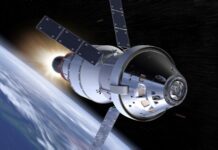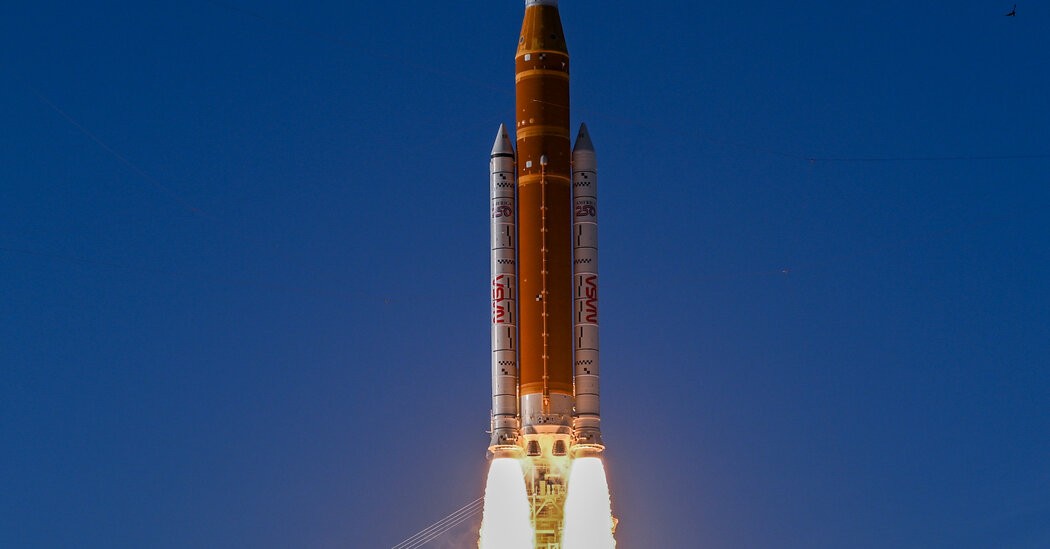
The Artemis II crew has initiated its journey toward the Moon, marking a pivotal step in NASA’s renewed lunar exploration program. At 7:49 p.m. Eastern time, the Orion spacecraft executed a critical engine burn, committing the four astronauts – three Americans and one Canadian – to a trajectory that will take them around the Moon and back to Earth over the next eight days. This mission isn’t about landing; it’s about testing systems and validating the hardware for future crewed lunar landings.
The Trans-Lunar Injection: A Flawless Burn
The engine burn, known as a trans-lunar injection, was described by NASA officials as “flawless,” accelerating the spacecraft with 6,000 pounds of thrust. This maneuver places Orion on a course dictated by orbital mechanics, propelling it toward the Moon without the need for further immediate adjustments. As Lori Glaze, acting associate administrator for NASA’s Exploration Systems Development Mission Directorate, explained, “From this point forward, the laws of orbital mechanics are going to carry our crew to the moon, around the far side and back to Earth.”
Mission Objectives: Beyond a Simple Flyby
The Artemis II mission isn’t just a scenic tour. The primary goal is to rigorously test the Orion spacecraft’s capabilities in deep space. This includes validating critical systems like life support (carbon dioxide filtering, temperature control) and practicing maneuvers essential for future lunar lander docking. As Howard Hu, who oversees the Orion spacecraft program, stated, the mission has already achieved its objectives for demonstrating the ability to dock with a lunar lander, which is a crucial step towards more ambitious lunar missions.
Life in Space: Adaptation and Endurance
The crew spent their first day in a higher-than-usual Earth orbit, conducting system checks aboard the spacecraft they’ve nicknamed “Integrity.” Life in space presents unique challenges. Without gravity, astronauts can work and even exercise in traditionally inaccessible spaces. The crew is utilizing a flywheel-based exercise device to maintain physical conditioning during the flight, demonstrating the adaptability required for extended space travel.
Crew Dynamics and Humor
The mission isn’t without its lighter moments. Astronauts are adapting to the close quarters, and even engaging in a playful, long-running inside joke involving hidden messages in photos and gifts. This underscores the psychological resilience required for long-duration missions.
Following the Mission: Transparency and Public Engagement
NASA is providing comprehensive coverage of Artemis II, streaming the mission on YouTube, X, and its website. While much of the feed will consist of exterior spacecraft views and audio commentary, it offers unprecedented access to this historic journey.
The Artemis II mission represents a calculated and crucial step toward sustained lunar exploration. The successful execution of this flight is a prerequisite for future missions that will ultimately return humans to the Moon’s surface, and potentially beyond.