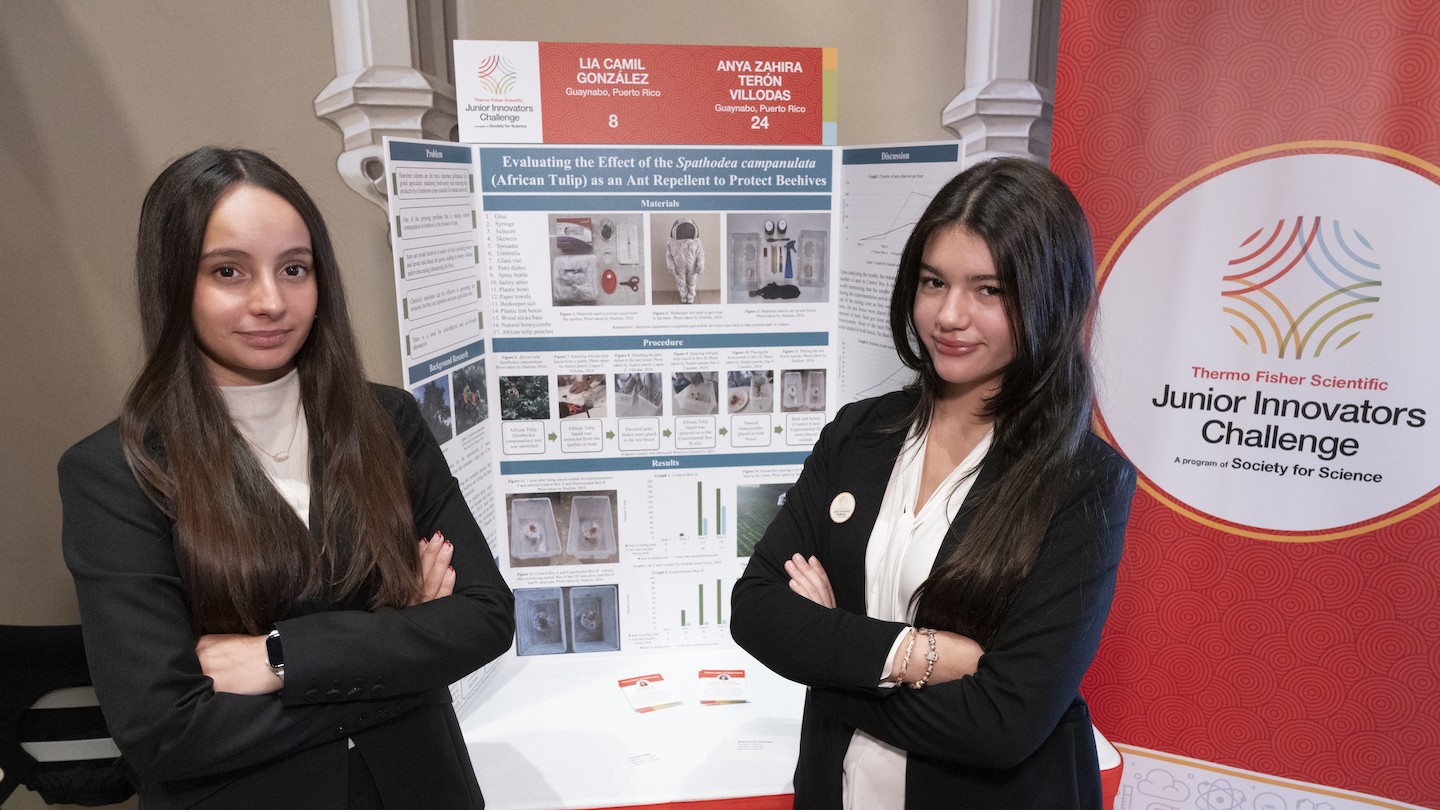
Two fourteen-year-old students from Puerto Rico, Anya Terón Villodas and Lia González, have discovered a potential natural solution to protect honeybees from predatory ants. Their research indicates that liquid extracted from the buds of African tulip trees effectively repels – and kills – ants that raid beehives for food.
The Problem: Ants Threaten Bee Colonies
Honeybees are vital for pollination and food production. However, their hives are vulnerable to invasions by ants, which steal honey and disrupt the colony. Current pest control methods can be harmful to the bees themselves. The need for a natural, bee-safe deterrent is critical.
The Experiment: A Clear Outcome
Anya and Lia constructed two model beehives filled with honeycombs. One hive was sprayed with African tulip tree extract, while the other remained untreated. After just four hours, the untreated hive contained 183 living ants. The treated hive held only 91 ants – all deceased. This stark difference demonstrates the extract’s effectiveness.
Context: Invasive Species, Unexpected Benefit
The African tulip tree is an invasive species in Puerto Rico. While often considered a nuisance, the girls’ work reveals an unexpected benefit to its presence. Their findings suggest a cost-effective way to protect hives without harming bees. The team found that bees moved into the repellant-sprayed hive, confirming that the extract does not harm the colony.
The Bigger Picture: Student Innovation
Anya and Lia conducted this research as eighth graders at Colegio Rosa-Bell. Their work earned them recognition as finalists in the 2025 Thermo Fisher Scientific Junior Innovators Challenge. Their success highlights the potential of young scientists to address real-world problems with creative solutions.
Future Research: Real-World Application
The next step, according to Anya, is to test the extract’s effectiveness on a live beehive. The team is also expanding their research into skincare, with plans to develop an anti-acne face mask.
“Be unique. Be fun. Go crazy… Do something that maybe isn’t what a lot of people are doing.”
Their work underscores the importance of curiosity-driven research and the value of unconventional thinking in scientific discovery.