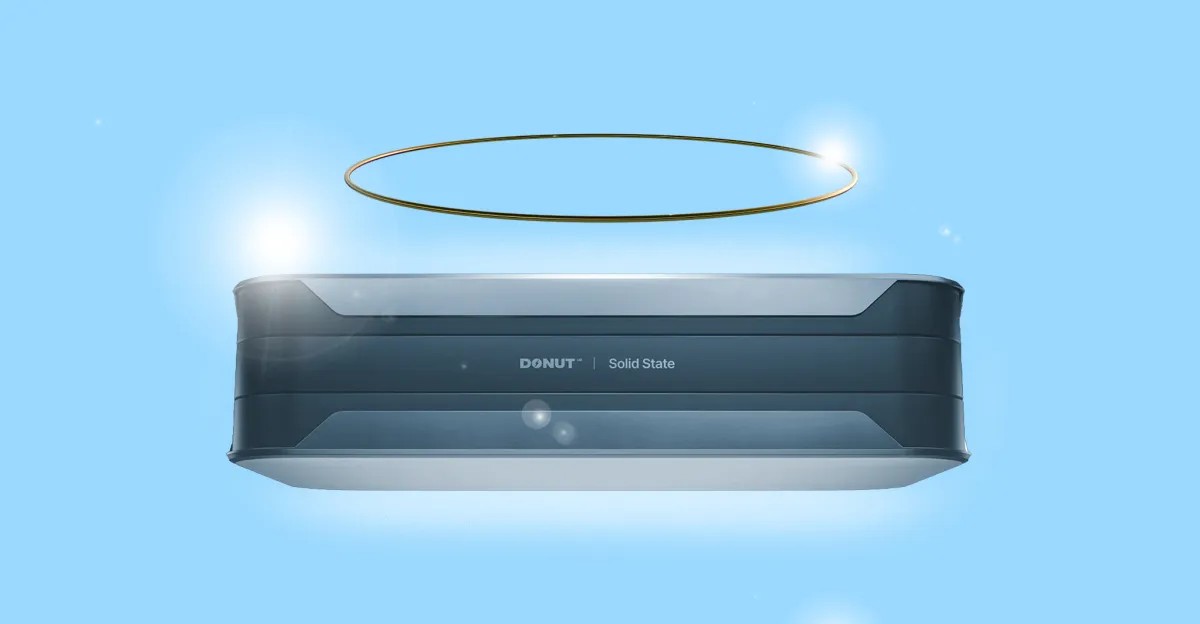
The pursuit of the “Holy Grail” of energy storage—the solid-state battery—has long been a saga of grand promises and perpetual delays. Now, a relatively unknown Finnish startup called Donut Lab has stepped into the spotlight, claiming it has finally cracked the code. However, as the company prepares for production later this year, the scientific community remains deeply skeptical.
The Bold Claims of Donut Lab
Donut Lab, a spinoff of Verge Motorcycles, has made a series of staggering assertions regarding its new technology. If their data holds true, the implications for the electric vehicle (EV) industry would be revolutionary. Their claims include:
- High Energy Density: A reported 400Wh/kg, roughly double that of standard lithium-iron phosphate (LFP) batteries.
- Ultra-Fast Charging: The ability to reach a full charge in just five minutes.
- Extreme Durability: A theoretical lifespan of 100,000 charging cycles.
- Resilience: Stable performance in extreme temperatures ranging from -30°C to 100°C.
- Safety and Sustainability: A design that uses no flammable liquid electrolytes, rare earth elements, or precious metals.
Why This Matters: The “Holy Grail” Explained
To understand why the industry is so obsessed with solid-state technology, one must look at the limitations of current lithium-ion batteries.
Standard batteries rely on liquid electrolytes to move ions. This liquid is flammable; if a battery is damaged or overheats, it can lead to “thermal runaway,” causing intense fires. Furthermore, liquid electrolytes require complex cooling systems, which take up valuable space in an EV.
Solid-state batteries replace this liquid with a solid material. This change promises a “triple threat” of benefits:
1. Increased Safety: Solid materials are much less likely to catch fire.
2. Higher Density: Without the need for heavy cooling systems, manufacturers can pack more energy into a smaller, lighter footprint.
3. Faster Charging: Solid electrolytes can theoretically handle higher currents without the same risks of overheating.
The Credibility Gap
Despite these promises, Donut Lab faces a massive uphill battle regarding its reputation. Unlike industry titans like Toyota or Tesla, Donut Lab emerged without a visible roster of renowned researchers or a deep history of published academic papers.
While the startup launched a website (idonutbelieve.com ) to host third-party test results from the VTT Technical Research Centre of Finland, experts note that significant gaps remain. Even after these tests, the company has yet to provide definitive proof regarding its specific chemistry, actual density, or verified cycle life.
In fact, Donut Lab CEO Marko Lehtimäki recently clarified that the “100,000 cycles” figure is a design target rather than a verified experimental result. This distinction is crucial: in engineering, a goal is not the same as a proven reality.
The Technical Hurdle: The Dendrite Problem
Even if Donut Lab’s claims are valid, the entire solid-state industry faces a common enemy: dendrites.
Dendrites are microscopic, metallic, needle-like structures that grow inside a battery during charging. Much like tree roots cracking a sidewalk, these dendrites can eventually pierce the internal separators, causing a short circuit and battery failure. Solving this “dendrite problem” has been the primary roadblock in moving solid-state technology from the lab to the assembly line for decades.
A Global Arms Race
Donut Lab is not racing alone. The competition is global and intense:
- China: Leading the charge in scale, companies like CATL are reportedly aiming for small-scale production of high-density solid-state batteries by 2027. China’s dominance in the current EV supply chain gives them a massive head start in manufacturing maturity.
- Japan: Toyota has announced plans to integrate all-solid-state batteries into vehicles by 2027 or 2028.
- Europe & USA: Companies like Mercedes-Benz (partnering with startup Factorial) and Honda are pursuing different chemical paths, such as sulfur-based electrolytes, to reach the same goal.
“The companies probably have a ways to go,” notes Alevtina Smirnova of the NSF Industry-University Cooperative Research Center, highlighting the widening gap between Western research and Chinese manufacturing momentum.
Conclusion
While Donut Lab’s claims could signal a paradigm shift in energy storage, the lack of transparent, peer-reviewed data means their “breakthrough” remains unproven. The race for the solid-state battery is no longer just a scientific challenge; it is a high-stakes geopolitical battle for the future of global transportation.