A new study published in Environmental Research Letters reveals a concerning potential side effect of stratospheric aerosol intervention (SAI), a proposed technique to cool the planet: reduced protein content in major food crops. Scientists are now grappling with the question of whether the benefits of SAI outweigh the risks, including this potentially significant impact on global nutrition.
Understanding Stratospheric Aerosol Intervention (SAI)
SAI, sometimes referred to as solar geoengineering, aims to mimic the cooling effect of volcanic eruptions. The concept involves releasing sulfur dioxide into the stratosphere, where it transforms into microscopic sulfuric acid particles. These particles form a thin layer that reflects a small portion of incoming sunlight, effectively lowering global temperatures. This approach is seen by some as a potential tool to mitigate the worst impacts of climate change, particularly if emissions reductions prove insufficient.
Modeling the Impact on Global Crops
Researchers at Rutgers University used sophisticated climate and crop models to examine how SAI would impact the protein levels in four key crops: maize (corn), rice, wheat, and soybeans. These crops are the primary source of carbohydrates for a large portion of the world’s population, but they also provide a significant share of their dietary protein.
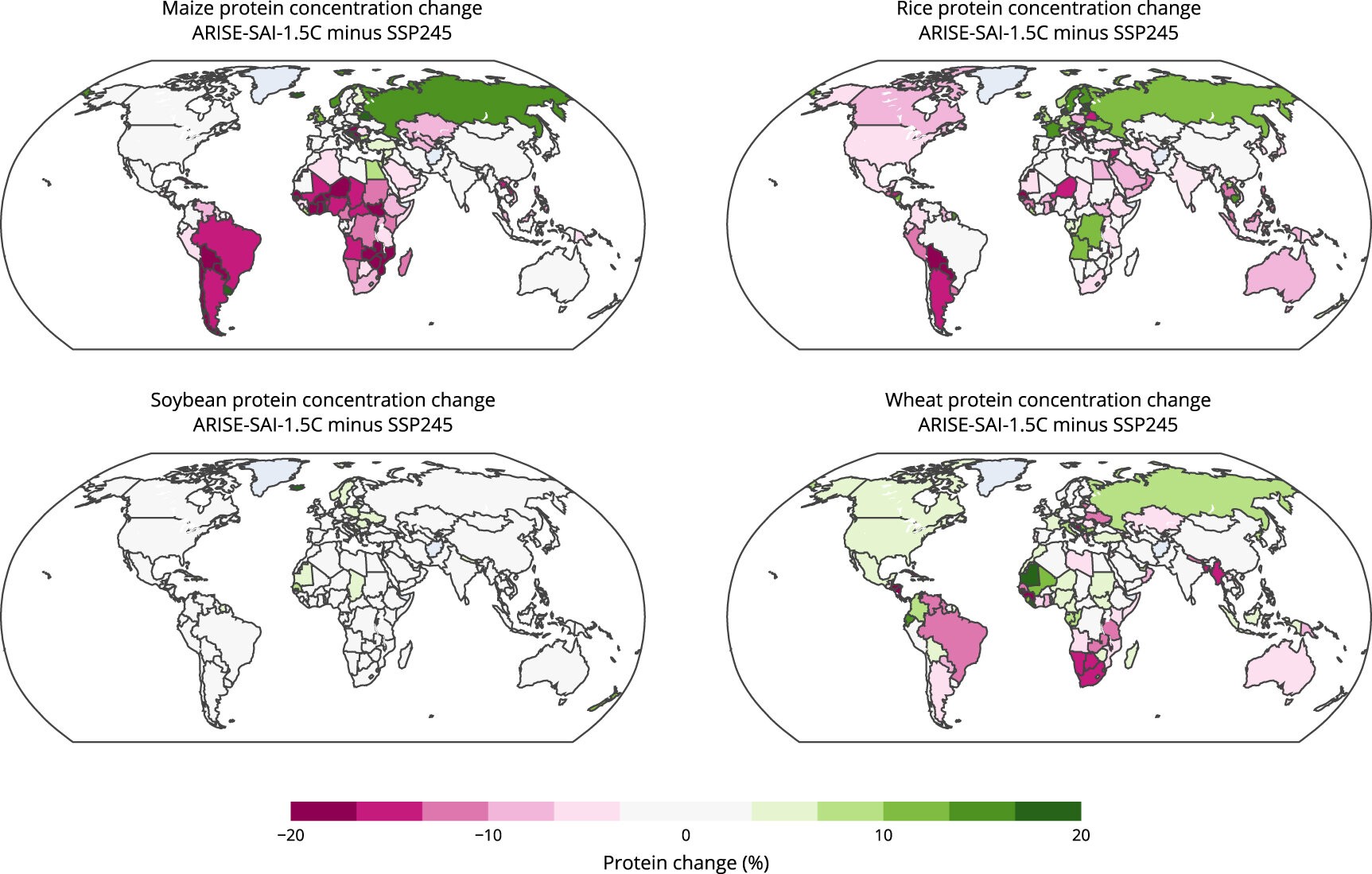
The study found a complex interaction between rising carbon dioxide levels, temperature, and crop nutrition. While increased CO2 concentrations generally decrease protein content in crops, higher temperatures tend to increase it. SAI would counteract the warming effect, meaning the negative impact of increased CO2 on protein levels would not be offset, leading to an overall reduction in protein.
Uneven Impacts and Regional Vulnerabilities
The models indicate that SAI’s effects on crop protein would vary significantly across different regions. The most substantial declines are projected in nations already facing malnutrition and protein deficiencies, potentially exacerbating existing food security challenges. This localized effect highlights the uneven distribution of risks and benefits associated with SAI.
SAI would not perfectly counteract the impacts of climate change; it would instead create a novel climate where the relationship between CO2 and surface temperatures is decoupled. This would likely reduce the protein content of crops, and impact plant ecology in other ways we do not yet fully understand. – Brendan Clark, former doctoral student, Rutgers University
The Urgent Need for Further Research
The study’s authors stress the critical need for more field studies and model refinement to better understand the potential consequences of SAI. They caution that deploying SAI without a thorough assessment of its impacts could have unintended and potentially harmful repercussions on global food systems. The core question they pose is whether the prospect of reduced global warming justifies accepting these potential trade-offs.
Are we willing to live with all these potential impacts to have less global warming? That’s the question we’re trying to ask here. – Alan Robock, Distinguished Professor, Rutgers University
The research team, which included scientists from Cornell University, NASA, Columbia University, and the National Center for Atmospheric Research, underscores the complexity of geoengineering and the need for a rigorous, data-driven approach to decision-making. It’s clear that any consideration of SAI must factor in not just its potential to cool the planet, but also its potential effects on essential food crops and the populations that rely on them for sustenance