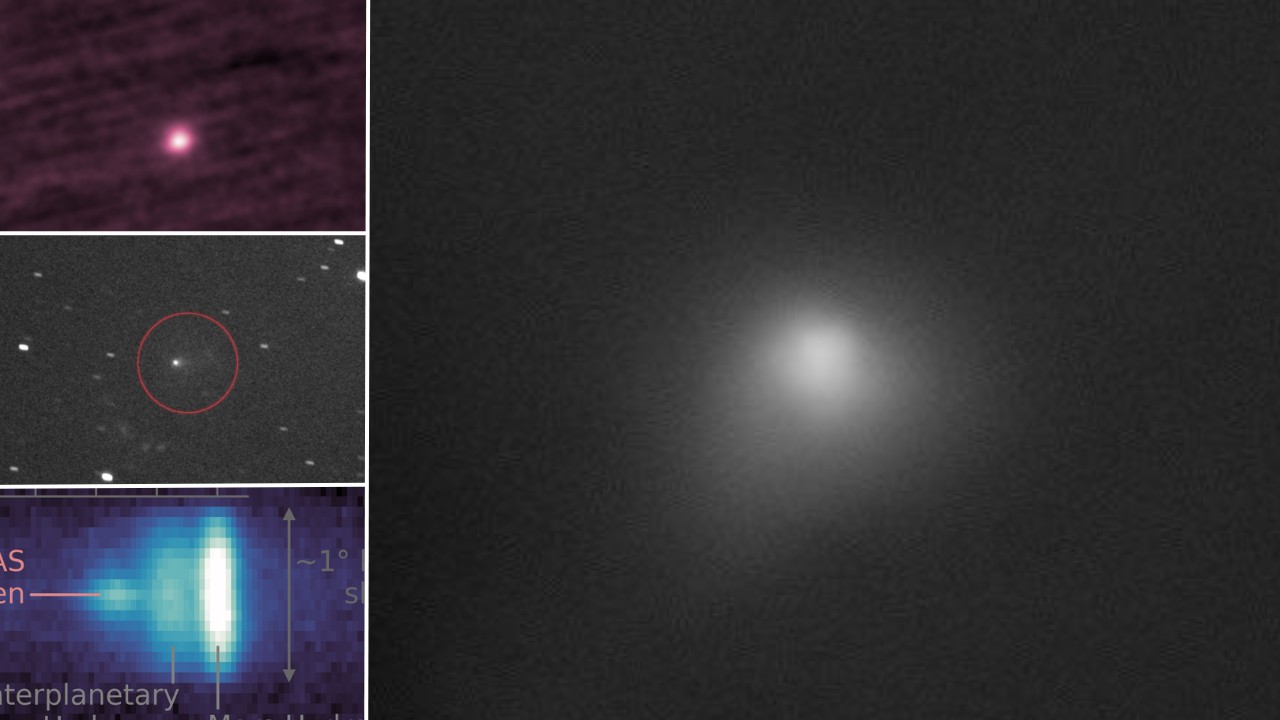
NASA has released a wealth of new images and data on the interstellar comet 3I/ATLAS, a rare visitor from outside our solar system. The object, only the third confirmed interstellar object ever detected, has been observed by a remarkable 15 different NASA spacecraft, including the James Webb Space Telescope, Mars orbiters, and even probes en route to other destinations. The coordinated effort underscores the scientific community’s excitement over this unique opportunity to study material from another star system.
What Makes 3I/ATLAS Special?
The comet’s behavior is distinctly cometary—shedding dust and gas as it approaches the sun—but its origin is what truly sets it apart. Scientists confirm it is not an alien spacecraft, as some online speculation has suggested. Instead, it represents a window into the composition of ancient stellar systems, potentially far older than our own. This makes 3I/ATLAS a unique chance to compare the building blocks of other solar systems with our own.
“It’s a rare opportunity to compare ancient dust from a distant solar system to that from our own,” said Shawn Domagal-Goldman, acting director of NASA’s Astrophysics Division.
Multi-Spacecraft Observations: A Comprehensive View
The sheer volume of data collected is unprecedented. The Mars Reconnaissance Orbiter (MRO) captured images showing the comet as a fuzzy, icy ball shedding dust. Meanwhile, the James Webb Space Telescope (JWST), combined with data from SPHEREx, detected high levels of carbon dioxide and water ice in the comet’s coma – the cloud of gas and dust surrounding it. Interestingly, the comet is emitting more carbon dioxide than water, a deviation from typical cometary behavior.
The strategic positioning of NASA’s fleet has been crucial. Because Earth was positioned unfavorably for optimal viewing, Mars-based assets and probes farther from the sun were able to capture critical data, including backlit views of the comet’s tail. Missions like Psyche and Lucy, en route to other targets, opportunistically gathered images as 3I/ATLAS passed within range.
Unexpected Findings: Nickel Vapor and Planetary Defense Implications
The comet has already yielded some surprises. Researchers observed a puzzling amount of nickel vapor emitting from the comet even at great distances from the sun, where such evaporation is highly unusual. Furthermore, the data collected could indirectly enhance planetary defense strategies. By accurately tracking 3I/ATLAS’ trajectory, scientists can refine models for predicting and potentially mitigating threats from other space objects.
The Future of 3I/ATLAS Research
While its exact size remains uncertain, ranging from thousands of feet to miles in diameter, the comet’s journey presents enduring questions. Determining its birthplace is a key challenge, given the galactic orbit of stars. The possibility that 3I/ATLAS originated in a solar system older than our own is particularly intriguing.
As the comet departs our solar system, JWST will likely retain the last clear view thanks to its deep-space observation capabilities. The wealth of data collected will fuel future research for years to come, helping scientists decode the conditions that give rise to comets like 3I/ATLAS and better understand the diversity of planetary systems beyond our own.
Ultimately, the study of 3I/ATLAS is not just about one comet; it’s about unraveling the mysteries of interstellar space and the potential for life-sustaining environments elsewhere in the galaxy.