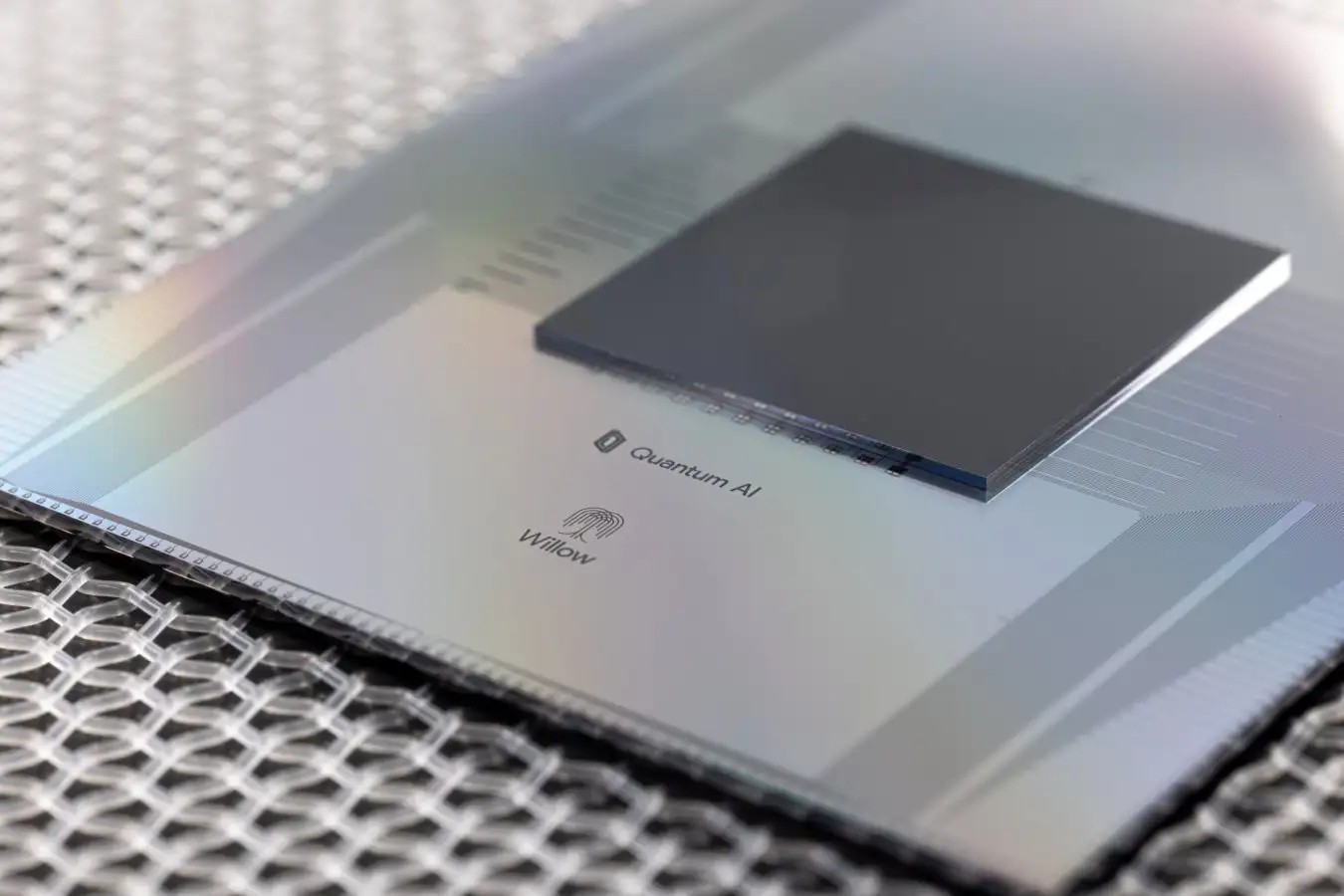
Researchers at Google Quantum AI have achieved a significant step forward, leveraging their Willow quantum computer to enhance the interpretation of Nuclear Magnetic Resonance (NMR) data. This widely used technique in chemistry and biology is crucial for understanding molecular details, and Google’s work suggests quantum computers could soon provide valuable assistance in this field.
Why This Matters
While quantum computers are best known for their potential to break modern cryptography—though current devices aren’t powerful enough to do so—they also offer promise in accelerating drug discovery and material science. These fields inherently involve complex quantum phenomena, making them well-suited for quantum computation. Google’s latest demonstration highlights how quantum computers can effectively “speak the same language as nature,” potentially revolutionizing molecular analysis.
Quantum Echoes and NMR: A Novel Approach
The team focused on a computational protocol called Quantum Echoes, which builds on a concept similar to the “butterfly effect.” This effect describes how a small change in one part of a system can trigger large consequences elsewhere. Researchers used this principle within Willow, utilizing 103 qubits to simulate molecular behavior.
How It Works: Simulating Molecular Perturbations
The process involves a series of steps:
- Quantum State Manipulation: Researchers initially apply a specific sequence of operations to the qubits, altering their quantum states in a controlled manner.
- Controlled Perturbation: A single qubit is then deliberately perturbed, acting as a “quantum butterfly.”
- Reversal and Measurement: The original sequence of operations is applied in reverse, and the resulting quantum properties of the qubits are measured.
- Mathematical Analysis: Analyzing these quantum properties provides insights into the entire system, including details about the molecule’s structure.
This approach mirrors the NMR process used in labs, which involves nudging molecules with electromagnetic waves and analyzing the reactions to determine the relative positions of atoms—essentially acting as a “molecular ruler.” By emulating this process with qubits, researchers can potentially “see between atoms” that are farther apart.
Performance and Potential
The team estimates that running a similar protocol on a conventional supercomputer would take roughly 13,000 times longer. Moreover, the ability to achieve the same results on two different quantum computers demonstrates the reliability and consistency of the Quantum Echoes protocol. This improvement is largely due to enhancements in Willow’s hardware, specifically a reduction in qubit error rates.
Current Limitations and Future Prospects
While promising, the team’s work is still preliminary. Current experiments only utilize up to 15 qubits and the results can still be replicated using conventional methods. Moreover, the results haven’t undergone a formal peer review process.
Experts agree that this application of Quantum Echoes holds considerable promise, although its usefulness is currently limited to specialized biological studies. Creating a link between established techniques like NMR and quantum computations is an important step forward. However, continued progress requires addressing limitations and demonstrating a clear advantage over existing methods.
Researchers are focused on reducing qubit error rates and increasing the number of qubits used in the protocol, enabling the analysis of progressively larger and more complex molecules. The ultimate goal is to make this technique a valuable tool for scientists across various fields.
The question of molecular structure determination is an extremely important and relevant one. Creating a connection between an established technique like NMR and calculations performed on a quantum computer is an important step, but for the time being, the usefulness of the technique would probably be limited to highly specialised studies in biology. — Keith Fratus, HQS Quantum Simulations
The pursuit of quantum computer applications continues, and while Quantum Echoes on Willow is an impressive experimental demonstration, its broad use hinges on overcoming current limitations and ultimately proving its superiority over conventional methods. Until then, it remains a valuable tool for physics theorists involved in the fundamental study of quantum systems.