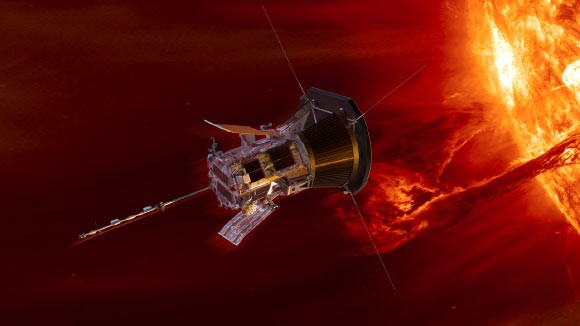
New data from NASA’s Parker Solar Probe reveal that the Sun’s magnetic reconnection – the process that drives solar flares and coronal mass ejections – is far more complex than previously understood. The findings suggest that protons and heavier ions are accelerated differently during these events, leading to a chaotic energy distribution that challenges existing space weather predictions.
The Problem with Current Models
For years, scientists assumed that all charged particles (protons, heavy ions) behave similarly when energized by magnetic reconnection. This assumption simplifies models of space weather, which is the impact of solar events on Earth’s environment. However, the latest measurements from the Parker Solar Probe show clear differences in how these particles are accelerated and dispersed.
The key takeaway: Current models are oversimplified and need to account for these divergent behaviors. This matters because accurate space weather forecasting is critical for protecting satellites, power grids, and communication systems.
How Particles Behave Differently
The new data demonstrates that heavy ions accelerate in a focused, beam-like manner. Think of it like a laser: the energy is concentrated in a tight direction. Protons, on the other hand, generate waves that scatter subsequent particles, creating a wider, dispersed pattern – more like a flashlight beam. This scattering effect means protons are less likely to travel in a straight line after being accelerated.
“Protons generate waves that scatter them more efficiently, while the heavy ions stay beam-like and retain their accelerated spectral shapes.” – Dr. Mihir Desai, Southwest Research Institute and the University of Texas at San Antonio.
Why This Matters for Space Weather
Magnetic reconnection is fundamental to how the Sun releases energy. It’s a universal phenomenon found throughout the cosmos, from black holes to supernovae. By studying it in our own star, scientists gain insights into extreme physics elsewhere in the Universe.
The differing acceleration patterns mean that current space weather models may underestimate the intensity and spread of proton storms. This is because scattered protons are more likely to interact with Earth’s magnetic field, causing disruptions.
The Bigger Picture
The Sun’s “magnetic engine” is not a smooth, predictable machine. It’s messy, chaotic, and far more intricate than we imagined. This discovery highlights the need for more sophisticated models that capture the nuanced behavior of particles during magnetic reconnection.
Ultimately, understanding these processes is critical for mitigating the risks of space weather events. As Dr. Desai put it, the Sun is a “local, accessible laboratory” for high-energy physics, offering a unique opportunity to unravel the mysteries of the cosmos and protect our technological infrastructure.
The findings were published March 31 in the Astrophysical Journal Letters (M.I. Desai et al., 2026).