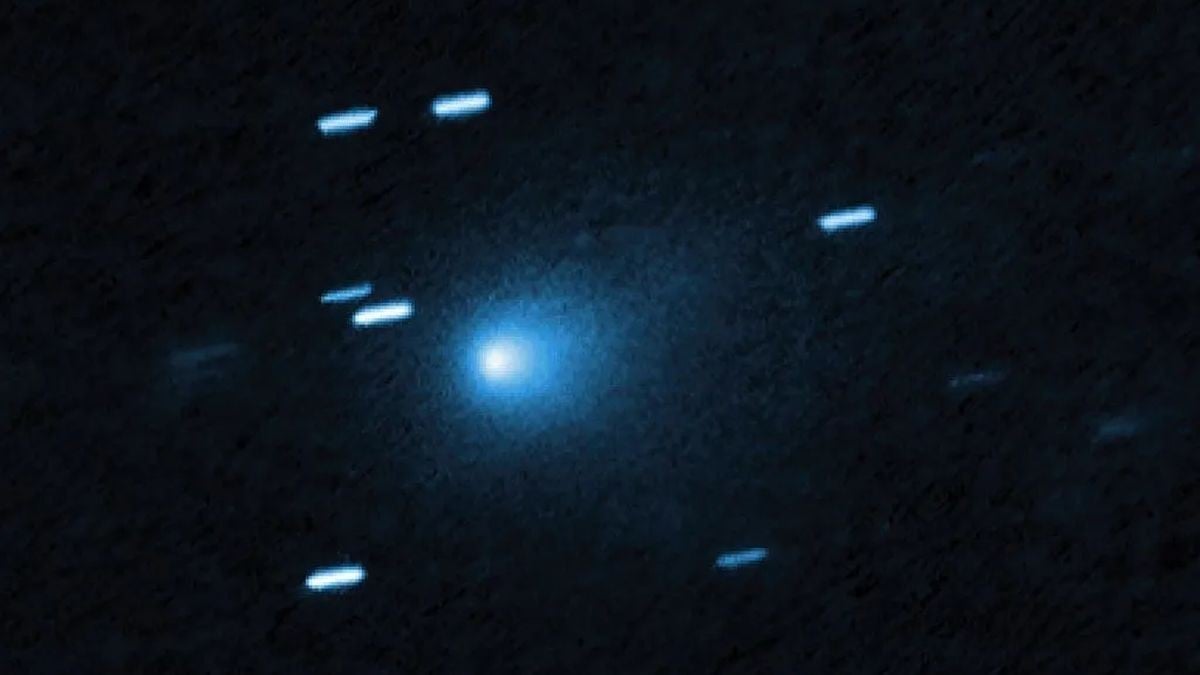
NASA will unveil a new collection of images of the interstellar comet 3I/ATLAS on Wednesday, November 19, at 20:00 UTC (15:00 EST). This event marks a significant moment in the study of objects originating from beyond our solar system, as 3I/ATLAS is only the third confirmed interstellar visitor detected to date.
What is 3I/ATLAS?
Discovered in July 2025, 3I/ATLAS quickly gained attention for its unusual trajectory. Unlike most comets, which originate from the distant Oort Cloud or Kuiper Belt, this object comes from interstellar space – meaning it formed around another star system. Its path through our solar system is a rare opportunity to study material that did not originate here.
Perihelion and Observations
The comet recently reached perihelion – its closest approach to the Sun – on October 29. While it was obscured from Earth-based observations at this time, instruments orbiting Mars captured crucial data. Comets are essentially icy bodies that vaporize as they approach the Sun, creating a coma (a hazy atmosphere) and often spectacular tails of gas and dust. Perihelion is when this activity reaches its peak.
NASA’s diverse fleet of telescopes, including those in Earth orbit and around Mars, were positioned to observe 3I/ATLAS throughout its journey. The agency’s coordinated effort ensures a comprehensive understanding of the comet’s behavior.
Upcoming Earth Approach
The comet will make its closest approach to Earth on December 19, passing within approximately 270 million kilometers (170 million miles). This proximity will offer further opportunities for ground-based observations, allowing astronomers to gather detailed data on its composition and structure.
The study of interstellar objects like 3I/ATLAS provides valuable insights into the formation of planetary systems beyond our own. By analyzing its properties, scientists hope to learn more about the environments where such objects originate.
The upcoming release of NASA’s latest images will undoubtedly shed new light on this fascinating visitor from another star