Click chemistry, a set of simple, reliable reactions developed in the early 2000s, has fundamentally changed how chemists build molecules. The concept, initially outlined by K. Barry Sharpless and colleagues in 2001, provides a fast, clean, and efficient way to join chemical components—akin to snapping Lego bricks together. This breakthrough earned Sharpless, Morten Meldal, and Carolyn Bertozzi the 2022 Nobel Prize in Chemistry.
The Core Idea: Efficiency Over Orthodoxy
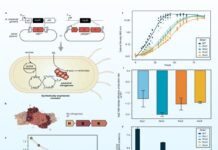
Traditional organic chemistry often involves complex reactions with low yields and difficult separations. Click chemistry sidesteps this by favoring bonds between carbon and heteroatoms (oxygen, nitrogen), rather than relying on the conventional, yet more challenging, carbon-carbon bond formation. The most famous example is the copper-catalyzed reaction that creates triazoles—stable rings of carbon and nitrogen—that readily attach to biological molecules.
This approach wasn’t just about speed; it was about reliability. As chemist Tom Brown of Oxford University puts it, “This was just a great idea.” The reactions work consistently in almost any solvent, making them highly adaptable for various chemical environments.
From Drugs to Biological Labeling: Expanding Applications
Sharpless’s initial work, independently discovered by Meldal at the University of Copenhagen, led to the synthesis of drugs like the anticonvulsant rufinamide. However, the true leap forward came with Carolyn Bertozzi’s development of a click reaction that functions without toxic catalysts.
This catalyst-free variant allowed for reactions inside living cells without disrupting biological processes. As Alison Hulme of the University of Edinburgh explains, Bertozzi’s work “brought small molecule chemistry to biologists in a way that doesn’t require a chemistry degree.” This opened doors for targeted labeling of proteins and other biological machinery, enabling detailed investigations of cellular functions.
The Legacy of Simplicity
Click chemistry’s impact extends beyond specific applications. It represents a paradigm shift: prioritizing simple, robust reactions over complex, inefficient ones. The Nobel Committee recognized this not just as a chemical achievement, but as a foundational change in how molecular construction is approached.
“Click chemistry exemplifies the power of elegant simplicity in solving complex problems,” said the Nobel Committee in 2022. “It has revolutionized fields ranging from drug discovery to materials science.”
The elegance of click chemistry lies in its accessibility and reliability, making it a cornerstone of modern chemical innovation.