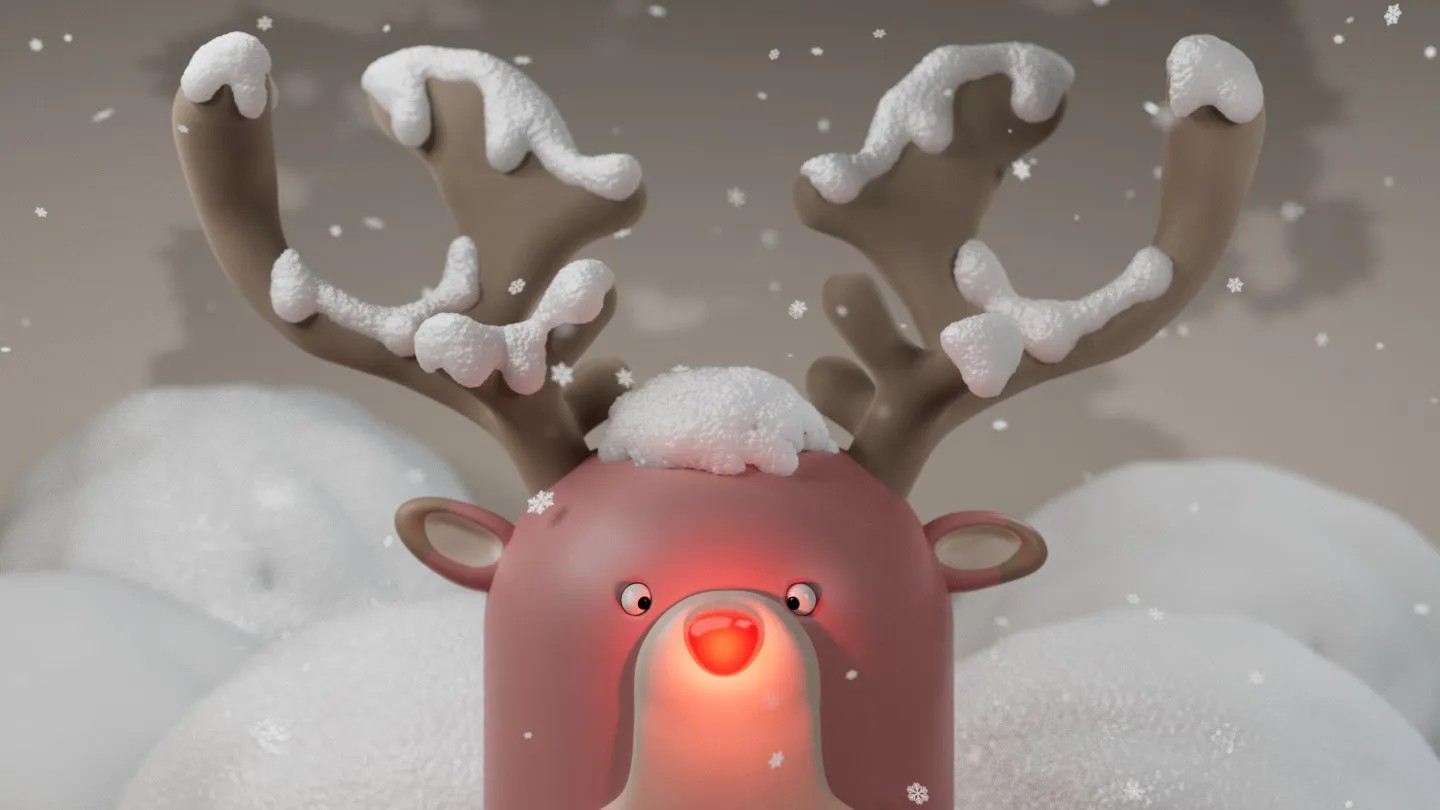
The enduring tale of Rudolph the Red-Nosed Reindeer sparks joy every holiday season. But beyond the catchy tune, could a glowing nose actually be possible? The answer, surprisingly, leans toward yes, with a healthy dose of scientific explanation. While reindeer don’t naturally bioluminesce, the underlying principles aren’t as fantastical as one might think.
Bioluminescence: Nature’s Glow-in-the-Dark
Many creatures, particularly in the ocean depths, generate light through bioluminescence. The process involves two key components: a light-emitting molecule called luciferin and an enzyme, luciferase. When combined with oxygen, they produce light. This phenomenon is widespread, with at least 100 evolutionary occurrences across the tree of life—from anglerfish to fireflies, and even some deep-sea organisms that glow red. The odds of it happening in reindeer are slim, as no mammals currently exhibit this trait, but evolution is unpredictable.
Why Red? The Physics of Foggy Nights
If Rudolph were to glow, red would be the most practical color. Red light has the longest wavelengths and is least susceptible to scattering by airborne water droplets. This means Rudolph’s nose would cut through fog far more effectively than any other color. However, there’s a twist: to an observer on the ground, the nose might not appear red at all.
Relativistic Effects: The Speed of Santa’s Sleigh
According to radio astronomer Laura Driessen, if Santa’s sleigh travels at even 10% the speed of light, the Doppler effect would kick in. As Rudolph approaches, his nose would appear blueshifted, shifting toward orange. But as he flies away, the light would redshift toward an almost black, deep crimson. Even the sleigh and reindeer themselves would undergo color shifts: brown fur and wood turning greenish when approaching, fading into infrared as they recede.
The Energy Cost of a Supercharged Snout
Maintaining such a bright, fast-moving glow would demand enormous energy. Evolutionary biologist Nathaniel Dominy suggests Rudolph would need maximum fuel: “Sugary foods.” So, leaving out cookies isn’t just a tradition—it’s potentially vital for powering Santa’s lead reindeer through the night.
In conclusion, while Rudolph’s glowing nose is a festive myth, the science behind it isn’t entirely far-fetched. Bioluminescence, relativistic effects, and the physics of light scattering all suggest that such a phenomenon, while improbable, isn’t entirely impossible—making the legend a little brighter with scientific curiosity.