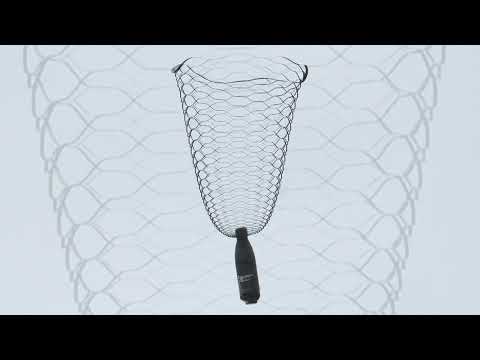
The technology behind modern parachutes, crucial for deploying everything from spacecraft heat shields to slowing drones, owes a surprising debt to kirigami, an ancient Japanese art of folding and cutting paper. This isn’t a poetic coincidence; the precise geometry of how these parachutes deploy is directly inspired by the mathematical principles embedded in this centuries-old craft.
How Kirigami Principles Apply to Space Tech
Kirigami differs from origami (which only folds) by incorporating cuts into the design. These cuts aren’t random; they allow materials to unfold in highly controlled ways, maximizing surface area with minimal weight. This is vital for parachutes, where the goal is to create drag —the resistance of air or fluid slowing down a moving object—as efficiently as possible.
Engineers, particularly mechanical engineers, apply these principles when designing deployable structures for space missions. A prime example is the heat shield for the Perseverance rover on Mars. This shield used a kirigami-inspired design to unfurl into a massive, heat-resistant barrier, protecting the rover during atmospheric entry. The same idea applies to slowing down payloads ejected from satellites or deploying braking mechanisms on high-speed drones.
The Scale of This Technology
To illustrate the impact, consider how much surface area a kirigami-inspired parachute needs to generate enough drag. A standard American football field is about 360 feet long, and this is often used as a relatable size reference. While parachutes aren’t that big, the principle is the same: maximizing surface area to slow down an object. The advantage lies in the fact that these designs can be packed into incredibly compact spaces, then deployed rapidly when needed.
The materials used can range from high-strength fabric to specialized plastic polymers designed to withstand extreme temperatures. The key isn’t just the material itself, but how it’s engineered to unfold predictably. The folding patterns are designed using physics and math to ensure that the device works as intended, whether it’s slowing a spacecraft descending through a planet’s atmosphere or stabilizing a drone.
Why This Matters
The story of kirigami and parachutes highlights how ancient techniques can become cutting-edge tech. It’s a reminder that innovation often comes from unexpected places. The principles of folding and cutting aren’t just aesthetic; they’re deeply rooted in geometry, physics, and the fundamental problem of controlling force and motion.
“The elegance of kirigami lies in its simplicity,” says [hypothetical engineer]. “It’s a way to achieve complex deployments with minimal moving parts, which is crucial in environments where reliability is paramount.”
This interdisciplinary approach is likely to become even more prevalent as engineers continue to seek lightweight, efficient solutions for space exploration, robotics, and beyond.