


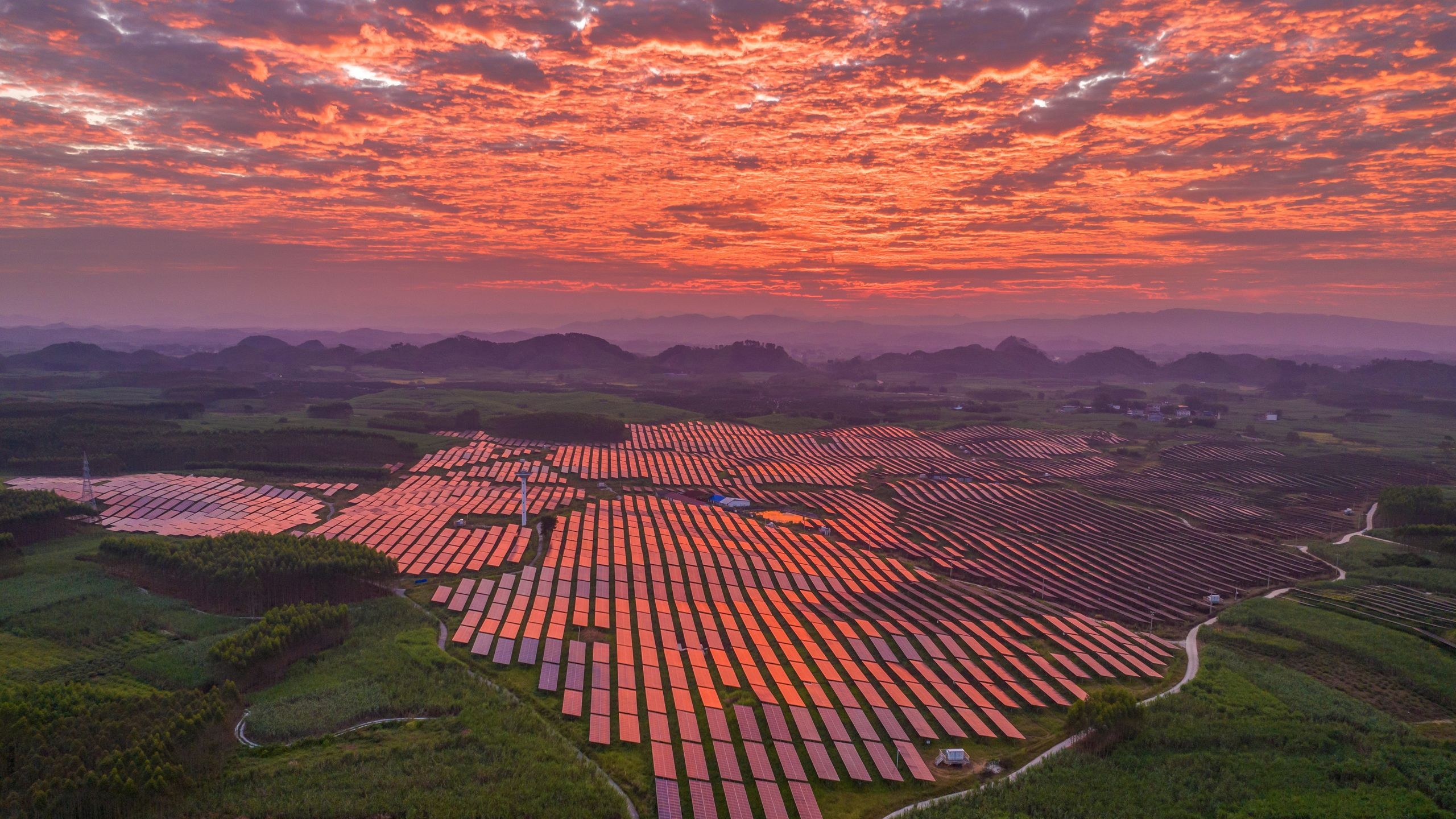
China, the world’s largest emitter of greenhouse gases, may have reached a critical turning point in its carbon emissions sooner than anticipated. For 21 consecutive months, emissions have either flatlined or fallen – a record not driven by economic slowdown, but by structural shifts within the Chinese economy. This development has significant implications for global efforts to curb climate change, though the long-term sustainability of this trend remains uncertain.
Emissions Decline Confirmed
According to a new analysis by the Finland-based Centre for Research on Energy and Clean Air (CREA), China’s carbon dioxide (CO2) emissions decreased by 1% in the final quarter of 2025 and by 0.3% over the entire year. This keeps emissions just below peak levels reached in May 2024. The decline spans almost two years, marking the longest sustained period of emission reduction without coinciding with economic recession.
This matters because China accounts for over one-third of global CO2 emissions. Any significant change in its trajectory has ripple effects across international climate targets.
Sectoral Shifts Driving the Trend
The decrease is broad-based, with notable reductions in key sectors: transport (-3%), power (-1.5%), and building materials (-7%). The chemicals industry remains an exception, experiencing a 12% emissions increase.
“CO2 emissions fell year-on-year in almost all major sectors in 2025,” states Lauri Myllyvirta, CREA’s lead author.
China’s carbon intensity—emissions per unit of GDP—fell by only 12% during 2020-2025, falling short of the 18% official target. To meet its Paris Agreement commitments, the country must cut intensity by approximately 23% over the next five years.
Renewable Energy Expansion and Demand Shifts
The plateau is driven by several factors: rapid development and deployment of renewable energy technologies, increasing electrification of transport, and slowing demand for cement and steel. China dominates global production of both materials (48% for cement, 54% for steel), each contributing roughly 15% to the country’s total greenhouse gas emissions.
Despite a 520 terawatt-hour (TWh) increase in overall power consumption in 2025, clean energy production kept pace. Solar output rose by 43%, wind by 14%, and nuclear by 8%, collectively adding 530 TWh of new clean power. Energy storage capacity also grew by a record 75 gigawatts (GW), outpacing the 55 GW growth in demand.
The Five-Year Plan: A Critical Decision Point
The sustainability of this emissions plateau depends heavily on decisions within China’s next five-year plan, set to be revealed in March. Current ambiguity in CCP planning suggests absolute emission reductions may not be prioritized until after 2030.
The CREA analysis warns that allowing coal consumption in the power sector to grow beyond overall peak levels could slow down the current rapid expansion of clean energy. However, clean energy technologies already drove over a third of China’s economic growth in 2025.
China is also investing in ecological engineering projects, such as tree-planting efforts around the Taklamakan Desert, turning one of the world’s driest deserts into a carbon sink.
Conclusion
China’s emissions plateau represents a significant, though tentative, step toward curbing global warming. The trend is driven by aggressive investments in clean energy and shifts in industrial demand. Whether this decline is sustained or reversed will depend on policy decisions made in the coming months, making China’s next five-year plan a crucial factor in the global fight against climate change.


