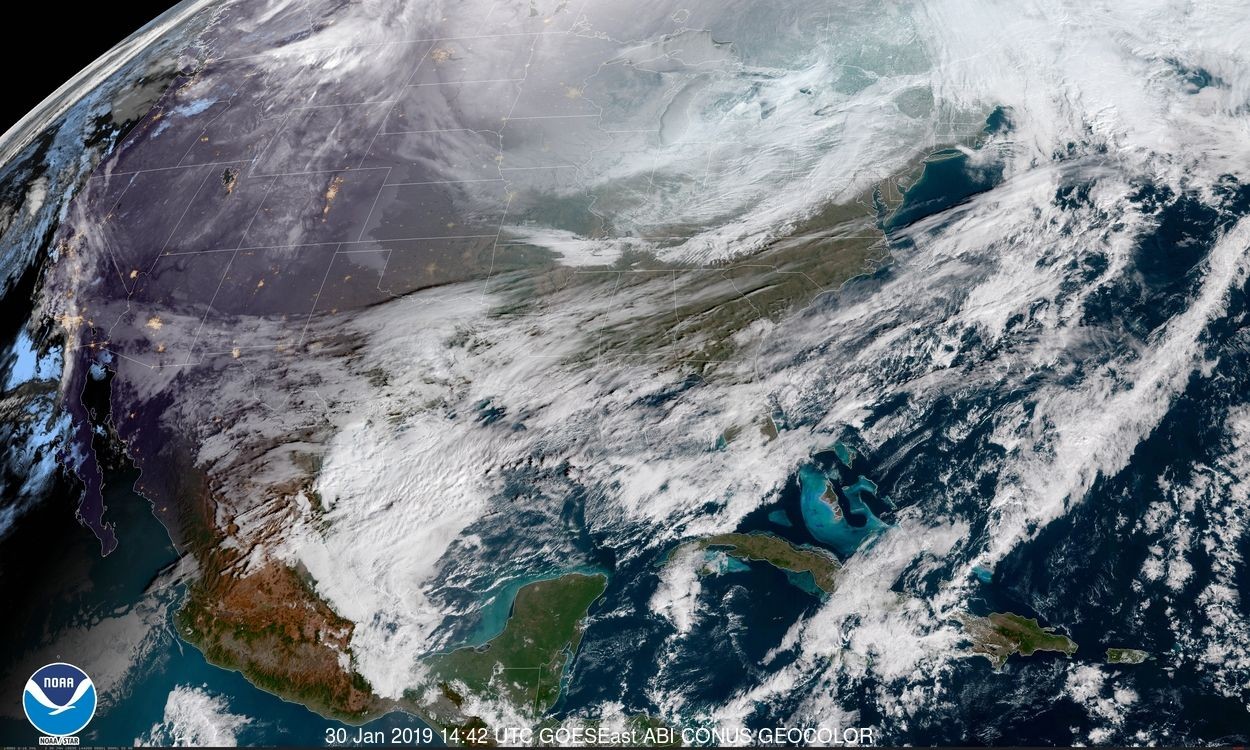
A recent severe winter storm impacted much of the U.S. in late January 2026, bringing crippling ice storms, heavy snow, and prolonged bitter cold from New Mexico to New England. Hundreds of thousands lost power, and many states endured dangerous conditions for days. While such blasts might seem unexpected in a warming climate, the underlying atmospheric processes are complex and becoming more understood.
How Winter Storms Form
Severe winter storms require specific conditions: a sharp temperature contrast between frigid air from the north and warmer air from the south, coupled with ample moisture. The jet stream – a fast-moving band of air that steers weather systems – plays a crucial role. When the jet stream dips southward and draws moisture from sources like the Gulf of Mexico, heavy precipitation results.
However, the story doesn’t end at the troposphere (the lowest atmospheric layer). The stratosphere, which sits above it, has a critical influence.
The Role of the Stratospheric Polar Vortex
The polar vortex is a belt of fast-moving air circling the North Pole. There are actually two circulations: one in the troposphere (what most people refer to when discussing weather), and another in the stratosphere. The stratospheric vortex is typically more stable and closer to the pole.
When this stratospheric vortex stretches southward over the U.S., it creates conditions for atmospheric waves to move between the stratosphere and the troposphere. These waves can amplify the jet stream’s dips, making severe winter weather more likely. The January 2026 storm was a prime example: a close overlap between the stratospheric vortex and the jet stream over the U.S. created ideal conditions for extreme cold and snow.
The key takeaway : energy from these atmospheric waves can reinforce southward swings in the jet stream, increasing the likelihood of severe storms.
Warming Climate, Extreme Weather?
Despite global warming, extreme winter storms persist. While overall snow amounts are decreasing, research suggests that even in a warming environment, cold events can remain severe in some regions.
The paradox : the Arctic is warming rapidly, which appears to disrupt the stratospheric polar vortex, making these southward intrusions more frequent.
Furthermore, warmer oceans increase evaporation, providing more moisture for storms. While warming can also reduce temperature contrasts (weakening storms), intense events may still become more intense. A warmer atmosphere also increases the chance of precipitation falling as sleet or freezing rain instead of snow.
Remaining Questions and Future Research
Scientists are continuously refining predictions and responses to extreme weather. However, many questions remain. The relationship between climate change, polar vortex disruptions, and the intensity of winter storms is still being investigated.
Understanding the interplay between the stratosphere and troposphere is crucial for improving long-term forecasting and mitigating the impacts of severe winter weather events.
The science is complex, but the message is clear: extreme weather is not simply disappearing with a warming planet; it’s evolving, and we must adapt to understand and prepare for these changing conditions.