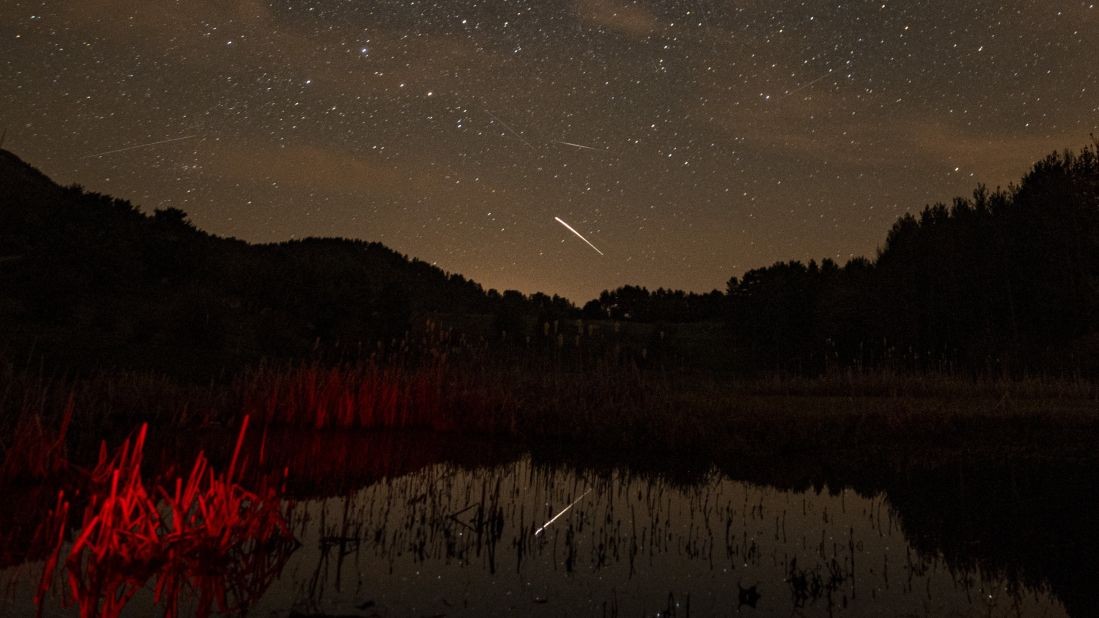
The spring sky is about to put on a show. The Lyrid meteor shower has officially begun, offering stargazers a chance to witness streaks of light dancing across the night sky. While many meteors are random occurrences, the Lyrids are a predictable celestial event caused by Earth passing through a specific trail of cosmic debris.
The Origin of the Lyrids
The meteors we see are not just random rocks; they are the remnants of Comet C/1861 G1 Thatcher. This is a long-period comet that only visits the inner solar system once every 415 years. As the comet orbits the sun, it leaves behind a trail of dust and debris. When Earth intersects this “dusty trail,” those particles burn up in our atmosphere, creating the phenomenon we call shooting stars.
What to look for:
– Speed: Lyrid meteors are known for being fast-moving.
– Fireballs: Occasionally, larger pieces of debris—sometimes the size of a basketball—can enter the atmosphere, creating brilliant “fireballs” that outshine even the brightest planets.
– Short Trails: Unlike some other showers, Lyrids typically do not leave long-lasting glowing trails behind them.
Peak Viewing and Conditions
While the shower is active from April 16 to April 25, the best time to watch is during its peak on the night of April 21–22. During this window, observers may see up to 18 meteors per hour.
The moon will play a significant role in your viewing experience. On the peak night, the moon will be about 40% illuminated. However, there is good news for enthusiasts: the moon is expected to set in the west (near the constellation Gemini) roughly 90 minutes after midnight. This will leave the sky dark and ideal for spotting fainter meteors.
How to Spot a Lyrid
If you see a flash of light, how can you tell if it belongs to this specific shower?
The key is the radiant —the point in the sky from which the meteors appear to originate. For the Lyrids, this radiant is located near the bright, blue-white star Vega in the constellation Lyra.
Pro-Tips for Meteor Hunting:
- Timing: Your best window is the predawn hours of April 22, as the shower reaches its maximum intensity.
- The “Fist” Method: Do not stare directly at the radiant point. Instead, look about 40 degrees away from it (roughly the width of four clenched fists held at arm’s length). Meteors viewed at this angle will produce much longer, more dramatic trails.
- Navigation: If you aren’t a seasoned astronomer, use a stargazing app on your smartphone. Many use augmented reality to help you locate Vega and the constellation Lyra easily.
- Dark Adaptation: Give your eyes at least 20–30 minutes to adjust to the darkness. Avoid using white light (like a phone screen), as it ruins your night vision; use a red light if you need to see your surroundings.
Summary: To maximize your chances, head outside in the predawn hours of April 22, look away from the radiant point, and allow your eyes time to adjust to the dark.
The Lyrid meteor shower offers a fleeting but spectacular glimpse into the debris left behind by a massive comet, providing a perfect opportunity for both casual observers and dedicated astronomers to connect with the scale of our solar system.