For decades, the prevailing theory held that primates – the order of mammals including monkeys, apes, and humans – first evolved in warm, tropical climates. However, a new study published in the Proceedings of the National Academy of Sciences suggests that this may not be the case. Researchers now propose that early primates actually thrived in colder, higher-latitude environments.
Challenging Conventional Wisdom
The shift in thinking comes from detailed computer models that simulate climate conditions and primate evolution. These simulations factored in density and the movement of early primate species, as well as the geological history of continents. The study’s authors argue that the earliest primates likely originated in what is now North America or Europe, rather than Africa or Asia. These regions experienced cooler temperatures and seasonal changes that may have driven crucial evolutionary adaptations.
Why Cold Climates Mattered
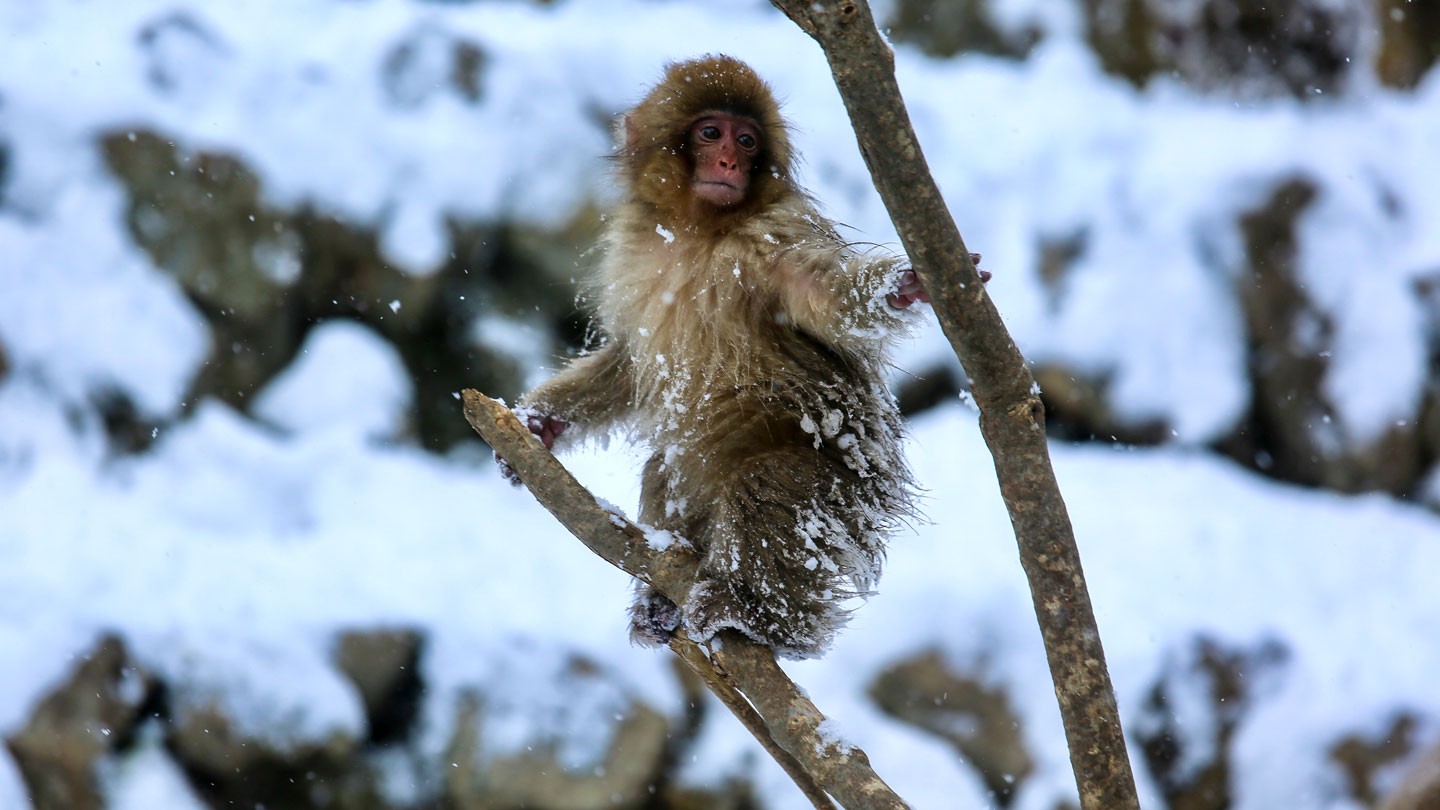
The idea that primates evolved in colder climates isn’t just about where they lived. It’s about how they adapted. Cooler temperatures often force species to develop thicker fur, higher metabolic rates, and the ability to store energy efficiently. These traits could have laid the groundwork for later primate adaptations, like complex social behaviors and increased brain size.
The key is that this is not just about a new location. The evolutionary pressures in a colder climate are very different from those in the tropics. For instance, seasonal food scarcity in cold regions would have favored primates capable of planning ahead, storing food, and cooperating in groups.
The Ancestral Puzzle
The study points to early primate fossils found in North America and Europe as supporting evidence. These fossils show features that align better with cold-adaptation than with tropical adaptation. The common ancestor of modern primates may have been a small, furry creature that scurried through forests in higher latitudes. Over time, some of these populations migrated south into warmer regions, while others remained in colder environments.
The ancestor of all primates was likely not some jungle dweller, but a more generalized mammal that could handle colder conditions. This ancestor could have been a tree-dwelling insectivore or omnivore, similar to modern-day lemurs.
The Lemur Connection
One piece of the puzzle lies in the history of lemurs. These primates evolved in Africa but later migrated to Madagascar. Madagascar’s climate is relatively mild today, but the island was once part of a larger landmass that experienced colder temperatures. This suggests that lemurs may have carried cold-adaptation traits with them as they dispersed.
What This Means for Our Understanding of Human Evolution
The implications of this research are far-reaching. If primates truly evolved in the cold, it means our own evolutionary history may be more complex than previously thought. The selective pressures that shaped early primate brains and bodies were likely very different in cold climates versus warm climates. This could explain why humans developed such unique traits as advanced cognition, tool use, and complex social structures.
The study’s findings force us to reconsider the entire narrative of primate evolution. The idea that our ancestors were adapted to cold environments changes how we interpret the fossil record, genetic data, and the very definition of what it means to be a primate.
The study’s conclusion is clear: the story of primate evolution must be rewritten, and the cold should no longer be overlooked as a crucial factor in shaping our species.