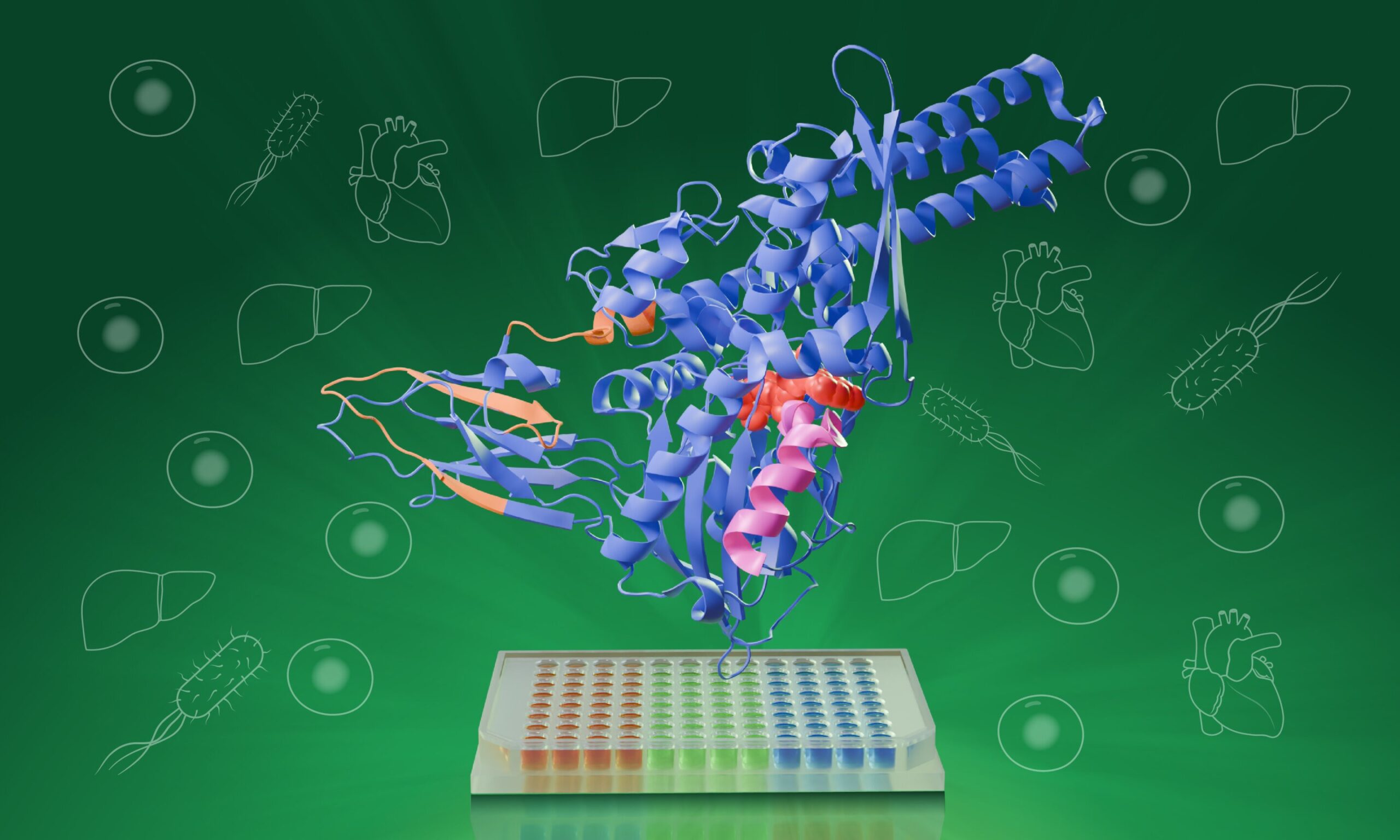
Proteins are often called the “workhorses” of our bodies because they drive nearly every biological process. Their ability to interact with other molecules, known as ligands, is crucial for these functions. Understanding these interactions is key to developing new drugs and unraveling the mysteries of life itself.
Scientists have long sought ways to efficiently map these protein-ligand partnerships. Last year, a groundbreaking technique called PELSA emerged, offering the ability to analyze how ligand binding affects protein stability across an entire organism’s proteome (all its proteins). This allowed researchers to see which parts of proteins become more stable when a ligand binds – a telltale sign of interaction.
However, the original PELSA method was painstakingly slow and laborious, relying on manual steps that limited the number of samples scientists could analyze. Now, EMBL researchers have unveiled HT-PELSA, a high-throughput adaptation of this powerful tool. This breakthrough significantly speeds up analysis, making it 100 times faster and allowing scientists to process hundreds of samples simultaneously.
How HT-PELSA Works: Simplifying the Process for Big Results
Think of traditional PELSA like carefully sorting individual grains of rice from a handful. HT-PELSA is more akin to using a sieve – it leverages physical properties to efficiently separate proteins and their smaller, ligand-bound fragments.
Instead of relying on mass spectrometry to distinguish between whole proteins and trypsin-cleaved peptides (fragments created by enzymes), HT-PELSA uses the natural water-repellent nature of proteins. The technique employs specialized surfaces that attract proteins more strongly than peptide fragments, enabling a swift and automated separation process.
This streamlined workflow not only increases efficiency but also opens doors to studying previously challenging targets: membrane proteins. These crucial proteins, which account for roughly 60% of known drug targets, are notoriously difficult to isolate without disrupting their structure. HT-PELSA, by working directly with complex samples, allows researchers to observe how membrane proteins interact with potential drugs in their natural environment.
Unveiling New Possibilities: From Drug Discovery to Biology
This faster, broader approach to protein analysis has profound implications for multiple fields.
- Drug discovery: By revealing how ligands bind to specific proteins, HT-PELSA can accelerate the development of targeted therapies. This leads to more effective and safer drugs with fewer side effects.
- Basic biology: Understanding protein-ligand interactions provides fundamental insights into cellular processes, signaling pathways, and disease mechanisms.
“HT-PELSA really opens the door for high-throughput understanding of protein function as well as accelerating drug development,” says Mikhail Savitski, team leader at EMBL Heidelberg and senior author of the study. “This is critical for understanding basic biology, discovering disease mechanisms, and for developing safer, more effective medicines.”
The development of HT-PELSA represents a significant leap forward in our ability to explore the intricate world within cells. Its speed, efficiency, and expanded capabilities promise to reshape our understanding of life’s fundamental processes and pave the way for groundbreaking medical advancements.