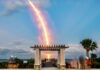
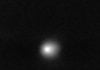
A bright, daytime meteor exploded over northern Ohio this morning, creating a powerful sonic boom that rattled homes and was even captured by a satellite in geostationary orbit. The event, described as “exceedingly rare” by experts, underscores the dramatic intersection of space debris and Earth’s atmosphere.
The Event: A Bright Flash and Loud Boom
Residents across the midwestern U.S. reported a loud boom around 8:56 a.m. EDT (1256 GMT). The Cleveland National Weather Service confirmed that the sound was likely caused by a meteor entering the atmosphere at supersonic speeds. Footage captured by multiple witnesses, including Dr. Jim Lloyd and Jared Rackley of the Pittsburgh National Weather Service, shows a bright fireball streaking across the daytime sky, leaving a glowing trail.
The event wasn’t just visible from the ground. The National Oceanic & Atmospheric Administration’s GOES-19 satellite detected a bright flash of light above northern Ohio using its Geostationary Lightning Mapper instrument. This is notable because most meteors burn up entirely before being detected by orbital sensors.
Why This Matters: Rare and Potentially Fragmented
The fact that this meteor was visible during daylight hours suggests it was exceptionally large—possibly “beach ball size or larger,” according to Robert Lunsford of the American Meteor Society. Such large meteors rarely survive intact and often create a sonic boom as they pass through the atmosphere.
“When an extraordinarily large meteor enters the atmosphere, it often survives down to the lower atmosphere where air molecules are dense enough to carry sound,” Lunsford explained to Space.com.
This implies that fragments of the meteor may have reached the ground, with computer models suggesting a possible landing zone near Akron, Ohio. The rarity of this event highlights how frequently Earth is struck by space debris, even if most of it burns up harmlessly.
The Source and Future Research
The origin of the meteor is currently unknown and doesn’t appear to be connected to any known meteor shower. This suggests it was a random, sporadic event. Whether any fragments will be recovered for study remains to be seen. The incident serves as a reminder of the constant influx of material from space and the potential for larger, more impactful events in the future.
The event is a stark illustration of how frequently Earth intersects with space debris. The combination of ground reports, eyewitness footage, and orbital satellite data provides a comprehensive picture of this rare phenomenon.