Proteins are the tiny workhorses of life, carrying out an astonishing variety of tasks within every living organism. Their complex three-dimensional shapes dictate their function — a protein might ferry molecules across cell membranes, defend against invaders, or even mend damaged DNA. Deciphering how these chains of amino acids fold into these intricate structures has been a central quest in biology for decades.
Yet, despite significant progress, many mysteries surrounding protein folding remain unsolved. 🤯 Accurate computer simulations are crucial to understanding this process, but existing models struggle with complexity. They operate at an atomic level, requiring immense computational power that often makes simulating realistic protein folding impossible. This limitation is compounded by the fact that we only know the structures of roughly 40% of human proteins – a vast gap in our biological knowledge.
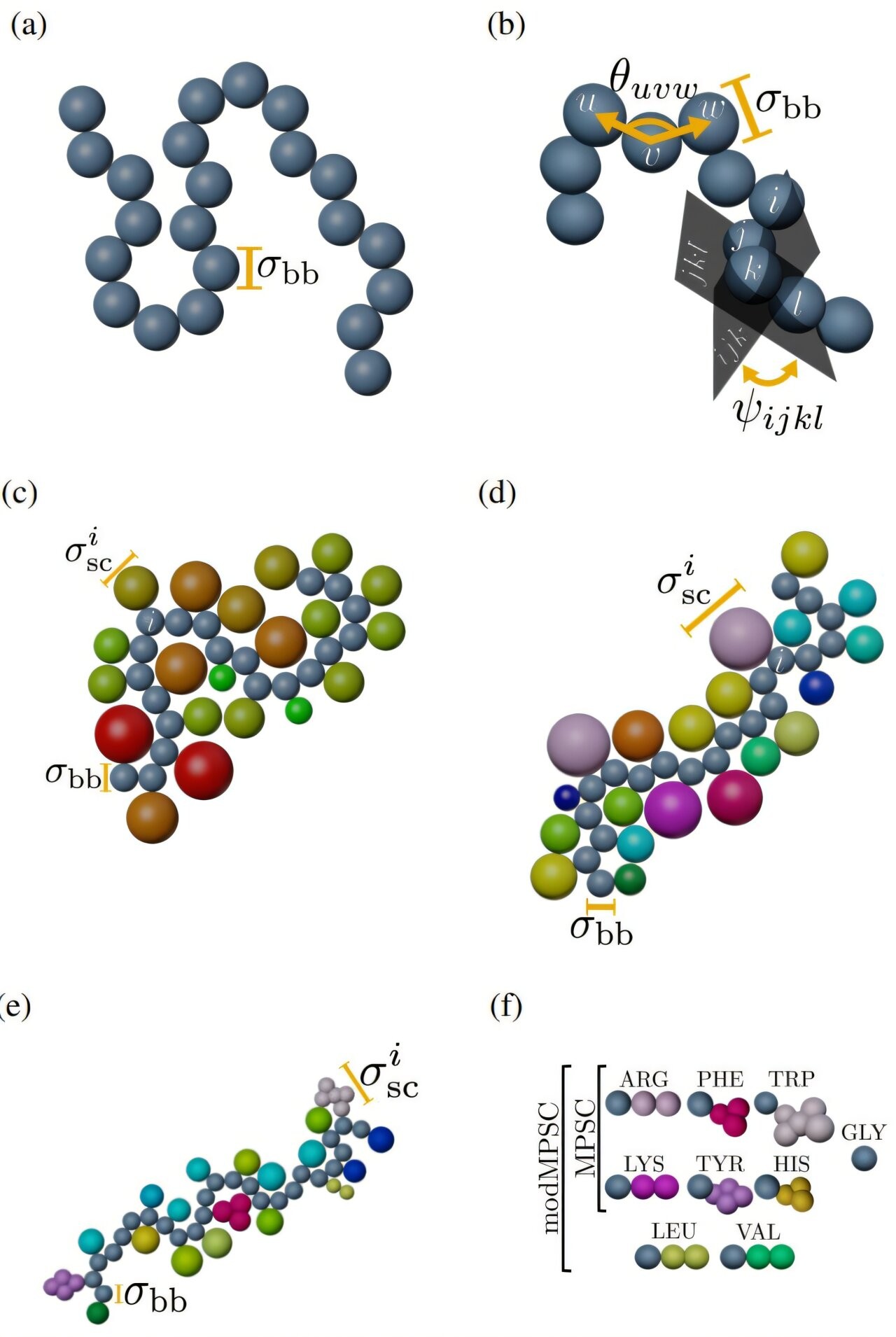
Now, researchers at Yale University have developed a groundbreaking solution: remarkably simplified computer models that capture essential protein features without the overwhelming detail of atomic simulations. These “coarse-grained” models represent groups of atoms as single units, dramatically reducing computational demands while preserving key structural information.
The team meticulously tested these simplified models against existing data from thousands of proteins, comparing their predictions to real-world structures and density distributions. They discovered that surprisingly simple representations – a single sphere for each amino acid – effectively captured the core structural characteristics necessary for understanding protein folding.
This breakthrough means researchers can finally simulate the folding of the vast majority of proteins whose structures remain unknown. 🔓 This opens up exciting new avenues in drug discovery and disease research. Misfolded proteins are implicated in countless diseases, and a deeper understanding of how they fold could pave the way for innovative therapies targeting these mishaps at their root cause.
“With this coarse-grained protein model, we will be able to fold the 60% of proteins with unknown structures,” explains Corey O’Hern, professor of mechanical engineering and lead author of the study published in Physical Review E. This simplification allows researchers to tackle a previously intractable problem, bringing us closer to unlocking the secrets of these fundamental biological machines.