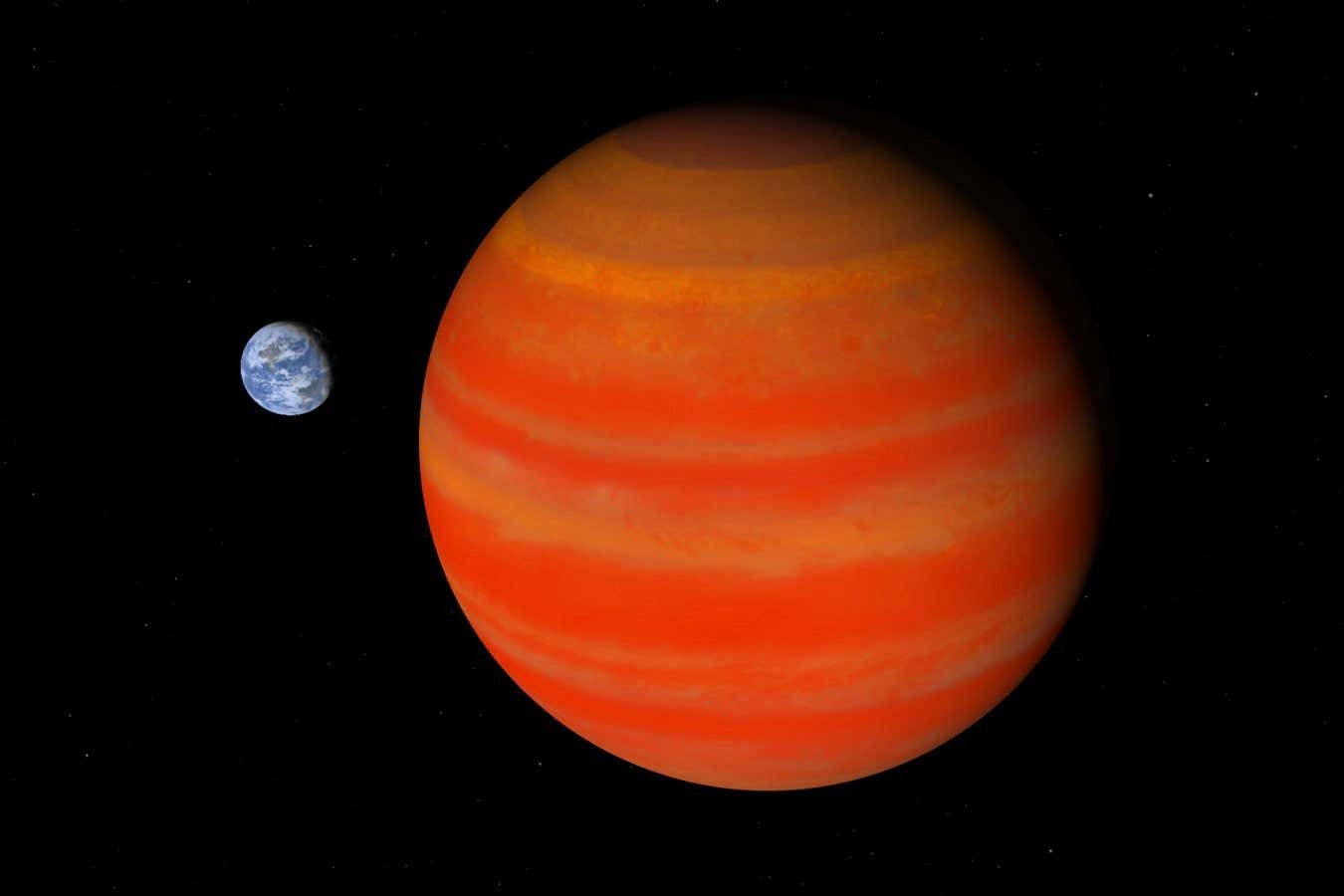
Astronomers have identified a unique planetary system around a young star, V1298 Tau, featuring four remarkably low-density planets. These worlds, orbiting a 20-million-year-old star, possess densities comparable to polystyrene – a key finding that could unlock the mysteries of how the most common types of planetary systems in our galaxy take shape.
The Missing Link in Planetary Formation
For years, astronomers have detected numerous planetary systems containing planets larger than Earth but smaller than Neptune. However, nearly all of these systems orbit older stars, making it difficult to observe the formation process directly. The V1298 Tau system provides a rare, real-time look at a young version of these common planetary configurations.
“We are seeing a young version of a type of planetary system we see all over the galaxy,” explains Erik Petigura of the University of California, Los Angeles. This discovery is significant because it allows scientists to study planetary formation as it happens, rather than inferring it from mature systems.
How the Discovery Was Made
The system was initially detected in 2017, but detailed observations took five years of meticulous work using both space-based and ground-based telescopes. The team, led by John Livingston and Erik Petigura, tracked subtle variations in the planets’ orbital timings, caused by gravitational interactions between them. These variations allowed them to calculate each planet’s radius and mass with unprecedented accuracy.
The process wasn’t without its challenges. Calculating the outermost planet’s orbit required educated guesswork; a miscalculation could have invalidated the entire study. However, the team’s estimations proved remarkably accurate, confirming their findings.
The Planets Themselves: Remarkably Low Density
The measurements revealed that the planets have exceptionally low densities – comparable to Styrofoam. Their radii range from five to ten times Earth’s, while their masses are only a few times greater. This suggests that the planets are still contracting under their own gravity, slowly evolving toward the more compact super-Earth or sub-Neptune sizes common in older systems.
Orbital Resonance and System Stability
The planets in V1298 Tau exhibit orbital resonance, meaning their orbital periods are mathematically related to each other. This arrangement aligns with the prevailing theory of planetary system formation, where systems initially form in a tightly packed, resonant state before becoming unstable over billions of years.
Sean Raymond of the University of Bordeaux notes that this discovery represents a potential precursor to typical sub-Neptune systems. Studying such young systems is notoriously difficult, making this finding particularly valuable.
“This discovered system of close-in, lower-mass planets orbiting a very young star represents a potential precursor to a typical sub-Neptune system,” Raymond said.
In conclusion, the V1298 Tau system offers an unprecedented glimpse into the early stages of planetary formation. The remarkably low densities of these young worlds provide vital clues for understanding how the most common types of planetary systems in our galaxy come into existence, bridging a critical gap in our knowledge of exoplanetary evolution.