Dating fossil sites can be like trying to decipher a blurry photograph – paleontologists often lack precise information about when the ancient creatures lived. This makes it incredibly difficult to piece together how species evolved, migrated, and interacted with their environments over millions of years.
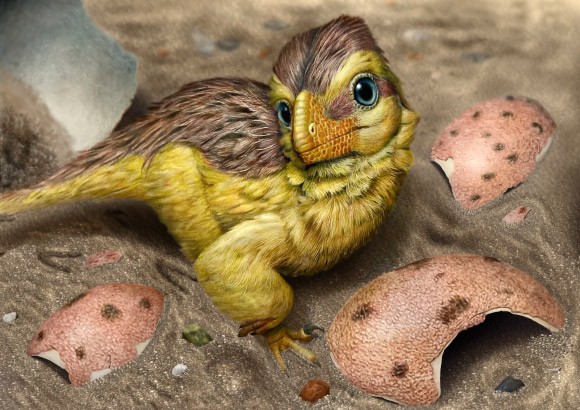
Traditionally, scientists have relied on dating minerals like zircon or apatite found near fossils. But these minerals aren’t always present, leaving gaps in our understanding. Attempts to date fossils directly (such as bones or teeth) haven’t always been reliable either. Now, a team of paleontologists has cracked open a new method: using fossilized dinosaur eggshells as time capsules.
The breakthrough lies in analyzing the tiny amounts of uranium and lead trapped within the calcite that makes up eggshells. These isotopes act like an internal clock – they decay at known rates over time, allowing scientists to calculate the age of the material with remarkable accuracy.
Led by Dr. Ryan Tucker from Stellenbosch University, the research team tested fossilized eggshells from Utah, USA, and Mongolia’s famed Gobi Desert. Remarkably, these shells provided ages that were within 5% of those determined using volcanic ash layers – a gold standard for precise dating. This validation suggests a game-changing approach to paleontology.
In Mongolia, the team made a particularly significant discovery. For the first time, they directly dated a well-known fossil site rich in dinosaur eggs and nests, pinning it at approximately 75 million years old. This adds another layer of detail to our understanding of ancient ecosystems during the Late Cretaceous period.
“Eggshell calcite is remarkably versatile,” Dr. Tucker explains. “It gives us a new way to date fossil sites where volcanic layers are missing – something that has hindered paleontology for decades.”
The discovery opens up exciting possibilities for unraveling mysteries about dinosaurs and other prehistoric life. By providing accurate dating tools, researchers can now map out the evolution of species across vast landscapes and time scales more precisely than ever before.
“Direct dating of fossils is a paleontologist’s dream,” says Dr. Lindsay Zanno of North Carolina State University. “This new technique allows us to tackle questions about dinosaur evolution that were previously impossible to answer.”
The study, published in the journal Communications Earth & Environment, marks a significant leap forward in our ability to understand Earth’s ancient past by harnessing the secrets locked within fossilized eggshells.