A newly discovered phenomenon suggests that the space between Earth and the Moon isn’t uniformly exposed to galactic cosmic rays, a constant stream of high-energy particles from beyond our solar system. Data from China’s Chang’e 4 lander on the far side of the Moon indicates the presence of a temporary “cavity” in this radiation flux, reducing proton levels by up to 20% when the Earth and Moon align in a specific orientation.
Cosmic Rays and the Threat to Space Exploration
Galactic cosmic rays (GCRs) are energetic particles – primarily protons and heavy atomic nuclei – emitted by events like supernova explosions. These particles pose a significant hazard to astronauts and high-altitude flight crews because they are ionizing radiation, capable of damaging DNA and increasing cancer risk. While Earth’s atmosphere largely shields the surface, spacecraft and lunar missions remain exposed.
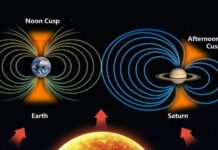
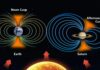
The Sun’s activity also influences GCR levels; solar flares and increased magnetic activity can deflect some of these particles, but the new findings point to another protective factor: Earth’s magnetic field. The team found that Earth’s magnetic field can, too – but the Sun is still indirectly involved.
The Discovery from Chang’e 4
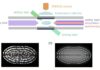
The Chang’e 4 lander, equipped with a Lunar Lander Neutron and Dosimetry (LND) instrument, has been monitoring proton flux on the Moon’s far side since 2019. By analyzing data across 31 lunar cycles, researchers observed a consistent dip in proton levels when the Moon entered a specific orbital position—the “preneon sector”—relative to Earth and the Sun.
This reduction isn’t random. It’s tied to the alignment of the interplanetary magnetic field, which spirals outward from the Sun as it rotates (known as the Parker spiral). When this field lines up with Earth’s magnetic field, it creates a “shadow” in the GCR flux. The Moon effectively passes through this region of reduced radiation for about two days during each orbit.
Implications for Future Missions
The researchers suggest this discovery has practical applications for space mission planning. By scheduling lunar operations, particularly extravehicular activities (EVAs), during periods when the Moon is within this GCR cavity, astronaut exposure to radiation could be minimized.
“This finding provides a potential strategy for mission planning… operations could be timed to coincide with these lower radiation periods to reduce exposure risk.”
Further research is needed to map the extent and behavior of this phenomenon, which could also inform radiation protection strategies for missions near other magnetized bodies in our solar system. The study underscores that space radiation is not uniform, and understanding these variations is crucial for ensuring the safety of future explorers.