Scientists have uncovered clues about the formation of the Moon within some of Earth’s oldest rocks, found deep in Western Australia. A recent study by the University of Western Australia (UWA) analyzed 3.7-billion-year-old feldspar crystals from anorthosite rocks in the Murchison region, providing a window into Earth’s earliest days and potentially reinforcing the prevailing theory of the Moon’s origin.
What are Anorthosites and Why Do They Matter?
Anorthosites are a type of igneous rock composed primarily of plagioclase feldspar. They are exceptionally rare on Earth, but remarkably common on the Moon. This shared geological characteristic strongly suggests a connection between the two celestial bodies. Anorthosites form when molten magma cools slowly deep beneath the surface, allowing large, chemically rich crystals to grow and lock in information about their environment. The remarkable preservation of these ancient rocks over billions of years allows scientists to precisely date them and gain insights into Earth’s early crust.
Decoding the Ancient Mantle
To unravel the secrets held within these rocks, researchers led by Ph.D. student Matilda Boyce employed sophisticated analytical techniques. They focused on isolating the fresh areas of plagioclase feldspar crystals, effectively separating and examining the isotopic “fingerprint” of the ancient mantle—the semi-molten layer beneath Earth’s crust. These isotopic ratios provide a direct snapshot of the chemical composition of Earth’s interior billions of years ago.
A Later Start to Continental Growth
The analysis revealed that the growth of Earth’s continental crust didn’s begin immediately after the planet’s formation. Instead, it started later, approximately 3.5 billion years ago—nearly a billion years after Earth was born. This challenges previous assumptions about the pace of early crustal development.
A Striking Lunar Connection
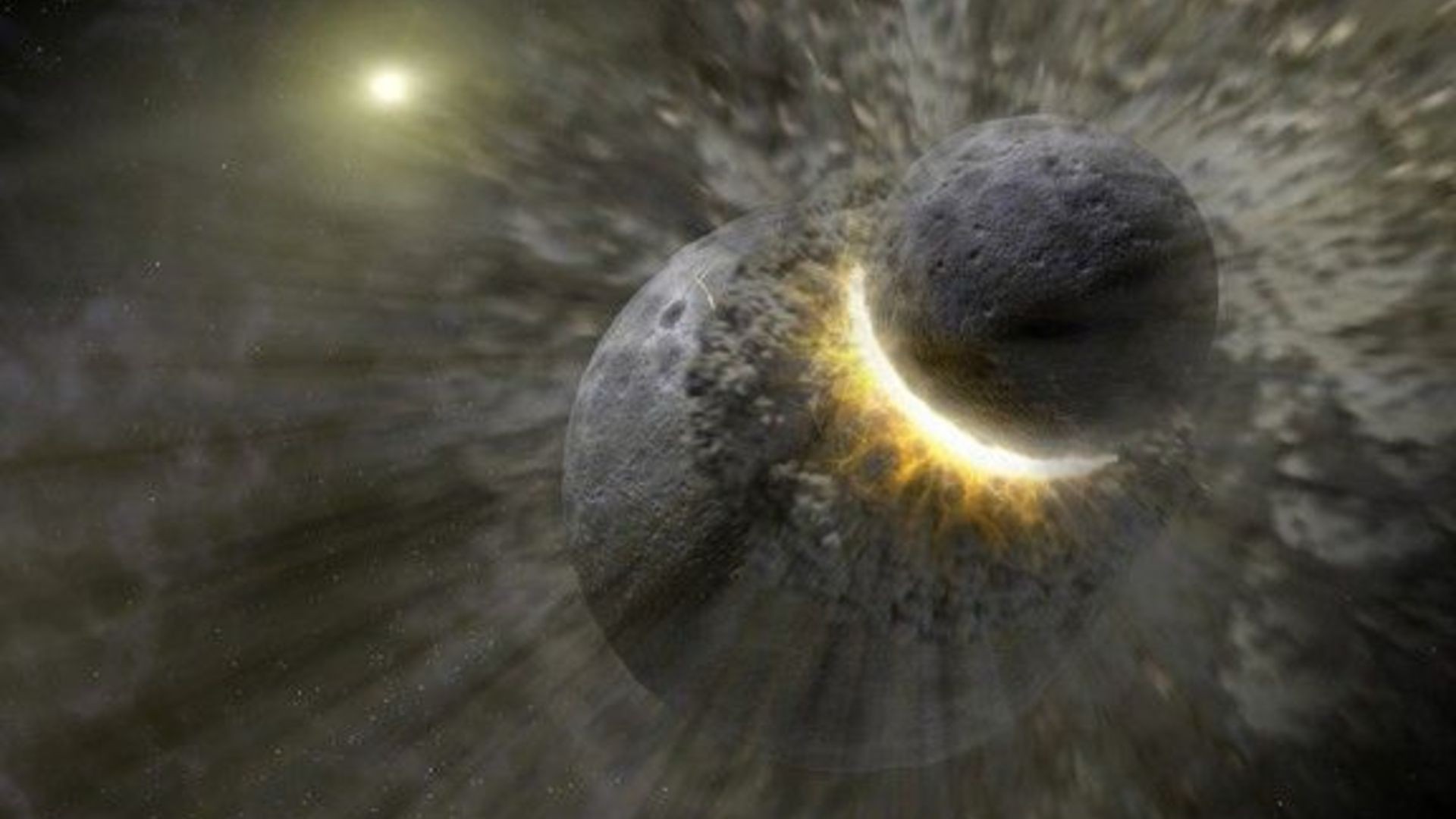
The most intriguing finding was the close resemblance between the isotopic signatures from the Australian rocks and samples collected during NASA’s Apollo missions to the Moon. This similarity lends strong support to the “giant impact” hypothesis for the Moon’s creation. This theory posits that a Mars-sized object collided with early Earth around 4.5 billion years ago. The collision ejected a massive amount of material into space, which eventually coalesced to form the Moon.
“Our comparison was consistent with the Earth and moon having the same starting composition of around 4.5 billion years ago,” explained Boyce. “This supports the theory that a planet collided with early Earth and the high-energy impact resulted in the formation of the moon.”
A Unique Opportunity to Explore Earth’s Past
The rarity of intact rocks from this ancient era makes this discovery exceptionally valuable. These ancient minerals hold a potential record of the chemical mix left behind by the cataclysmic collision that formed the Moon—a vital link between Earth’s infancy and the creation of its satellite. The research provides a unique and valuable opportunity to peer directly into Earth’s formative past, solidifying our understanding of our planet’s geological history and the forces that shaped it.
Scientists believe that this connection between Earth and the Moon can provide crucial evidence to understand how planets are born and evolve.