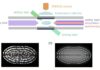
A team at the University of Wisconsin-Madison has successfully reconstructed a 3.2-billion-year-old enzyme, providing a direct biochemical link to life before oxygen dominated Earth’s atmosphere. This breakthrough not only illuminates the conditions under which early life thrived but also establishes a robust chemical marker for detecting potential life on other planets.
The Primordial Enzyme: Nitrogenase
The research, led by Professor Betül Kaçar, focused on nitrogenase, an enzyme essential for converting atmospheric nitrogen into a usable form for organisms. Without nitrogenase, life as we know it would not exist. This enzyme’s function is so fundamental that its reconstruction offers a unique window into Earth’s earliest biological processes.
Bridging the Fossil Gap with Synthetic Biology
Traditionally, understanding ancient life has relied on scarce geological records – fossils and rock samples that are often difficult to obtain. Kaçar’s team employed synthetic biology to overcome this limitation. By recreating ancient enzymes and introducing them into modern microbes, they can study these relics of the past in a controlled laboratory setting. This approach effectively fills gaps in the fossil record, offering tangible reconstructions of life from billions of years ago.
Life Before Oxygen: A Sharper Picture
Three billion years ago, Earth’s atmosphere was drastically different – rich in carbon dioxide and methane, and dominated by anaerobic microbes. Understanding how these organisms accessed crucial nutrients like nitrogen is vital for grasping how life persisted before the Great Oxidation Event fundamentally reshaped the planet.
The team’s research confirms that ancient nitrogenase enzymes produce the same isotopic signatures as modern versions, meaning that the way this enzyme interacts with its environment has remained consistent over billions of years. This consistency is critical because isotopic signatures in rocks are often used to infer the presence of ancient life.
Implications for Astrobiology
Professor Kaçar emphasizes that understanding Earth’s past is essential for the search for life beyond our planet. “The search for life starts here at home, and our home is 4 billion years old,” she stated. By reconstructing ancient enzymes, scientists gain a deeper understanding of the biochemical fingerprints life leaves behind, making it more likely to identify traces of life on other worlds.
“We need to understand life before us, if we want to understand life ahead of us and life elsewhere.”
This research provides a powerful tool for astrobiologists, offering a reliable marker for identifying life in environments radically different from our own. The study’s findings were published in Nature Communications.
Ultimately, this work demonstrates the value of synthetic biology in unlocking secrets of the deep past. By physically recreating ancient molecules, scientists can test assumptions, fill knowledge gaps, and refine methods for detecting life – both on Earth and beyond.