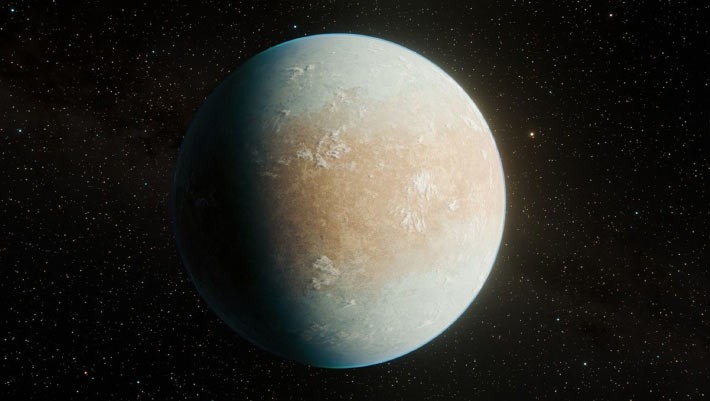
Astronomers have confirmed the existence of a new exoplanet, HD 137010b, orbiting a star remarkably similar to our own Sun. The discovery, made using archival data from NASA’s Kepler mission, raises the possibility of finding truly habitable worlds beyond our solar system.
The Discovery and the Star
HD 137010b orbits a K-dwarf star (HD 137010) approximately 146 light-years away in the Libra constellation. This star, aged between 4.8 and 10 billion years, is quieter and less active than many other exoplanet hosts—particularly the red dwarfs often associated with Earth-sized planets. This relative stability is crucial: high-energy radiation from active stars can strip away planetary atmospheres, rendering them uninhabitable.
The planet was identified through a single transit observed during Kepler’s K2 Campaign 15 in 2017. Rigorous checks confirmed the signal as astrophysical, ruling out false positives like background objects or eclipsing binaries.
Planetary Characteristics
HD 137010b is approximately 1.06 times the radius of Earth and completes an orbit every 355 days. It receives around 29% of the stellar flux Earth receives from the Sun, placing it near the outer edge of the star’s habitable zone.
“This is significant because many Earth-sized planets in habitable zones have been found around red dwarfs, which present habitability concerns,” explains Dr. Alexander Venner, lead author of the study. “The host star of HD 137010b is much closer to our Sun in terms of properties, increasing the likelihood of atmospheric retention.”
Implications for Habitability
While the planet is likely colder than Antarctica with an Earth-like atmosphere, a thicker atmosphere could trap enough heat to allow liquid water—a key ingredient for life as we know it. The fact that the host star is sun-like is what makes this planet particularly interesting. Red dwarfs, though common, often pose challenges to habitability due to their intense flares and tidal locking.
Future Research
Current instruments cannot fully characterize HD 137010b, but it will be a high-priority target for upcoming radial velocity instruments designed to detect Earth analogues. Future missions, such as the planned NASA Habitable Worlds Observatory, may even directly image the planet.
This discovery underscores the potential for finding habitable planets around stars similar to our own, offering a new direction in the search for life beyond Earth. The ongoing refinement of exoplanet detection techniques will continue to yield more such candidates, pushing the boundaries of our understanding of planetary habitability.
The research has been published in The Astrophysical Journal Letters.