
Scientists are returning to the depths of the Pacific Ocean to unravel a surprising discovery: metallic nodules on the seafloor appear to be generating oxygen in the absence of sunlight. This “dark oxygen” phenomenon, first observed in 2024, has ignited debate surrounding deep-sea mining proposals, raising questions about the potential disruption of a previously unknown ecosystem.
The Unexpected Discovery
For decades, scientists believed that oxygen production in the deep ocean relied primarily on sinking organic matter from the surface. However, researchers found potato-sized nodules in the Clarion-Clipperton Zone (CCZ) – a key area for deep-sea mining – were actively producing oxygen despite the complete darkness. This discovery challenges established understanding of marine life support systems and introduces critical unknowns regarding deep-sea ecosystems.
The CCZ is particularly important because it holds vast deposits of valuable metals like cobalt, nickel, and manganese, making it a prime target for mining companies eager to extract resources for electric vehicle batteries and other technologies.
How Does It Work?
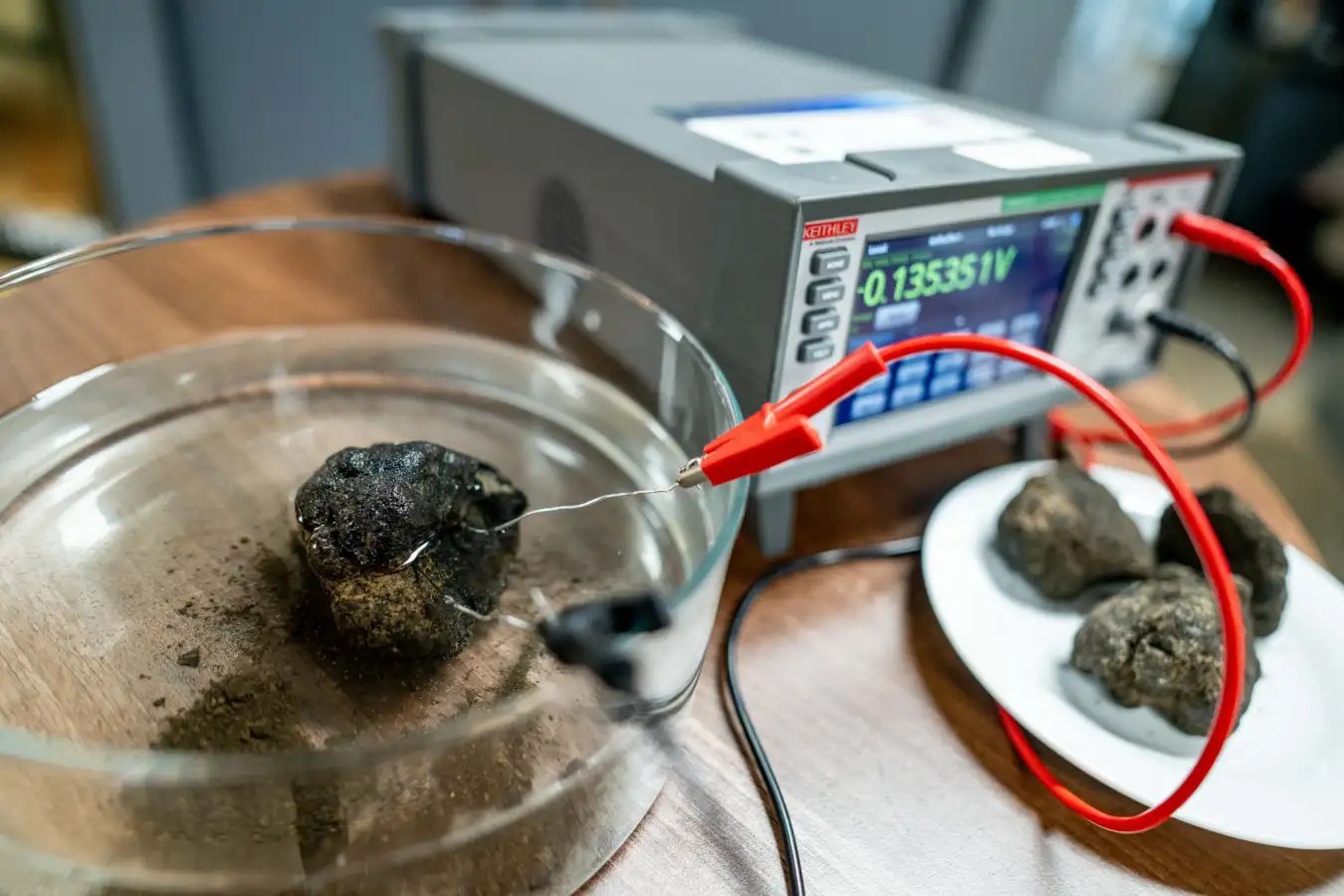
The leading hypothesis suggests that the metallic layers within the nodules create an electric current when in contact with seawater. This current could then break down water molecules into hydrogen and oxygen through electrolysis, a process previously thought impossible under such conditions.
Researchers have measured voltages of up to 0.95 volts on the nodules’ surfaces – enough to potentially drive electrolysis, especially if multiple nodules act as a combined power source. They will now deploy advanced landers equipped to measure oxygen fluxes, pH levels, and collect sediment cores for detailed analysis. The landers will descend to depths exceeding 10,000 meters, where pressures reach 400 atmospheres (similar to those that caused the Titan submersible implosion).
The Role of Microbes
The nodules also harbor an astonishing diversity of microbes – up to 100 million per nodule. Scientists will use DNA sequencing and microscopy to determine if these microscopic organisms play a role in oxygen production or other critical processes. The sheer number of unknown species suggests the deep sea may hold secrets that could reshape our understanding of life on Earth.
Industry Pushback and Scientific Rigor
Deep-sea mining companies, including The Metals Company, have disputed the findings, suggesting the observed oxygen may be contamination from surface air carried by the landers. Researchers, led by Andrew Sweetman of the Scottish Association for Marine Science, counter that their data – collected across 65 experiments, with 90% showing oxygen production – supports the existence of “dark oxygen.” A rebuttal paper is currently under peer review in Nature Geosciences.
Sweetman acknowledges the industry’s interest in discrediting the research, stating that commercial pressure exists to silence this line of inquiry. The UN’s International Seabed Authority has yet to decide whether deep-sea mining will be permitted, but some nations, including the US under former President Trump, have expressed support for extraction.
The Stakes Are High
The discovery of “dark oxygen” complicates the debate over deep-sea mining. If these nodules sustain a unique ecosystem, disturbing them could have unforeseen consequences. Further research is crucial to determine whether the oxygen production is vital to deep-sea life and whether mining operations will irreparably harm this fragile environment.
The expedition’s findings will either confirm the existence of this unusual phenomenon or provide evidence against it, ultimately influencing the future of deep-sea resource extraction.