A new study analyzing data from two powerful space telescopes paints a sobering picture of the universe’s future: While it won’t end anytime soon, star formation has already peaked and the cosmos is on a slow but steady path toward colder and quieter times.
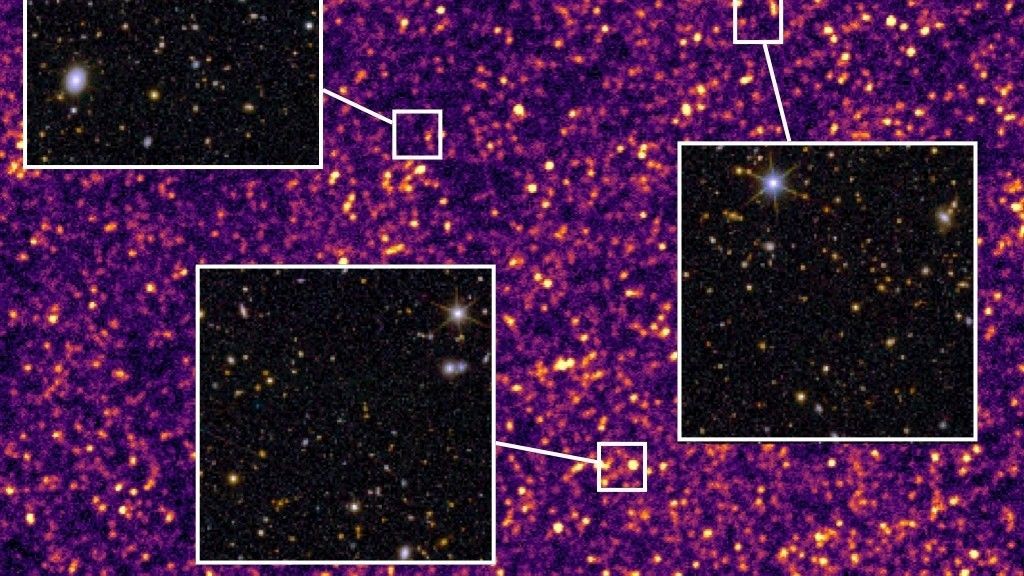
This conclusion comes from an international team of 175 researchers who combined observations from the European Space Agency’s Euclid and Herschel telescopes. They examined heat emitted by stardust in over two million galaxies spanning billions of light-years, creating the most detailed temperature map of the universe to date.
While this cosmic cooling seems incremental — average galactic temperatures have fallen by just 10 Kelvin over the past 10 billion years — it carries profound implications. This tiny change reflects a significant slowdown in star formation rates. Galaxies with hot cores are born from dense clouds of gas and dust, where intense gravity triggers the birth of new stars. As those stars age and die, they enrich their surroundings with heavier elements and contribute to the galactic “dust” that fuels future generations of stars.
“The amount of dust in galaxies and their dust temperatures have been decreasing for billions of years,” explains study co-author Douglas Scott, a cosmologist at the University of British Columbia (UBC). This means, he adds, we are “past the epoch of maximum star formation.”
A Universe ‘Getting Colder and Deader’
The researchers acknowledge that while this downward trend is clear, it doesn’t signal the imminent demise of the universe. It takes trillions upon trillions of years for these processes to unfold. But even with an extremely long lifespan – estimated at anywhere from 33 billion to a mind-bogglingly large number (one followed by 78 zeros) — the universe is no longer in its exuberant, star-birthing prime.
“The Universe will just get colder and deader from now on,” Scott says simply.
Mapping the Cosmos: Euclid’s Contribution
This research builds upon data released earlier this year by ESA’s Euclid telescope, which began a mission to map one-third of the night sky in unprecedented detail. It is already cataloging observations of over 1.5 billion galaxies, aiming for an ultimate picture stretching back billions of light years.
The researchers combined Euclid’s visible and near-infrared data with older observations from Herschel Space Observatory, which specialized in detecting far-infrared light – the kind emitted by heat within dust clouds. This multi-wavelength approach allowed them to create a more complete picture of galactic temperatures and star formation history than ever before.
A Dust-Driven Story
The cooling trend is driven by the dwindling supply of fuel for new stars—the gas and dust found in galaxies. While some galaxies continuously replenish their stock through mergers or galactic interactions, others lose this material over time. Supermassive black holes at the centers of many galaxies can also disrupt star formation by expelling gas and dust into space. Eventually, these “quenched” galaxies run out of fuel and fade away, leaving behind a universe where fewer stars ignite and twinkle in the vast darkness.
While this cosmic future may seem bleak, it’s simply the natural progression of an immense, ever-evolving system. The universe will continue to exist for unimaginably long timescales – but its dynamic youthful phase of rapid star birth has passed. The era of galactic expansion and fiery stellar creation is winding down, leaving behind a cosmos gradually settling into cooler quietude.