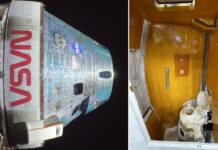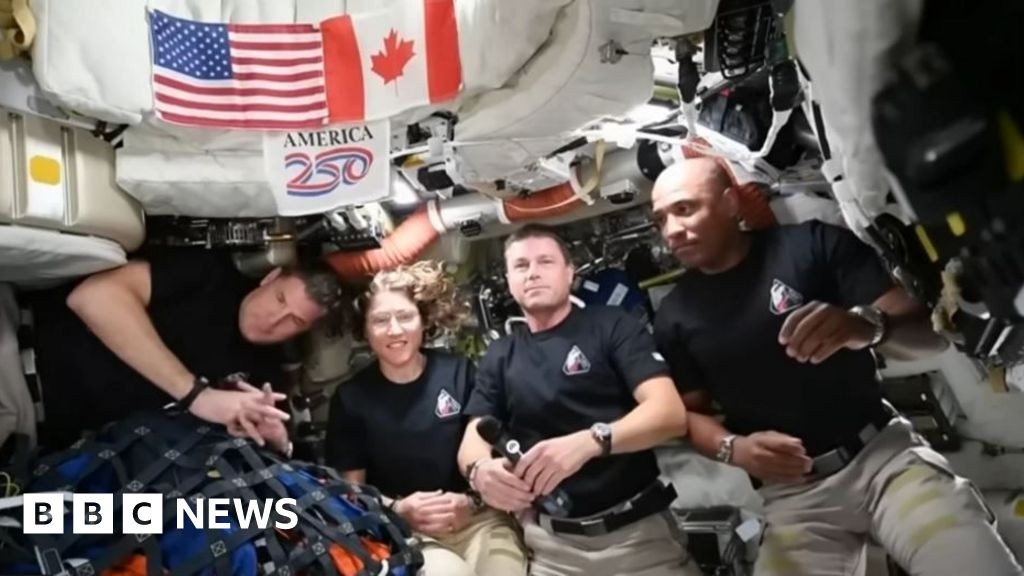
The Artemis II mission has achieved a historic milestone, sending four astronauts on a lunar flyby that pushed human exploration further from Earth than ever before. While the spotlight often shines on NASA and the astronauts aboard the Orion spacecraft, a crucial piece of this cosmic journey was engineered in Bridgend, Wales.
The Precision Behind the Wiring
The Orion spacecraft relies on approximately 32 kilometers (20 miles) of complex wiring to function. In the high-stakes environment of space travel, organization is not just a matter of convenience—it is a safety requirement.
Spectrum Technologies, a Welsh firm specializing in laser technology, provided the precision tools necessary to manage this massive network. Because the sheer volume of wires makes traditional color-coding impractical, each individual wire requires a unique identity. Spectrum’s machines use lasers to print alpha-numeric codes directly onto the wires, ensuring that every connection can be identified with absolute certainty.
A Growing Hub for Space Tech in Wales
This achievement is more than a single company’s success; it signals a broader trend of Wales emerging as a player in the global space economy. The involvement of Spectrum Technologies highlights how modern space exploration is rarely a solo endeavor, but rather a complex web of international collaboration.
Key indicators of this growing sector include:
– Global Supply Chains: Local companies are increasingly providing critical components for major NASA missions.
– Private Sector Partnerships: Spectrum Technologies is also working with SpaceX to prepare wiring for upcoming spaceflight projects.
– Orbital Presence: Last June, Cardiff-based Space Forge successfully launched Wales’ first satellite into orbit.
“It’s easy to forget with NASA missions, people think it’s just a US mission, but actually it’s international,” notes Dr. Rosie Cane of Space Wales. “There are companies in Wales taking part in that—supplying parts and components and supporting that mission.”
The Human Element of Engineering
For the team at Spectrum Technologies, the mission represents the culmination of decades of expertise. Rhys Roberts, who has spent over 30 years developing the software that controls the company’s lasers, expressed the profound sense of pride felt by the staff.
This connection to space is deeply personal for the company’s leadership. Chairman Dr. Peter Dickinson, inspired by the Apollo Moon landings of 1969, views this success as a stepping stone toward even more ambitious engineering feats in the future.
Conclusion
The Artemis II mission proves that even the most distant space explorations rely on precise, terrestrial engineering. By providing the essential identification systems for Orion’s wiring, Welsh industry has secured its place in the next era of human lunar exploration.