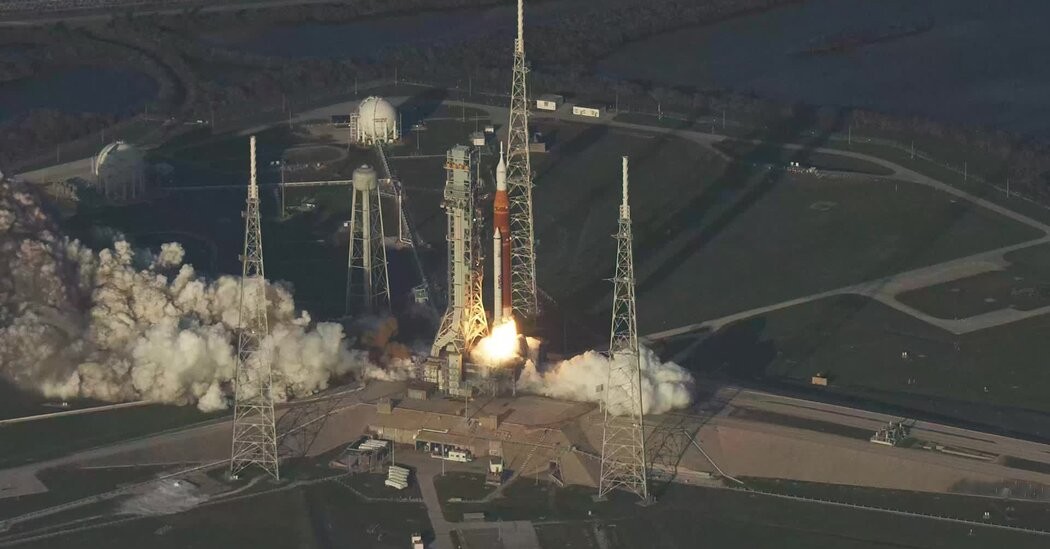
After several delays that pushed the mission from February through March, NASA finally achieved its goal on April 1st. What began as a series of postponed launch windows culminated in a successful mission that sent four astronauts into deep space, marking a historic milestone in human lunar exploration.
The Crew and the Mission
The Artemis II crew—comprising Reid Wiseman, Victor Glover, Christina Koch, and Jeremy Hansen —embarked on a 10-day journey that pushed the boundaries of modern spaceflight. This mission was not merely a test of hardware, but a demonstration of human endurance and the ability to operate in the most hostile environments known to man.
The crew represented a diverse international effort, including three Americans and one Canadian, underscoring the collaborative nature of modern space exploration.
Key Highlights of the Journey
Throughout their 10-day orbit, the astronauts experienced phenomena that few humans have ever witnessed:
- Deep Space Exploration: The crew traveled further into deep space than any human in history, moving well beyond the low Earth orbit typically occupied by the International Space Station.
- The Lunar Far Side: The mission provided a rare opportunity to observe parts of the Moon’s far side—regions that remain hidden from Earth’s view and have never been seen by human eyes before.
- Celestial Events: The astronauts witnessed a 53-minute solar eclipse, a rare astronomical event viewed from a unique vantage point in space.
- Human Connection: Beyond the technical achievements, the mission was defined by “moon joy”—the profound sense of awe and connection to humanity expressed by the crew during their observations.
Why This Mission Matters
The success of Artemis II is a critical stepping stone in NASA’s broader goal of returning humans to the lunar surface. While previous missions focused on orbiting the Moon, this mission proved that crews can survive and operate effectively in deep space for extended periods.
The mission also highlights the growing cultural impact of space exploration; the crew’s journey captured global attention, even prompting interest from high-profile figures like President Trump. This level of engagement suggests that space exploration continues to serve as a powerful unifying force for public interest.
The mission successfully transitioned from a series of technical delays to a triumph of human engineering and spirit, proving that humanity is ready for the next leap into deep space.
Conclusion
Artem