During the winter months, two prominent constellations – Canis Major (the Big Dog) and Canis Minor (the Little Dog) – become visible in the evening sky. These patterns are not just beautiful; they have been culturally significant for millennia, linked to myths, agriculture, and even the very concept of timekeeping.
Locating the Dogs
If you step outside around 6 p.m. local time as darkness falls, you can easily spot the first marker: Murzam, a 2nd-magnitude star rising approximately 30 degrees south of due east. Visualize holding your clenched fist at arm’s length (about 10 degrees); three fists to the right of east will bring you to it. Alternatively, extend an imaginary line through Bellatrix in Orion and Alnitak (Orion’s Belt), doubling its length to find Murzam.
Just 17 minutes later, the brightest star in the sky, Sirius, will rise as part of Canis Major. Procyon, Canis Minor’s brightest star, appears even earlier, about 25 minutes before Sirius. As the night progresses, however, Procyon appears behind Sirius in the southern sky.
Ancient Origins: The Dog Days and the Nile
The ancients closely watched these stars for a reason. The rising of Sirius, in particular, was once tied to the hottest, most humid days of summer, hence the term “dog days.” The ancients believed that Sirius amplified the sun’s heat, causing drought and pestilence.
More importantly, the Egyptians revered Sirius because its heliacal rising (first visibility before sunrise) coincided with the annual flooding of the Nile River, critical for agriculture. The star, called Sopdet, was seen as a goddess who called up the waters, and temples were aligned to its rising point. The correlation was coincidental, but for the Egyptians, it was proof of divine connection.
Modern Observations and Hidden Companions
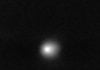
Today, we know that both Sirius and Procyon have dim, dense companions: white dwarf stars. Sirius B, nicknamed “The Pup,” is roughly Earth-sized but contains almost the same mass as our sun. Its density is extreme; a glassful would weigh ten tons on Earth.
Astronomers first suspected these companions in the 19th century by observing the stars’ slightly wavy paths, hinting at unseen gravitational influences. In 1862, Alvan Clark was the first to observe Sirius B with a telescope. Procyon’s companion was discovered in 1896. The existence of these stars proves that even the brightest points in the sky are often part of complex systems.
By 9:30 p.m., both Canis Major and Canis Minor are clearly visible, roaming the south-southeast sky. Canis Major is recognizable by Sirius, its dazzling, blue-tinged star, while Canis Minor consists of Procyon and one other bright star.
These celestial dogs are a reminder that the night sky is not just a canvas of light but a window into ancient history, cultural beliefs, and the hidden wonders of astrophysics.