


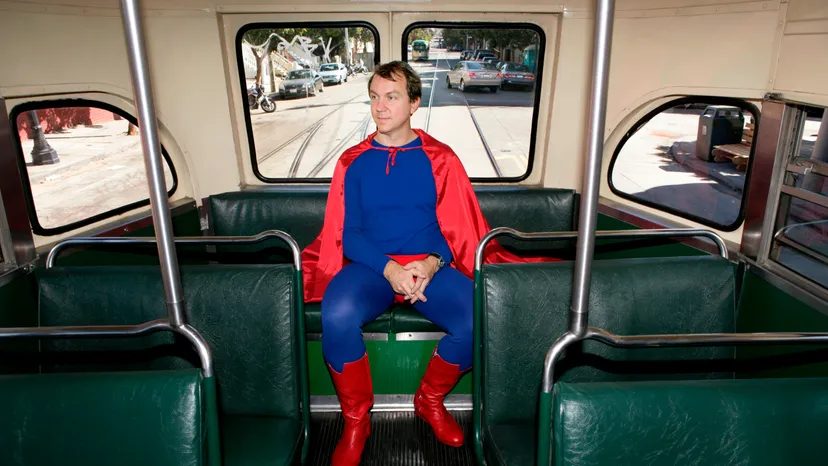
They say crime doesn’t pay. But in the Marvel Universe, neither does saving it.
We love to imagine our caped crusaders living in sleek penthouses or wielding infinite resources. Tony Stark? Sure. T’Challa? Obviously. But for every billionaire vigilante, there’s a dozen heroes sleeping on floors, eating ramen, and stressing over rent. Some never owned a thing. Others have day jobs that barely cover the electric bill.
These aren’t just plot devices for drama. They are the financial reality for the 12 poorest superheroes in the Marvel Universe. Here is how some of the most iconic figures are struggling to keep their heads above water.
The Hulk: Ruined by Rage
For decades, Bruce Banner was the definition of unstable income. Before the gamma accident, he was a physicist with steady job security. Then came the explosion.
Now, every time Banner loses his cool and transforms into the green-skinned behemoth, he loses everything. Literally. He shows up naked, covered in grime, with his clothes torn to shreds by his own expanding muscles. He doesn’t just lose his wardrobe; he loses his reputation. The government hunts him. Scientists want to dissect him. And he leaves millions in property damage in his wake.
You can’t build wealth when your biggest enemy is your own mood swings.
Power Man: The Struggling Entrepreneur
Luke Cage thought he had it figured out. Partnering with Danny Rand (Iron Fist), they formed Heroes for Hire, turning crime-fighting into a full-time, billable profession. In theory, charging for services should work.
In practice? It’s a grind. New York City is flooded with heroes who will punch bad guys for free out of altruism. Why pay Luke Cage when someone else will do it for love?
American small businesses make between $60,000 and $70,000 a year on average. But according to American Express, 15% of those owners need a second job just to survive. Luke Cage is likely in that 15%. He opened a bar not because he loves mixology, but because fighting crime wasn’t covering the rent.
Big Bertha: The Team Bankroller
Ashley Crawford, a.k.a. Big Bertha, has a mutant ability that lets her shift her body mass at will. Heavy mode? Incredible strength and durability. Light mode? A slender, attractive model based in Milwaukee, Wisconsin.
Modeling pays well, right? It does, if you’re only paying for yourself. But Big Bertha is the primary financier for the Great Lakes Champions. She isn’t just working for her own survival; she’s bankrolling a team. Her savings account? Empty. Again. Being the team mom is expensive.
Echo: Artistic but Broke
Maya Lopez was born deaf. She started in special education until she revealed an uncanny ability to mimic movements she saw—including complex martial arts and choreography. That skill landed her in a gifted class and eventually the mantle of Echo.
After her father’s death, the Kingpin took her in. He paid for the best schools money could buy. She became talented in nearly every artistic field. But having talent doesn’t mean having liquidity. As a performance artist, Echo makes roughly $20 an hour. Passion is great for the soul, but it’s terrible for the bank account.
Jessica Jones: PTSD and Maxed-Out Cards
If you watched the Netflix series, you saw the reality of Jessica Jones. She isn’t living in luxury. She’s a worn-out private investigator drowning in PTSD from her time with Killgrave (the Purple Man).
Her coping mechanism? Alcohol. Which costs money.
In the very first episode, she realizes Killgrave is back. Her instinct? Flee. She tries to buy a plane ticket and realizes she can’t afford it. Her credit cards are maxed out. She calls her lawyer friend, Jeri Hogarth, asking for an advance on a case. Denied. She has to borrow from her adoptive sister, Trish Walker.
She pays Trish back eventually. But she still can’t afford to fix her broken front door. That’s the ceiling for her life right now.
Spider-Man: The Freelance Grind
It’s no shocker that Marvel’s flagship hero is broke. Peter Parker’s “career” is freelancing as a photographer for the Daily Bugle.
The numbers don’t lie. Newspaper photographers get paid about $65 per assignment. The client usually picks one or two photos from a batch of five to ten. That means each published photo is worth about $10. Do the math, and Peter makes roughly $40,000 a year at best.
He’s working for J. Jonah Jameson, who pays pennies on the dollar. If Peter wanted to get rich, he should have stopped selling to the Bugle and started working as a paparazzo. One scandalous shot of a celebrity could net him more than a year of Bugle paychecks. But he’s too busy swinging through Queens to chase fame.
Firestar: Student Debt and Superpowers
Angelica Jones, a.k.a. Firestar, gained the ability to generate intense heat at age 13. She joined the Avengers for a while. Then the Superhuman Registration Act passed.
She walked away.
She chose to finish her education. Now, she’s a college student. And what do college students have in abundance? Time, stress, and debt. She earns little to no income. Between tuition and living expenses, Firestar is likely drowning in student loans. Being a hero didn’t set her up for retirement. Being a student kept her broke.
It’s a rough life. One where your greatest power is also your greatest liability. The Hulk destroys the assets he tries to protect. Luke Cage undercuts the market. Jessica Jones pays for her trauma with her freedom.
Are they heroes? Yes. Are they wealthy? Hardly.
The industry loves a billionaire playboy. It’s easier to sell fantasy when the hero doesn’t have to worry about the electric bill. But the struggle? That’s the real story. And it’s one that keeps many of these characters grounded, even when they’re flying.
What happens when the money runs out completely? That’s the next chapter.
Why Elvin Haliday, aka Rage, Is Probably Broke
Elvin Haliday’s origin story reads like a bad chemistry experiment gone wrong. As a kid, he jumped into a creek full of toxic waste to escape a group of racist thugs. The result? Super strength and a new alias: Rage. He didn’t get to keep the glory for long. He briefly fought alongside Captain America and the Avengers, only to be kicked off the roster because he was, well, a teenager.
Rejection breeds poor decisions. Rage joined the New Warriors, their first mission involving the theft of an Avengers Quinjet. That phase of his life ended when the team fractured. Elvin went back to school. Like so many other young heroes on this list, he has no other income stream. College tuition just piles on the debt. 📚💸
Squirrel Girl’s Surprising Resume
Doreen Green’s powers are arguably the most absurd in the Marvel Universe. Her abilities manifested early, giving her a tail and squirrel-like traits. Doctors confirmed it was genetic, but not the mutant kind associated with the X-Men. By all logic, she should be a joke.
She isn’t.
Doreen has taken down heavy hitters like Doctor Doom early in her career. Those credentials should land her a high-paying gig with a major hero team. Instead, she seems content guarding New York’s Central Park. We know she briefly worked as a nanny for Jessica Jones and Luke Cage. Since those two are also struggling financially, Squirrel Girl is likely working for peanuts. Literally. 🐿️
Doorman’s Teleportation Trouble
No superhero title screams “low income” quite like Doorman. DeMarr Davis is a mutant who can teleport. There’s a catch, though. He can only go where he can see a room he’s already been in. It’s a fantastic party trick. It’s terrible for crime-fighting.
Before joining the Great Lakes Avengers, DeMarr was just a college student. He finished three years of graduate school. That degree didn’t pay the bills. His real skill turned out to be gambling. He became an experienced card player, likely trying to scrape together cash.
He and his teammates once played in a charity poker tournament hosted by the Thing. Doorman didn’t make the finals. The Thing lost to Flatman. With no steady job and a gambling habit, Doorman isn’t just penniless. He’s probably drowning in debt. 🃏
The Morlocks: Surviving in the Sewers
Most X-Men have it easy. Their teaching jobs at the Xavier Institute cover rent and living expenses. Many have science backgrounds that lead to lucrative opportunities. The Morlocks don’t have that luxury.
This group of mutant outcasts lives in the sewers. They fight daily just to stay alive. Survival means raiding the surface world for food, clothes, and furniture. It gets darker from there. Some Morlocks are sterile or can’t reproduce naturally. In desperate times, they’ve resorted to kidnapping children. They are the disposable underclass of the mutant world. 🕳️
Man-Thing’s Swampy Existence
Ted Sallis was a serious man before the accident. A prominent biochemist, he was trying to recreate Captain America’s Super-Soldier Serum. The terrorist group Advanced Idea Mechanics (AIM) ambushed his team. Sallis destroyed his notes. He injected himself with the only remaining sample to save his life.
It didn’t work like he hoped. He crashed his car into a swamp. Chemical and magical forces mutated him into Man-Thing.
He is now a giant, slow-moving monster. Job prospects are nonexistent. He can’t interact with normal society, let alone hold down a shift. But he’s not entirely destitute. His swamp habitat provides everything he needs to survive. He doesn’t have a bank account, but he has a home. And for Man-Thing, that’s enough. 🌿


