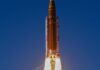
NASA’s Artemis 2 mission will send four astronauts on a groundbreaking ten-day journey around the moon, marking the first crewed lunar flyby in over half a century. The mission isn’t just about reaching the moon; it’s a meticulously planned series of tests, observations, and preparations for future lunar exploration. Here’s a detailed look at what each day holds for the Artemis 2 crew.
Launch and Initial Orbit (Day 1)
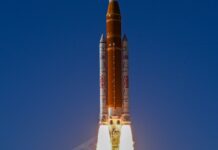
The first eight minutes are critical. The crew will launch aboard the Space Launch System (SLS) rocket, separating its solid rocket boosters and first stage as it ascends into orbit. This initial phase is heavily rehearsed, but remains a high-stakes event. Once in space, the Orion spacecraft will detach from the SLS’s upper stage (ICPS) and perform “proximity operations,” testing its ability to maneuver near another object – a skill crucial for future lunar lander rendezvous.
The crew will then begin essential systems checks and prepare for sleep, with their first rest period split into two halves due to ongoing orbital adjustments. This sets the tone for a mission where every minute is optimized.
Translunar Injection (Day 2)
The defining moment arrives: translunar injection (TLI). This 30-minute engine burn commits the spacecraft to its lunar trajectory, placing it on a “free-return” path that slingshots around the moon and back to Earth without requiring another major burn. While not entering lunar orbit, this ensures a safe return and minimizes fuel expenditure.
Alongside this critical maneuver, the crew will begin testing exercise equipment to assess the effects of prolonged spaceflight on the human body, building on decades of research from the International Space Station.
Lunar Flyby Preparations (Day 3)
As Orion approaches the moon, the crew focuses on rehearsing observations for their closest pass. They have roughly three hours to complete their lunar survey, including detailed geological recordings and imagery. Practicing in zero-gravity is key; the crew needs to adapt to how their bodies respond differently in weightlessness.
Minor course corrections and safety drills, including CPR procedures, fill out the rest of the day.
Fine-Tuning the Trajectory (Day 4)
With the moon growing closer, Orion performs another small correction burn. The crew spends time reviewing lunar imagery, preparing for key observation targets, and capturing unique photos of Earth and the moon from a vantage point further than any previous crewed mission. This is a chance to gather data and document a perspective rarely seen by humans.
Entering Lunar Space (Day 5)
Today marks a significant milestone: Orion enters lunar space as the moon’s gravity becomes dominant. The crew will test their spacesuits, practicing rapid donning and pressurization – a crucial exercise in case of cabin depressurization. These suits are designed to protect the crew for up to six days in the event of a pressure loss.
A final course correction burn ensures a precise flyby trajectory.
The Lunar Flyby (Day 6)
This is the mission’s climax. Orion will fly within 4,000–6,000 miles (6,440–9,650 kilometers) of the lunar surface, providing unprecedented close-up views. The moon will appear as a basketball-sized object outside the spacecraft’s windows.
For roughly three hours, the crew records extensive observational data, photographs geological formations, and documents this historic event. This flyby may push them further from Earth than any previous crewed space mission.
Data Relay and ISS Contact (Day 7)
As Orion exits lunar space, the crew relays data back to Earth, allowing scientists to evaluate the mission’s performance, crew health, and psychological effects. For the first time, astronauts beyond low Earth orbit will communicate directly with the ISS, acknowledging a shared presence in space.
The crew also begins a series of return trajectory correction burns to ensure a precise landing path.
Radiation Shielding and Maneuverability Tests (Day 8)
This day focuses on risk mitigation and systems checks. The crew tests radiation shielding by using onboard water tanks and the spacecraft’s heatshield to protect against potential solar flares. They also demonstrate Orion’s maneuverability using different thruster modes, ensuring precise control for future missions.
Final Preparations (Day 9)
With just one full day remaining, the crew conducts final technology demonstrations, performs another trajectory correction burn, and prepares for reentry by wearing orthostatic intolerance garments to counteract the effects of returning from microgravity. Every detail is secured for the final descent.
Reentry and Splashdown (Day 10)
The mission culminates in atmospheric reentry. Orion jettisons its service module, orients its heatshield, and plunges into Earth’s atmosphere at extreme temperatures. Parachutes deploy, slowing the capsule to 17 mph (27 kph) for a Pacific Ocean splashdown. A U.S. Navy recovery team will retrieve the crew, completing this historic mission.
The Artemis 2 mission is not merely a flight around the moon but a comprehensive test of human endurance, spacecraft capabilities, and preparation for sustained lunar exploration. The data and experience gained will be vital for future Artemis missions and the long-term goal of establishing a permanent human presence on the moon.