The Milky Way did not form as a single, static entity. Instead, it grew like a cosmic snowball, accumulating mass by absorbing smaller galaxies over billions of years. Now, astronomers have identified the “skeletal remains” of one such ancient victim: a dwarf galaxy nicknamed Loki.
By analyzing the chemical composition and orbital paths of 20 unusual stars, researchers have concluded that Loki merged with the Milky Way approximately 10 billion years ago. This discovery offers a rare glimpse into the chaotic early days of our galaxy, revealing how the first small structures in the universe coalesced to form the grand spiral we see today.
The Anomaly in the Disk
The story begins with a contradiction. In the standard model of galactic evolution, the Milky Way consists of two main structural components:
- The Disk: A flat, rotating region containing younger, metal-rich stars (like our Sun).
- The Halo: A vast, spherical cloud surrounding the disk, populated by older, metal-poor stars that are remnants of ancient mergers.
According to computer simulations, stars from early mergers should have been scattered deep into the inner galaxy, while those from later mergers remain in the outer halo. However, finding metal-poor stars—the chemical signature of ancient origins—within the inner disk is exceptionally rare.
A team led by astrophysicist Federico Sestito of the University of Hertfordshire found exactly this anomaly. They identified 20 stars that are:
* Extremely old and metal-poor: Similar to stars found in distant dwarf galaxies, not the typical disk population.
* Orbiting close to the galactic disk: Located within 6,500 light-years of the Sun, deep inside the Milky Way’s structure.
Decoding the Chemical Fingerprint
To understand why these stars are significant, one must understand cosmic chemistry. The first stars in the universe were composed almost entirely of hydrogen and helium. Heavier elements, which astronomers collectively call “metals,” were forged inside these stars and scattered into space when they exploded as supernovae.
Each subsequent generation of stars formed from gas enriched by the previous one. Therefore, metal-poor stars are cosmic fossils ; they formed early in the universe’s history before heavy elements became abundant.
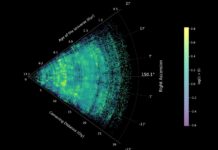
The team used the Canada-France-Hawaii Telescope to measure the chemical abundances of these 20 stars and data from the Gaia space telescope to map their orbits. The results were puzzling. While the stars were chemically similar to ancient halo stars, their orbits were mixed: some moved in the same direction as the Milky Way’s rotation (prograde), while others moved against it (retrograde).
The Chaos of Early Merger
How could a single infalling galaxy produce stars moving in opposite directions? The answer lies in the timing of the collision.
Sestito and his colleagues ran computer simulations to test different scenarios. They found that if Loki had merged with the Milky Way when our galaxy was still young, lightweight, and had not yet settled into a stable, spinning disk, the collision would have been violent and chaotic.
“The early merging history of a large galaxy might be very chaotic, with various smaller systems merging together and dispersing their stars with many different orbits,” Sestito explained.
In this early environment, the gravitational forces were not yet organized into a coherent rotational flow. Consequently, Loki’s stars were scattered in all directions, creating the mix of prograde and retrograde orbits observed today. The simulations suggest this merger occurred roughly 3 billion years after the Big Bang, placing Loki among the very first galaxies formed in the young universe.
Based on the distribution and kinematics of these stars, the team estimated that Loki had a total mass of approximately 1.4 billion solar masses.
Why This Matters
The identification of Loki is more than just naming another ancient galaxy; it challenges how we map the history of the Milky Way.
- Revising the Map: Traditionally, astronomers look for ancient merger remnants in the galactic halo. Loki proves that significant primitive structures can be hidden within the crowded inner disk, making them harder to detect but potentially more informative about the galaxy’s core formation.
- Understanding Cosmic Assembly: This finding supports the hierarchical model of galaxy formation, where large galaxies are built from the bottom up. It provides empirical evidence for the chaotic, violent nature of the early universe.
The Search Continues
While the evidence is compelling, scientists caution that more data is needed. The current sample of 20 stars is small, partly because high-resolution spectroscopy is time-intensive, requiring about four hours of telescope time per star.
Anirudh Chiti, an astrophysicist at Stanford University who was not involved in the study, noted the promise of the findings but emphasized the need for verification. “The chemical abundance analysis is intriguing… This is a nice example of the kind of discovery that those samples could turn up or verify,” Chiti said.
Future observations with advanced spectroscopic facilities will allow astronomers to analyze hundreds of stars, mapping their trajectories and chemistry with greater precision. This will help distinguish whether these stars are truly the remnants of Loki or a previously unknown substructure within the Milky Way itself.
Conclusion
The discovery of Loki highlights that the Milky Way’s history is written in the stars we can still see today. By deciphering the chemical and orbital clues left behind by ancient collisions, astronomers are reconstructing the violent, chaotic birth of our galaxy. As technology improves, the hidden “bones” of even more primordial galaxies may emerge from the depths of the galactic disk, further refining our understanding of how the universe evolved from simple clouds of gas to complex, star-filled spirals.