Antibiotics don’t just disappear. They linger.
Researchers from the University of São Paulo found them in the Piracicaba River. Specifically, residues of drugs banned in livestock production. It was discovered in fish commonly eaten by locals.
The study, published in Environmental Sciences Europe, tracks how these chemicals pile up in water, sediment, and aquatic life. Led by Patrícia Alexandre Evangelista. Funded by FAPESP. It also tested if a nuisance plant called Salvinia auriculata could help scrub the toxins out of the system.
They combined field monitoring with lab experiments. Checking for genetic damage in fish. Testing plant-based cleanup. The goal was broad: evaluate ecological risks. Find low-cost solutions. The pollution sources? Sewage, agricultural runoff, pig farms. All of it drains into this river.
Dry Spells Concentrate the Problem
It’s not just about what is there. It’s about when it is there.
The team collected samples during rainy and dry seasons near the Santa Maria da Serra dam. They looked for 12 common antibiotics. Tetracyclines. Fluoroquinolones. Sulfonamides. Phenols.
The results were stark.
In the rain? Most antibiotics vanished below detection limits. The water volume diluted them out. But in the dry season? The water recedes. Concentrations spike.
Levels hit nanograms per liter in the water. Sediment held micrograms per kilogram. Enrofloxacin and sulfonamide levels in the sediment exceeded those seen in global studies.
Why the sediment? It acts as a sponge. Organic matter, phosphorus, calcium, magnesium—they hold onto the drugs. A storage tank. Waiting to release it back.
The Banned Ingredient in Dinner
Here is the kicker.
Chloramphenicol was found in lambari fish (Astyanax sp. ). Caught by local fishermen in the Barra Bon region. This drug is banned in Brazil for livestock. Too toxic. Yet it showed up. Only in the dry season. At concentrations of tens of micrograms per kilogram.
People eat lambari. Which means humans might be consuming this banned compound.
Evangelista highlighted why chloramphenicol and enroflokacin mattered for lab tests. Enrofloxacin is everywhere in animal husbandry and human medicine. Chloramphenicolor? Banned for food animals but still used in some human contexts. A marker for persistent, historical contamination.
Can a Weedy Plant Fix This?
They tried using Salvinia auriculata. A floating weed. Often hated. Sometimes helpful.
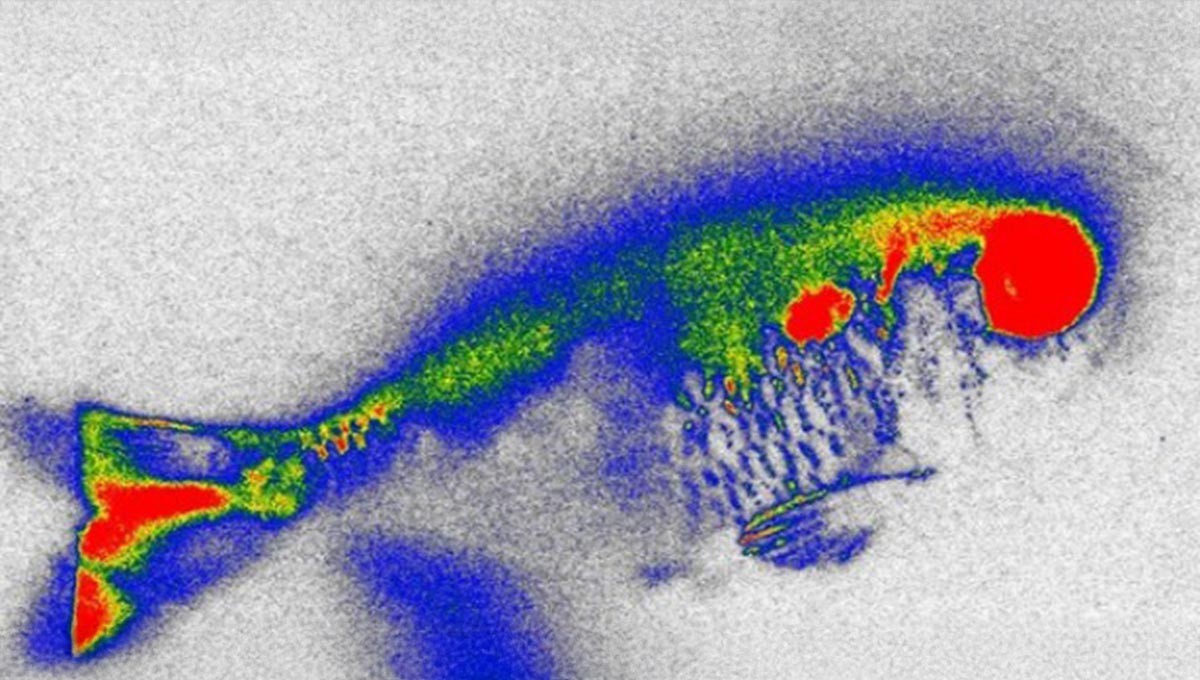
Lab experiments exposed the plant to real-world concentrations of enrofloxacin and cholramphenicol. Plus levels 100x higher. To track movement, they used carbon-14 radiolabeled compounds. Precision tracking.
The results for enrofloxacin were impressive. Over 95% removed in a few days when biomass was high. Half-life dropped to 2-3 days. Chloramphenicol was tougher. Slower removal. Partial only. 30% to 43% cleared. Half-lives of 16 to 10 days. This compound sticks around.
Where did the drugs go? Into the roots. Autoradiography images confirmed it. Rhizofiltration is the key. The plant soaks it up through its underground network.
The Complication of Bioaccumulation
It gets weird in the fish.
Lowering antibiotic levels in the water didn’t always stop absorption. Sometimes it made it worse. Or faster.
Enrofloxacin stays dissolved in water. Fish excrete it relatively fast. 21-day half-life. Low bioconcentration. It doesn’t build up much.
Chloramphenocol behaves differently. 90-day half-life. High retention in tissue. It lingers.
Adding the plant changed the game again. The weed lowered drug levels in the water, sure. But fish sometimes absorbed them more quickly. Why? The plant may break the antibiotics down into forms that are easier for aquatic organisms to ingest. A transformed threat.
“Using plants as sponges isn’t trivial. It changes the entire system, how organisms interact with contaminants,” Evangelista said.
Genetic damage told a similar mixed story. Chloramphenocol caused significant DNA issues in fish. Micronuclei. Nuclear abnormalities. But add Salvinia, and damage dropped toward control levels. Maybe the plant released antioxidants? Reduced oxidative stress?
Enrofloxacin didn’t cooperate. No significant reduction in genetic effects from the plant. The compound is too stable. Produces persistent metabolites. The plant couldn’t neutralize the threat.
Natural Solutions Aren’t Magic Bullets
Evangelista is clear: Salvinia isn’t a silver bullet.
If you pull the contaminated plants out and just toss them? The antibiotics re-enter the environment. New pollution source. The handling of bio-sludge is critical.
But there is promise. In areas where ozonation or advanced oxidation tech is too expensive, nature might offer a cheaper path.
The research highlights complexity. The Piracicaba River tells a story of human impact. Sediments act as reservoirs. Superbugs thrive in resistant environments.
“The detection shows just how harmful human activity can be… The resistance of microorganisms leads to superbugs,” Valdemar Luiz Tornisieolo, Evangelista’s supervisor, noted. “Low-cost solutions work, but we need to understand the integrated functioning of ecosystems.”
The radiolabeled tools came from the IAEA. The data is solid. The problem is real. What happens to those treated plants remains a question mark. One the ecosystem has to answer.