We have stereotypes for a reason. There is the nasty cat. The happy-go-lucky dog. The brave fish swimming endlessly to reunite with his son. One is a Disney plot; the others are cultural shorthand. Most societies do not anthropomorphize animals into beloved pets. It is easy to assume nonhumans relate to us as just another species. Those who see animals as more than instinct and action might be onto something.
How do animals engage in behavior that surprises humans? From a sense of humor to putting off undesirable tasks. They show a propensity for actions suited to a neighbor rather than an alley cat. Let us start with behavior that might indicate humans aren’t as bad as we think.
10: Empathy
Empathy is not a human monopoly. Many species display it. It is the ability to understand and share the feelings of another. This is not just a human trait. It is widespread in the animal kingdom.
Consider elephants. They mourn their dead. They touch the bones of their deceased with their trunks. This is a ritual of remembrance. It is not mere instinct. It is grief.
Dolphins also show empathy. They support injured companions at the surface. They help them breathe. This requires cooperation. It requires understanding another’s need.
Why does this matter? It challenges the idea that only humans have moral frameworks. If animals feel empathy. Then they have a social bond that goes beyond survival. It changes how we view them. Not as machines. But as beings with inner lives.
“Empathy is not a human monopoly. Many species display it.”
This shifts the narrative. We are not alone in feeling for others. The line between human and animal emotion is blurrier than we admit. It suggests a shared emotional landscape. One we are only beginning to map.
9: Humor
You see a dog yawn. You yawn back. It’s contagious. But the reflex isn’t limited to us.
Monkeys yawning at pictures of other yawning monkeys? That’s documented. Mice showing fear when they spot a friend in danger? Also observed. Scientists call it empathy. It’s the ability to recognize and share another’s emotional state.
This isn’t just cute behavior. It suggests something about our own nature. We aren’t inherently evil. Empathy drives cooperation. It stops an individual from prioritizing self-interest over the group.
Natural selection didn’t favor the cruelest. It favored the kind. Kindness won out over the long term. Evolution proves nice guys finish first. Or at least stay alive.
Now consider the viral videos. Animals being funny. But what if it’s scripted?
“Animals can be hilarious. But this time, it’s scripted.”
Humor in animals might not be accidental. It could be a social signal. A way to bond. To release tension. To say, “I’m safe. We’re safe.”
Which animals show signs of humor? Dogs playing bow. Cats chasing toys. Dolphins creating bubbles. It’s not laughter. It’s play. And play builds social bonds.
Why does this matter? Because humor reduces stress. It strengthens groups. It makes survival easier. Not just physically. Socially.
Where do we see this in the wild? In primate grooming. In wolf pack dynamics. In elephant matriarchs guiding calves. It’s everywhere.
How does humor affect human-animal interactions? It builds trust. It breaks down barriers. It makes us care.
So next time your pet does something silly. Don’t just laugh. Think. It’s more than a joke. It’s connection.
Is it possible animals understand irony? Probably not. But they understand play. They understand safety. They understand each other.
And that’s enough.
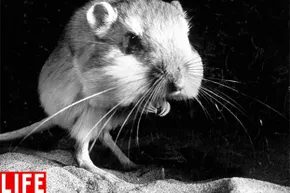
We laugh at animals. We watch dogs chase their tails and parrots insult their owners, and we assume the comedy is one-way. The humans find it funny. The animals are just being animals. But that assumption cracks the moment you look closer at what’s actually happening inside their heads. It turns out the line between “funny” and “mean” is thinner than we thought.
Researchers at the University of Washington stumbled onto something weird. They noticed rats making a high-pitched, ultrasonic chirping noise. At first, no one knew what it meant. It was just a sound. Then, in a moment of spontaneous inspiration, a scientist decided to tickle the rats. The rats responded exactly like humans do when you surprise them with a poke. They giggled.
But here is the catch. Giggling doesn’t prove they have a sense of humor. It just means they are experiencing a positive social stimulus. If you want to know if an animal gets the joke, you have to look for intent.
Chimps, Gorillas, and the Art of the Prank
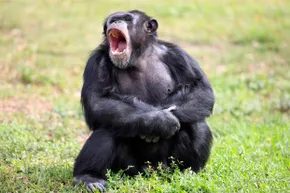
Chimps are different. When they play peekaboo, they aren’t just making noise. They are testing your reaction. They are watching your face to see if you’re amused. That is active engagement with social humor.
Then there’s the gorilla story that always sticks with me. A trainer would run back and forth along the length of a cage. The gorilla would sprint alongside him, match his speed, and then suddenly stop. The trainer would keep going, looking back in confusion. The gorilla would erupt in what sounded like uproarious laughter.
He was delighting in the human’s stupidity. It wasn’t just play. It was mockery.
Is that funny? Sure. It’s better than Dane Cook, for sure. But it points to a darker, more complex capability. These animals aren’t just reacting to stimuli. They are manipulating situations. They understand cause and effect. And if they can play a prank, they can also hold a grudge.
8: Revenge and Grudges
Why do animals hold grudges?
It’s easy to think of animals as living in the moment. Eat. Sleep. Reproduce. Move on. But that’s a human projection. It assumes they don’t remember past interactions.
They do. And they judge.
If you wrong an animal, they remember. Not just the event, but the context. A chimpanzee that is stolen food by a troop mate doesn’t just get mad. It waits. It watches. It plans. This isn’t anger; it’s strategy. It’s the understanding that social standing matters, and if someone violates the rules, there must be a consequence.
Which animals are known for revenge?
Crows are the most documented case. If a human catches and handles a crow negatively, that specific human’s face is remembered for years. Not just by the crow, but by the entire flock. Crows will mob that specific person, dive-bombing them on sight, even if they haven’t seen each other in a long time. They communicate the threat. They coordinate the response.
Octopuses are another example. Highly intelligent, solitary creatures that are notoriously bad at trusting humans. An octopus that
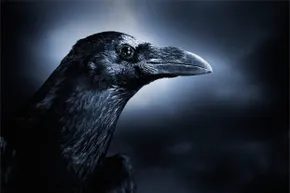
The University of Washington researchers thought they were just doing standard bird banding. They were wrong.
After they started capturing and tagging the local corvids, the harassment began. Every time the scientists left their office, the crows dove at them. Screaming. Screeching. Unrelenting. It didn’t matter what the researchers wore. The birds attacked indiscriminately.
So, the team tested a hypothesis. They wore distinct masks when trapping the birds. Then, they walked around campus later wearing those same masks. The reaction was immediate and aggressive. The crows remembered.
But here is where it gets strange. One researcher wore a mask that had been used for trapping five years prior. The older generation of crows, who had never been trapped by him, descended on him.
“The older ones had let the word spread about which faces were good and bad.”
This isn’t just individual memory. It’s cultural transmission. The birds communicate. They identify threats. They share that data with the flock. They hold a grudge against a specific human face across generations.
Is it personal? Probably. Is it efficient? Absolutely.
Recognizing individual humans is a rare skill in the animal kingdom. Most creatures rely on scent or general movement. Crows map faces. They remember them. And they discuss them.
7: Monogamy
While they are busy gossiping about dangerous humans, these birds are also obsessed with long-term partnerships.
Crows are not strictly monogamous in the human sense of fidelity, but they are pair-bonded for life. Or at least, for many years. They form strong, enduring attachments.
This isn’t just romance. It’s survival strategy.
Raising nestlings is exhausting. Two parents are better than one. Cooperative breeding is common in corvids. Sometimes siblings from previous years stay to help raise the new chicks. This “helper at the nest” dynamic boosts survival rates significantly.
The social structure is complex. Mated pairs defend territories. They hunt cooperatively. They navigate urban landscapes together.
It’s not about love, exactly. It’s about stability. In a world where humans throw rocks and wear scary masks, having a reliable partner makes sense.
The same brain that remembers a face from five years ago is also maintaining a multi-year bond. That’s not coincidence. That’s cognitive power.
We think of them as pests. Scavengers. Noise-makers.
They are building societies.
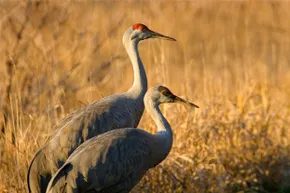
You might have romantic ideas about monogamy in the animal kingdom, but the truth is that only about 5 percent of species are together forever. And “forever” is relative. While some animals remain socially entwined with one partner, genetic testing has taught us they aren’t entirely faithful sexually.
But don’t throw away your promise ring yet. Several animal species have been shown to naturally stick with one partner. Both parents take care to raise and protect the kiddos, too. Although they might not be the most elegant example to point to during a wedding toast, prairie voles don’t just mate for life. They also groom each other and share a parental role. Studies found that even after a mate died, fewer than 20 percent found another mate.
Sandhill cranes also mate for life. Messing around, or as researchers call it “extra-pair copulation,” is so rare that a paper was written about an instance it was discovered in 2006.
But monogamy isn’t strictly for male and female pairs. Let’s take a look at some animals that have what many think of as a “less traditional” partnership.
6: Same-sex Relationships
The idea that same-sex behavior is a modern anomaly or a human construct falls apart quickly in the wild. It happens everywhere. In fact, it’s documented in over 1,500 species. This isn’t just fleeting experimentation. It involves long-term pair bonds that mirror heteronormative relationships in structure and stability.
Take the Laysan albatross. On Midway Atoll, roughly one in three females forms a same-sex pair bond with another female. These pairs often raise chicks together. They share incubation duties. They defend their territory. The success rate of raising offspring in these same-sex partnerships is comparable to heterosexual pairs. The biology doesn’t care about the gender of the parent. It cares about the presence of a parent.
Bottlenose dolphins offer a different angle. Male dolphins form strong, long-lasting alliances. These bonds are often sexual in nature. They cooperate to control groups of females. The social glue here is male-male bonding. It’s not just about mating access. It’s about social structure and survival.
Then there are the swans. Trumpeter swans, specifically. Same-sex pairs are common. They often attempt to raise young by adopting abandoned eggs or chicks from other pairs. The male-male pair usually includes a dominant and a subordinate. The dominant male may eventually mate with a female, but the pair bond between the males often persists. It provides stability. It provides a territory.
This behavior challenges the assumption that reproduction is the sole driver of mating systems. If same-sex pairs are raising young and maintaining territories, what is the evolutionary advantage? Some researchers suggest it strengthens social bonds within a group. It reduces conflict. It creates a network of support that benefits the entire community.
In penguins, same-sex pairing is particularly interesting in the wild. In captivity, it’s more common, but in natural settings, it happens for reasons that aren’t fully understood. It might be due to a lack of available opposite-sex partners. Or it might be a strategy to avoid competition. The key is that these pairs stay together. They don’t just mate and move on.
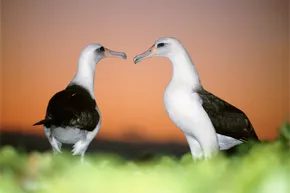
Calling animals “gay” is messy. It’s usually shorthand for same-sex sexual behavior. That’s biologically interesting. Evolutionary biologists still puzzle over why it exists if it doesn’t directly produce offspring. But there’s a deeper layer. It’s about monogamous same-sex relationships. These bonds may not even include sex. They are partnerships.
Albatrosses are the poster children for this. For years, researchers watched them. They assumed every pair was a traditional male-female unit. The birds looked identical. They defended the same territory. They raised the same chicks. Then, genetic testing changed everything.
Nearly a third of one colony’s pairs were female-female.
The discovery was a shock. Scientists had misidentified the sexes for decades. They only knew the birds stayed together. They knew they protected the nest. They assumed the standard reproductive model. They were wrong.
Female pairs exhibited the exact same parenting duties as male-female pairs. They shared affection. They shared the burden of raising young. Some of these bonds lasted over fifteen years. That is a lifetime commitment. It challenges our definition of family structures in the wild.
But let’s shift gears. Intimacy is one thing. Cooperation is another. How do animals teach each other?
5: Teaching
We think teaching is a uniquely human trait. We’re wrong. Several species demonstrate complex information transfer. This isn’t just instinct. It’s active instruction.
Meerkats are a prime example. They don’t just show pups where the food is. They modify their behavior based on the pup’s skill level. If the pup struggles, the adult simplifies the prey. They might remove the venomous parts of a scorpion. They present the food in a way that’s safe to handle. This is scaffolding. It’s a pedagogical strategy.
Orcas take this further. Different pods have distinct hunting techniques. Some herd fish into tight balls. Others beach themselves to catch seals. Mothers teach these skills to their calves. It’s a cultural transmission. A specific pod in Norway teaches its young to strand themselves on sandy beaches to catch seals. The calves practice on soft sand first. The mother guides them. It’s risky. It’s learned. It’s not genetic.
New Caledonian crows craft tools. They bend wires into hooks. They carve leaves into probes. Juveniles watch adults. They don’t just copy. They improve. Over time, the tools become more efficient. This is cumulative culture. It’s evolution of technology within a single lifetime.
Why does this matter?
Because it blurs the line between instinct and intelligence. If an animal can adapt its teaching style to match its student’s needs, it requires theory of mind. It requires understanding what the other knows. And what they don’t.
We used to think human language was the only vehicle for complex teaching. Now we see gestures, modifications, and demonstrations spanning species. It forces us to rethink education itself.
Is it truly different from what we do in a classroom?
Probably not in kind. Only in complexity.
The implications are staggering. If teaching exists in the wild, then survival isn’t just about strength. It’s about what you can pass on. Knowledge is the ultimate adaptive trait.
And yet, we barely scratch the surface
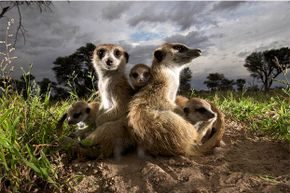
Most animals learn. That’s the easy part. A lion cub watches its mother kill, and the cub learns to pounce. But there is a difference between watching and being taught. We are looking for active intervention. The kind where one animal tries to correct another.
Chimps don’t do this. Researchers found that if a young chimp tries to crack a nut the wrong way, the adults just watch. They don’t step in. The juvenile has to fail. It has to get frustrated. It has to learn by trial and error. There is no hand-holding here.
Not all species are so hands-off. Some show distinct methods in teaching.
Meerkats and the Scorpion Ladder
Meerkats eat scorpions. Poisonous ones. Letting a newborn pup loose to hunt them is a death sentence.
Instead, parents bring back dead or nearly dead scorpions. They offer them as practice. The pups learn to strip the stinger safely. As they get better, the parents bring back scorpions that are more alive. More defensive. The difficulty ramps up. The young ones build skill before they ever face the wild alone. It is a structured curriculum.
Elephants and the Art of Deception
Elephants are sly teachers. Specifically, older females teach younger ones about mating strategy.
A young, fertile female often rejects the advances of a strong bull. This is a mistake. It costs her protection. It costs her genes. She thinks she is being safe. She is not.
The older female sees this. She fakes fertility. She cuddles up to the bull. She shows the young one what success looks like. The young female sees the error of her ways. She approaches the bull herself. It is a lesson in social dynamics, taught through mimicry and mild deception.
4: Funerals and Grieving
This leads us to the darker side of social learning. Or perhaps the most profound.
The study didn’t just show sadness. It showed a specific, crushing absence. When a chimpanzee friend died, the survivors didn’t just scream. They stopped sleeping. They tossed in their beds, unable to settle, haunted by the void left behind. They avoided the exact spot where the body lay, treating the space as if it were contaminated by death itself.
There was a ritualistic quality to it. The chimps removed straw from the corpse. They prepared the body. It looked less like instinct and more like a wake.
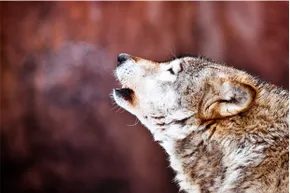
Then there are the wolves. Their reaction is quieter but no less stark. Instead of howling in a group chorus after a pack member passes, they bay alone. The collective noise vanishes. Their tails drop. Their heads hang low. Play stops. Movement slows. The pack doesn’t just mourn; it changes its physical posture to reflect the loss.
Elephants take it further. They touch the bones of the dead in specific, deliberate patterns. It isn’t random sniffing. It’s homage. A recognition of the individual that once was.
Enough of the heartbreak. The natural world isn’t just about loss. It’s about staying alive against impossible odds.
Ingenious Survival Techniques
Look at how some species handle the sheer brutality of existence.
The archerfish doesn’t just swim. It shoots water. It targets insects hovering above the surface, knocking them into the water to eat them later. Precision is everything.
The mimic octopus doesn’t just hide. It impersonates. It morphs its shape and movement to look like a lionfish, a sea snake, or a flatfish. It changes its entire biological identity to avoid being eaten.
These aren’t just tricks. They are evolutionary masterclasses in adaptation. The chimp’s grief is real. The wolf’s silence is real. But the archerfish’s aim? That’s survival.
How do you adapt when the rules keep changing? You stop trying to fit in. You start becoming something else entirely.
The water hits the target. The fish waits. The octopus shifts. The chimp sleeps, eventually.
It’s not a neat story. It’s just life.
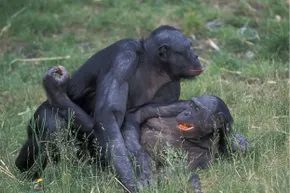
We talk about the human fight-or-flight response like it’s the gold standard of survival. It’s primal. It’s basic. But if you look closer at the animal kingdom, the idea that every creature simply runs or fights is lazy. It’s incomplete. Some species have evolved responses that are far more complex, or frankly, just weird.
Take the bonobo. When tension spikes in a troop, they don’t reach for claws or teeth. They don’t lash out. They defuse the situation with sex.
It’s not just about reproduction. It’s a social tool. Bonobos are famously altruistic compared to their chimpanzee cousins. They share food with strangers. They engage in sexual acts to resolve conflicts. The result? A society that looks less like a jungle and more like a near-utopia of free love and peace. Humans might find it baffling, but for bonobos, it’s the ultimate conflict resolution strategy.
Gorillas Show Unusual Problem-Solving Skills
Then there’s the gorilla. Specifically, the mountain gorillas in Rwanda. Conservationists were stunned when they observed these animals disabling snares set by poachers.
This wasn’t accidental. These gorillas developed a quick, systematic method to identify and neutralize traps. It’s a specific type of threat perception. They don’t just flee. They assess. They act. It’s proactive defense in a world where passive hiding usually leads to death.
But not every animal is a hero. Some are just… stuck.
Which Animals Procrastinate on Survival?
If bonobos de-escalate and gorillas dismantle threats, what happens when an animal simply cannot manage to get anything done?
In the wild, hesitation is often fatal. Yet, some species exhibit behaviors that look suspiciously like procrastination. Or at least, a profound inability to act until the last possible second.
Read on to find out who procrastinates in the animal world.
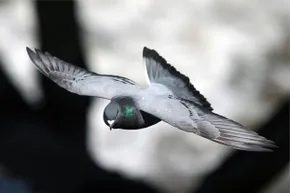
You might assume animals operate on pure impulse. Survival demands immediate action. If something is in front of you, you deal with it. But that’s not how it always works. Some creatures, much like us, prefer to drag their feet. They will push a task to tomorrow if it means avoiding work today.
Which species mimics our Sunday-night panic before a deadline? Pigeons.
We think of them as dumb birds. They wander into traffic. They get hit by slow cars. Yet, a recent study reveals a startling parallel to human behavior. Pigeons will choose a smaller annoyance now over a bigger punishment later. They actively delay.
This isn’t just laziness. It’s a specific cognitive trade-off. Researchers found that when given a choice, the birds opted to skip a mild aversive task immediately. They accepted the risk of a harsher task down the line. It explains their casual flight paths near moving vehicles. Why dodge now if you can handle the consequence later?
But there is another side to the coin. Procrastination is the failure of self-control. True discipline requires restraint. We rarely talk about which animals possess this grit.
The Discipline of Restraint
Self-control is hard for humans. It is harder for animals who live by instinct. Yet, some species strive for this exact restraint. They fight their immediate urges.
We are looking at the other end of the procrastination spectrum. These animals do not wait. They resist. They choose the long-term benefit over the short-term reward. Which creatures show this level of mental fortitude?
The answer lies in how they handle temptation. It’s not about avoiding work. It’s about saying no to what is right in front of them.
How Animals Master Delayed Gratification
To understand self-control in the wild, we have to look at the “marshmallow test” equivalent for animals. It’s not about essays. It’s about food. Or mates. Or safety.
Researchers have tested various species. The results are inconsistent but telling.
- Corvids show high levels of planning. They remember where they hid food weeks later.
- Primates can wait for better food. They trade tokens for higher value rewards.
- Some fish delay eating to avoid predators.
But the most striking examples come from social animals. They cooperate. They share. They sacrifice immediate gain for group stability. This is a form of self-control. It’s not just individual restraint. It’s collective discipline.
Why does this matter? Because it challenges our view of intelligence. We used to think humans were unique in their ability to plan. To say no. To wait. Now we see it in birds. In fish. In primates.
It’s not that animals are like us. It’s that we are like them. The biological roots of impulse control are older than we thought. The pigeon skipping work? It’s not a moral failing. It’s an ancient survival strategy gone slightly wrong in the city.
The real question isn’t whether animals can control themselves. It’s why we assume they can’t.

We like to believe that willpower is the crown jewel of humanity. The ability to look at a donut, say no, and walk away feels like proof that we’ve evolved past our base instincts. It’s a comforting narrative. We are the masters of our fate; the animals are slaves to their impulses.
But that narrative is crumbling.
Research into chimpanzee behavior is dismantling the idea that impulse control is uniquely human. Chimps aren’t just reacting to immediate stimuli. When offered a treat, they can wait. They can resist the urge to grab the sugar right away.
And they do it the same way we do.
Instead of just biting down, chimpanzees will distract themselves. They might fiddle with a toy. They might look at a picture. They might turn their attention elsewhere. This isn’t random behavior. It’s a strategy. It mirrors the human habit of scrolling through a phone to avoid eating the entire pizza. They are actively managing their desire.
Dogs follow a similar pattern, though the mechanics are slightly more biological. Studies show that glucose levels play a direct role in a dog’s ability to exert self-control. When their energy reserves drop, their restraint wavers. It’s a physiological link, not just a psychological one. We think of willpower as abstract. For dogs, it’s fuel-dependent.
This changes how we view the animals around us.
When you’re walking your dog on a tight leash, don’t assume it’s just obedience. It’s effort. It’s hard work. When you see a crow giving you a hard time, or voles cooperating to raise young, don’t dismiss it as simple instinct.
“Their behavior might be instinctual or primitive, but it sure isn’t solely ‘animal.'”
The line between human and animal isn’t a wall. It’s a gradient. We are all struggling with the same basic problem: the gap between what we want and what is good for us. The difference is minor. The struggle is identical.
Maybe you’ve noticed your cat staring at a closed door with intense focus. Is it instinct? Or is it a test of patience?
We don’t have a definitive answer. But we do know that we’re not as special as we’d like to believe.