It happens every few years, but this time it feels particularly cruel. Two meteor showers peak on the exact same night, yet the sky won’t reward your effort. Instead, you’ll get a bright moon and a serious fight against the elements.
Thursday, July 30, turning into Friday, July 31, marks the peak for both the Southern Delta Aquariids and the Alpha Capricornids.
But here’s the catch.
The Buck Moon hits fullness on Wednesday, July 29 — just one night prior. By the time the meteors are streaming through the atmosphere, that moon will be 98% illuminated. That’s not just “partly cloudy.” That’s light pollution from the sky itself. The American Meteor Society warns that this brightness will wash out the fainter streaks of light, turning what should be a spectacular display into a quiet, moonlit evening.
Which showers are peaking?
You need to know what you’re looking at to spot it. Two distinct groups of debris are entering Earth’s atmosphere.
First, the Southern Delta Aquariids. This shower runs from July 12 through August 23. Under perfect, pitch-black conditions, you might see about 25 meteors per hour. Faint. Slow. Subtle. They usually lack the fiery “fireballs” that grab headlines. The full moon will make seeing 25 an uphill battle. It will likely look like zero to the untrained eye.
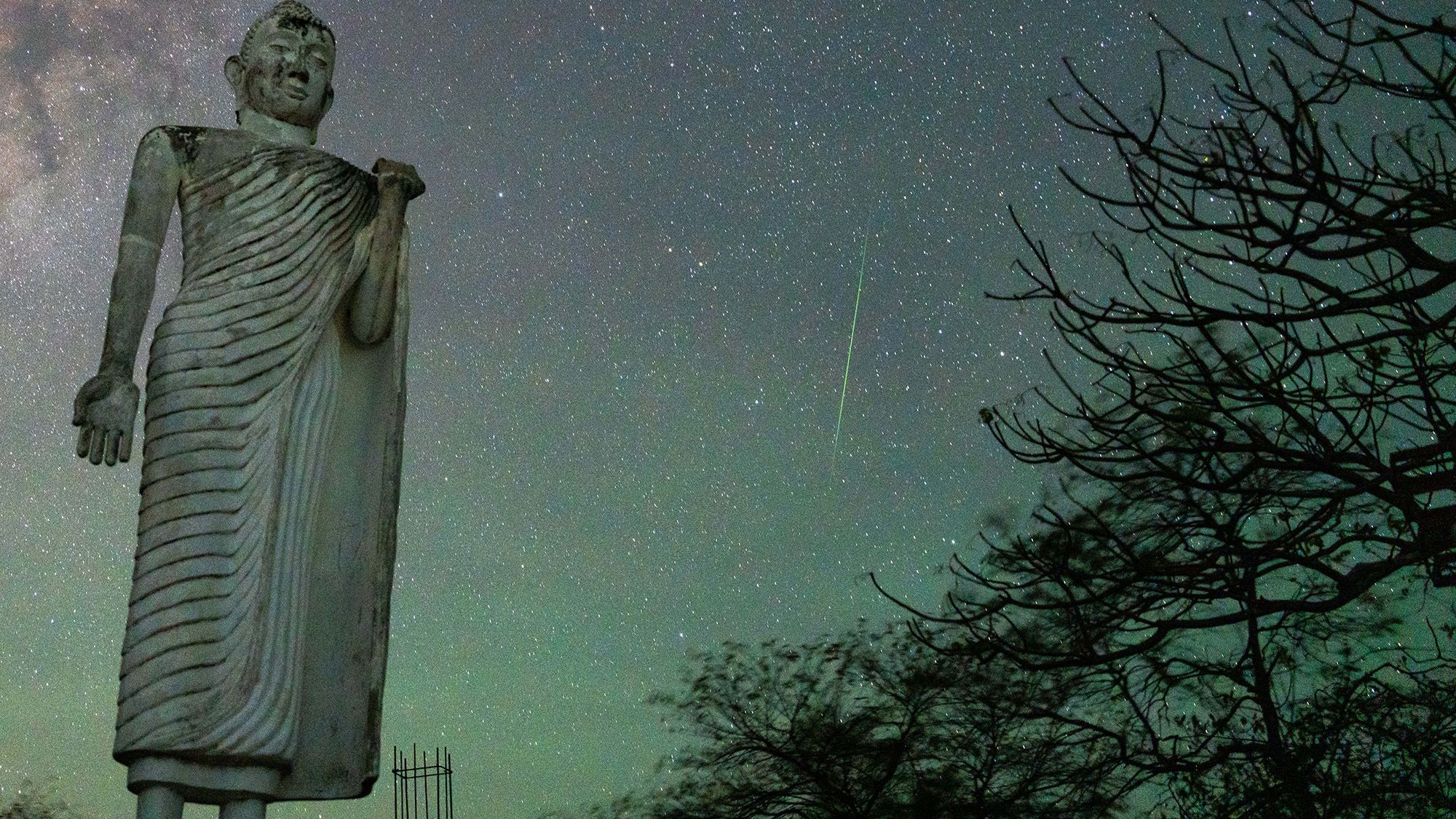
Then there are the Alpha Capricornids. They run from July 3 to August 15. They offer fewer meteors — roughly five per hour — but they compensate with quality. These space rocks tend to burn brighter and often show color. They are harder to wash out completely than their Delta Aquariid cousins. If you see a sudden flash that looks almost too bright, that’s likely your best bet for success this week.
Where to look for the best views
Location matters more than you think.
The radiant point — the imaginary spot in the sky where meteors seem to originate from — for the Delta Aquariids is in the constellation Aquarius.
If you are in the northern U.S., Canada, or northern Europe, Aquarius sits low on the southern horizon. That means you’re looking through more atmosphere, and the moon is likely higher and brighter in your field of view. Bad luck.
Head south.
Observers in the southern U.S., Mexico, and the Caribbean have the advantage. At lower latitudes, Aquarius climbs much higher in the sky. Higher in the sky means less atmospheric interference. It also helps you position the moon out of your direct line of sight.
The best viewing window is between midnight and dawn. By then, the moon is either setting or positioned in a way that you can block it.
Practical tips for moonlight viewing
Don’t just lie on your back and stare at the zenith. The moon will be glaring down on you.
- Block the moon. Find a hill, a tree line, or a building that can obscure the moon’s glow. Put that bright disc behind your head.
- Look dark. Scan the sky away from the moon’s glare. The meteors will appear as faint streaks against a darker background.
- Use your eyes. Binoculars or telescopes are actually bad for this. The field of view is too narrow. You’ll miss the streaks. The naked eye is your best tool for catching wide-field meteor activity.
- Manage expectations. You are not going to see a “storm” of meteors. You might see one or two fireballs from the Alpha Capricornids. That’s a win. Accept it.
For those who can’t get outside, this is a decent night for astrophotography practice. The moon is bright enough to photograph clearly, and if you’re fast enough, you might catch a meteor crossing the frame.
Why August might be better
If you miss this peak, or if clouds roll in during the moonlit night, look ahead.
August offers a far superior show.
The Perseid meteor shower peaks overnight on August 12–13. Why is this better?
The new moon falls on August 12. That means the sky will be moonless during the peak. No glare. No washed-out streaks.
The Perseids are historically more active too. The rate can hit up to 100 meteors per hour under dark skies. You’ll get the classic “shooting star” experience that the Delta Aquariids can’t deliver when competing with a nearly full moon.
And it gets weirder.
That same new moon on August 12 will create conditions for a total solar eclipse. A narrow path will see totality, cutting through eastern Greenland, western Iceland, and northern Spain. Parts of Canada and the northeastern U.S., including major cities in the American Northeast, will catch a partial eclipse.
Just don’t forget your glasses. Look at the sun only through proper solar filters until the totality phase begins.
So, this week? It’s a test of patience. You can watch the faint smudges of the Aquariids if you squint hard enough and hide the moon. But if you want the real show — the blinding flashes and the total darkness — save your skywatching energy for August 12.