


They look like bacteria. They act like bacteria. Under a microscope, you’d likely mistake them for the same thing. That was the assumption for decades.
Then the DNA showed up.
It turned out that archaea are not bacteria at all. They are a distinct domain of life. Prokaryotes without a nucleus, yes. But genetically, they share more in common with humans than they do with the E. coli in your gut. This isn’t just taxonomic pedantry. It’s a rewrite of the tree of life.
These organisms are everywhere. You’ve probably never seen one, but they’re likely breathing in the air around you. They thrive in aquatic environments and on dry land. Their shapes? Standard prokaryotic fare. Spheres. Rods. Spirals. Nothing fancy about the geometry.
The real story is where they survive.
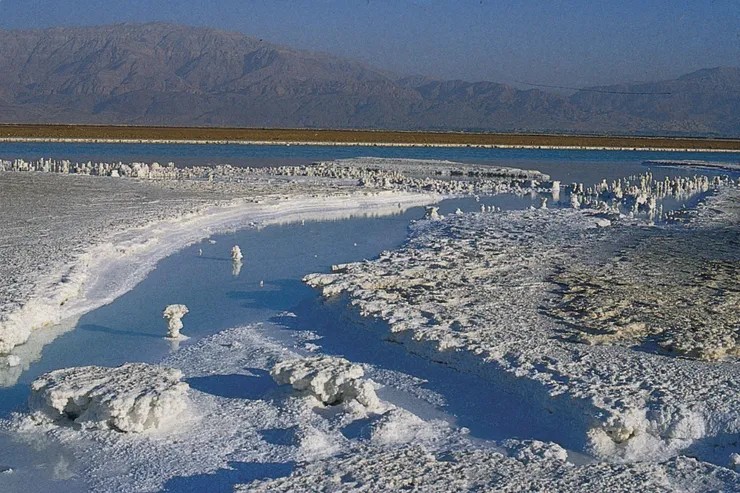
Think of the most hostile place on Earth. A boiling vent. A salt lake so dense it preserves bodies. A acidic pool that would eat your skin off in seconds. Archaea don’t just survive there. They live there. They eat sulfur in some places. They spit out methane in others. Some need oxygen. Many don’t. Their metabolic flexibility is terrifyingly efficient.
Reproduction is equally varied. Binary fission splits them in two. Budding pinches off a new cell. Fragmentation breaks them apart to start new colonies. It’s a toolkit built for endurance.
But here is the kicker. Genetic studies have repeatedly shown that archaea are more closely related to eukaryotes than to bacteria.
Why does this matter?
Because it suggests that the leap from simple single-celled organisms to complex life—plants, animals, fungi—didn’t happen in isolation. It happened through a partnership with these extremophiles. Your own cells likely started as a merger between a bacterium and an archaeon. You are, in a very literal sense, a hybrid.
We often think of evolution as a ladder. It’s more of a web. A messy, tangled connection of ancient microbes trading genes and energy in the dark.
The archaea remind us that life doesn’t care about our categories. It only cares about staying alive. However ugly. However hot. However salty.


