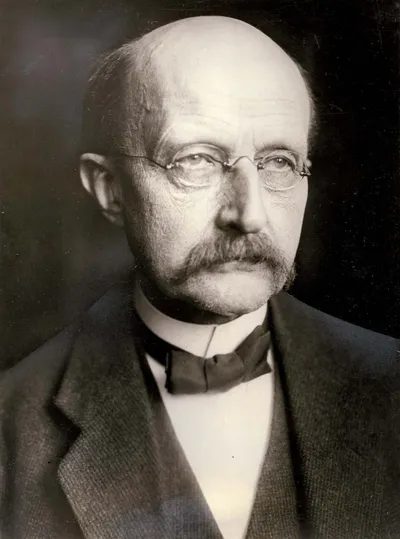
Max Planck wasn’t just a physicist. He was the guy who broke the rulebook. Born in Kiel, Germany, in 1858, he grew up to originate quantum theory. That single achievement won him the Nobel Prize in Physics in 1918. It also shifted the entire trajectory of human understanding.
Before Planck, we thought we knew how matter worked. We didn’t. His work, alongside Einstein’s relativity, formed the backbone of 20th-century science. These aren’t just abstract concepts. They’re the reason we have modern electronics, nuclear energy, and the digital devices you’re likely holding right now. Planck forced us to admit that the world at its smallest scale doesn’t follow the rules we see in daily life.
A Life of Music and Mountains
Planck’s early years were defined by order. He was the sixth child of a distinguished jurist. The family valued scholarship, reliability, and a deep devotion to church and state. These values stuck with him.
At nine, the family moved to Munich. There, a teacher named Hermann Müller sparked an interest in physics and math. But Planck was good at everything. At seventeen, he had to choose a path. He could have pursued classical philology. He could have chased music. He chose physics. Why? Because he realized his originality lay there.
Music never left him, though. He had absolute pitch. He played the piano daily. Schubert and Brahms were his comfort. He found serenity at the keyboard.
He also loved the outdoors. Long walks. Mountain hikes. He did this well into old age. It kept him grounded.
The Lonely Path to Brilliance
University wasn’t easy for him. He entered Munich in 1874. Physics professor Philipp von Jolly offered little encouragement. He spent a year in Berlin from 1877 to 1878. The lectures from giants like Helmholtz and Kirchhoff left him unimpressed.
He didn’t wait for a teacher to save him. He studied independently. He dug into Rudolf Clausius’s work on thermodynamics. That’s where the focus came.
He got his doctorate in July 1879. He was twenty-one. That’s young for any degree, let alone a PhD in theoretical physics. The next year, he completed his qualifying dissertation. He became a Privatdozent, a lecturer.
Connections helped later. His father’s professional network secured him an associate professorship at the University of Kiel in 1885. Then, in 1889, Kirchhoff died. Planck took his spot at the University of Berlin. He finally found a mentor in Helmholtz.
By 1892, he was a full professor. He stayed in Berlin for the rest of his active life. He only had nine doctoral students. But his lectures? They were legendary. They went through many editions and influenced countless minds.
The Search for Absolute Truth
Why did he do it? It wasn’t just for fame. Planck believed something profound. He wrote that human reasoning mirrors the laws of the impressions we receive from the world. Pure reasoning, he thought, could unlock the mechanism of the universe.
He decided to become a theoretical physicist before the field even existed as a distinct discipline. He saw the pursuit of physical laws as the quest for something absolute. The outside world, to him, was independent of man.
“The quest for the laws which apply to this absolute appeared…as the most sublime scientific pursuit in life.”
That belief drove him. It drove him to challenge the status quo. It drove him to propose that energy isn’t continuous. It comes in chunks. Quanta.
This idea seemed small at first. Just a mathematical fix for a problem with black-body radiation. But it opened a door. A door we’re still walking through.
The implications are everywhere. If energy is quantized, then atoms behave differently than Newton imagined. Electrons don’t orbit like planets. They jump. They exist in probabilities. This isn’t just theory. It’s the foundation of the transistor. The laser. The MRI scanner.
Planck died in Göttingen in 1947. But the framework he built remains. We live in a quantum world. We just don’t always see it.
Why do we still rely on his initial leap? Because every time we push the limits of technology, we hit the same wall. The wall he helped build. The question isn’t whether his theory is correct. It’s how far we can go before the next discovery shatters what we think we know. And that discovery is already waiting.
The Quest for an Absolute Law
Max Planck’s relationship with the laws of physics began in the classroom. Even as a student at the Gymnasium, he was struck by one specific certainty: the conservation of energy. The first law of thermodynamics felt unbreakable. By the time he reached university, he felt the same about the second law. Entropy always increased. It was absolute.
This belief drove his doctoral dissertation at Munich. It also led him straight to the discovery of the quantum of action. We call it Planck’s constant h now. The year was 1900.
To understand how he got there, you have to look at the blackbody problem. Gustav Kirchhoff defined this object back in 1859. A blackbody absorbs all radiation hitting it. It emits everything back. It is a perfect emitter and absorber. There is something rigid and absolute about how it behaves.
By the 1890s, scientists were obsessed with mapping this behavior. They wanted the spectral energy distribution. They needed a curve showing how much energy a blackbody emits at different frequencies for a set temperature. It was a puzzle of radiant heat.
Wien’s Law Breaks Down
Planck leaned heavily on Wilhelm Wien’s work. Wien, working at the Physikalisch-Technische Reichsanstalt (PTR) in Berlin-Charlottenburg, had produced a formula in 1896. It was elegant. Planck tried to derive it from the second law of thermodynamics. He thought he could prove it was fundamental.
It didn’t work.
The data from Planck’s colleagues at the PTR told a different story. Otto Richard Lummer. Ernst Pringsheim. Heinrich Rubens. Ferdinand Kurlbaum. These experimentalists had precise measurements. They showed that Wien’s law worked fine at high frequencies. It failed completely at low frequencies.
The curve was wrong. The theory was incomplete. Planck knew this before a German Physical Society meeting on October 19.
The Mathematical Gamble
He had a problem to solve. He knew the mathematical relationship between entropy and energy for the high-frequency region. Wien’s law held there. But he also knew what the relationship had to be in the low-frequency region to match the new experimental data.
Two different truths. One physical reality.
He needed to bridge the gap. The challenge was simple in concept but difficult in execution. He had to combine these two expressions in the simplest way possible. He needed a single formula.
It had to relate the energy of radiation directly to its frequency.
“Planck guessed that he should try to combine these two expressions in the simplest way possible.”
He didn’t just tweak the existing model. He constructed a new one. He took the high-frequency limit and the low-frequency limit and forced them to speak the same language. The result was a formula that fit the data across the entire spectrum.
This wasn’t just curve fitting. It was a structural change in how energy was understood. The math required a discrete unit. A chunk. A quantum.
The constant emerged from the equation. h.
It changed everything.
The Reluctant Revolutionary and the Birth of Quanta
Max Planck stared at his equation and saw a miracle. To the scientific community, Planck’s radiation law was indisputable. It fit the data perfectly. But inside his head, it was just a guess. A lucky intuition. If physics was to take it seriously, Planck needed to prove it wasn’t a fluke. He had to derive it from first principles.
By December 14, 1900, he had done it. The cost was steep.
To make the math work, Planck had to kill his most cherished belief. He had always held that the second law of thermodynamics was an absolute, unbreakable rule of nature. Now, he had to adopt Ludwig Boltzmann’s controversial interpretation: the second law is statistical. It’s about probabilities, not certainties.
Worse still, he had to assume that energy didn’t flow like water. It came in chunks. Planck proposed that the oscillators in a blackbody could only absorb and re-emit energy in discrete amounts. Quanta. Each packet of energy (h ν) was proportional to its frequency. By statistically distributing these discrete packets across all oscillators, he finally derived the formula he had stumbled upon two months earlier.
The implications were staggering. He used his new formula to calculate fundamental constants. His value for h (Planck’s constant) was 6.55 × 10⁻²⁷ erg-second. Close to the modern 6.626 × 10⁻²⁷. He also nailed down Boltzmann’s constant, Avogadro’s number, and the electron’s charge.
One number changed everything. h was not zero. It was small, but it existed.
This meant the microscopic world couldn’t be described by classical mechanics. The smooth, continuous world of Newton was a lie at the atomic scale. A revolution was underway.
Einstein Steps Into the Void
Planck’s concept of quanta clashed with every bit of established physics. He didn’t want to break the rules. He was forced to by logic. Historians call him a reluctant revolutionary. He didn’t see the full picture yet.
It took years for the consequences to sink in. Albert Einstein did the heavy lifting.
In 1905, Einstein argued that light itself consisted of quanta. He called them light quanta. We now call them photons. He didn’t care that Planck thought energy absorption was quantized but emission might still be continuous. Einstein went further. He suggested the radiation itself was granular.
By 1907, Einstein proved the generality of the hypothesis. He used it to explain why the specific heats of solids changed with temperature. Classical physics failed there. Quantum theory worked.
Then came 1909. Einstein introduced wave-particle duality into the mainstream discourse. Matter and energy weren’t just one or the other. They were both.
The Solvay Conference and the Turning Point
October 1911. Brussels. The first Solvay conference.
Planck and Einstein were there. So were the skeptics. The debates were intense. They pushed Henri Poincaré to find a mathematical proof. He delivered. He showed that Planck’s radiation law necessarily required the introduction of quanta.
The proof changed minds. James Jeans, a staunch classical physicist, finally joined the quantum camp. The dam broke.
Niels Bohr added to the momentum in 1913. His quantum theory of the hydrogen atom provided the structural proof that atoms weren’t just little solar systems. They were quantized systems.
Ironically, Planck was one of the last holdouts. He struggled to return to classical theory. He didn’t do it out of malice or ignorance. He did it to stress-test the new idea. By fighting it so hard, he convinced himself of its necessity.
Opposition to Einstein’s 1905 light quantum hypothesis lingered. Many refused to accept that light was made of particles. They waited for a definitive proof. They got it with the Compton effect in 1922.
The old world was gone. The new one was messy, counterintuitive, and undeniably real. We are still living inside the equation Planck was too afraid to believe.
The Weight of Authority in a Darkening World
Max Planck was 42 when he changed physics forever. The 1900 discovery that earned him the 1918 Nobel Prize didn’t lead to more earth-shattering breakthroughs. He didn’t stop contributing. He kept working at a high level across optics, thermodynamics, statistical mechanics, and physical chemistry. He was also the first big-name physicist to publicly back Einstein’s special relativity in 1905.
“The velocity of light is to the Theory of Relativity… as the elementary quantum of action is to the Quantum Theory; it is its absolute core.”
This wasn’t just polite support. Planck understood the structural DNA of both theories. By 1914, he and Walther Hermann Nernst had successfully recruited Einstein to Berlin. After WWI, Max von Laue, Planck’s favorite student, joined him too. When Planck retired in 1928, Erwin Schrödinger took his chair. For a brief moment, Berlin was the undisputed capital of theoretical physics. Then darkness fell in January 1933.
The Battle for Objective Reality
After retirement, Planck’s focus shifted. He wrote less about equations and more about philosophy, aesthetics, and religion. He clashed fiercely with the new quantum orthodoxy. Bohr, Born, and Heisenberg were building an indeterministic, statistical view of the universe. Planck hated it. It violated his deepest intuitions.
He believed the physical universe existed independently of human observation. The observer and the observed were not inextricably linked. This wasn’t just academic preference. It was a moral stance on how reality functions.
His influence wasn’t just theoretical. As permanent secretary of the Prussian Academy of Sciences from 1912 to 1938, and president of the Kaiser Wilhelm Society (now the Max Planck Society) from 1930 to 1937, he held immense power. But his authority didn’t come from titles. It came from moral force. His fairness and integrity were unquestioned among German physicists.
When the Nazis rose, Planck didn’t flee. He went straight to Hitler to try to reverse the racial policies. He stayed in Germany to salvage what he could of German physics. A different man might have left. Planck’s will was indomitable.
Tragedy as the Engine of Endurance
Planck needed that stoicism. Without deep philosophical and religious conviction, he would have broken long before the end. The tragedies started early.
In 1909, his first wife, Marie Merck, died after 22 years of marriage. She was the daughter of a Munich banker. Planck was left with two sons and twin daughters. The elder son, Karl, was killed in action in 1916. The next year, his daughter Margarete died in childbirth. In 1919, his other daughter, Emma, met the same fate.
World War II brought the final blows. His Berlin home was destroyed by bombs in 1944. His younger son, Erwin, was implicated in the July 20, 1944, assassination attempt on Hitler. The Gestapo executed him in early 1945. That merciless act destroyed Planck’s will to live.
At the war’s end, American officers took Planck and his second wife, Marga von Hoesslin (married in 1910, with whom he had one son), to Göttingen. He died there in 1947. He was 89. James Franck described death as coming to him “as a redemption.”
It wasn’t a defeat. It was an exit from a world that had broken his heart and his home. The science remained. The quantum of action endured. But the man who championed objective reality against the chaos of his time finally found his own form of equilibrium. The equations are still there. The tragedy is part of the record now.