


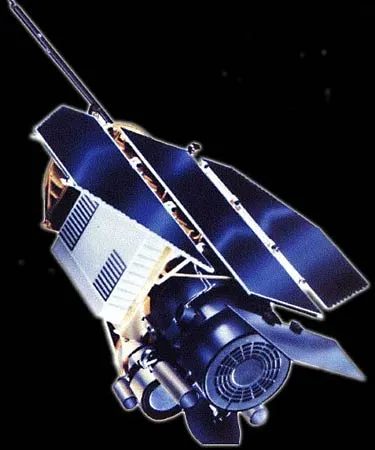
Launched on June 1, 1990, the ROSAT satellite marked a pivotal moment for space-based astronomy. It wasn’t just a standalone project; it was a collaborative effort between Germany, the United States, and the United Kingdom. The mission ran for nearly nine years until it was decommissioned on February 12, 1999. Its debris finally burned up in Earth’s atmosphere on October 22, 2011, ending a long orbit that had circled the planet for over a decade.
What made ROSAT X-ray astronomy so significant wasn’t just its longevity. It was its dual-telescope design. The satellite carried two parallel grazing-incidence telescopes. One focused on X-rays. It looked a lot like the equipment on the earlier Einstein Observatory but performed better. It had a larger geometric area. Its mirror resolution was sharper. This allowed for clearer, more detailed observations of high-energy cosmic events.
The second telescope handled extreme ultraviolet wavelengths. This wasn’t a minor add-on. It was a primary scientific tool. A position-sensitive proportional counter worked with the X-ray telescope. It surveyed the sky across X-ray wavelengths. The result was a massive catalog. It listed more than 150,000 sources. The positional accuracy was impressive, staying within 30 arc seconds. This precision helped astronomers pinpoint objects with a clarity that had been difficult to achieve before.
The First Wide-Field Ultraviolet Survey
The hardware behind ROSAT X-ray astronomy included a wide-field camera. It paired with the extreme ultraviolet telescope. It had a field of view that spanned 5 degrees. This setup conducted an extended ultraviolet survey. It provided source positions with arc-minute precision.
“It produced an extended ultraviolet survey with arc minute source positions in this wavelength region, making it the first instrument with such capability.”
This capability was unique. No instrument had offered such a broad and precise survey of this specific wavelength region prior to ROSAT. The mirrors were gold-coated. This coating allowed for detailed examination of the sky from 5 to 124 angstroms. That range covered critical data points for understanding the universe’s hot, energetic components.
Uncovering Cosmic Secrets
The data ROSAT gathered went beyond just mapping stars. It helped scientists observe the effects of dark matter on the intergalactic medium. It did this by studying a nearby cluster of galaxies. Dark matter is invisible, but its gravitational pull affects how visible matter behaves. ROSAT’s observations provided evidence of this interaction in a way that was previously hard to isolate.
The mission also achieved several “firsts” in astrophysics. It detected X-rays from protostars for the first time. These are young stars still forming, often hidden behind clouds of dust. Seeing them in X-rays gave astronomers a new way to study stellar birth. It also made the first detection of X-rays from comets. This revealed how comet atmospheres interact with the solar wind.
Even our own Moon became a subject of study. ROSAT recorded X-rays coming from the lunar surface. This helped scientists understand how solar radiation interacts with airless bodies.
The hardware specifications were precise. The gold-coated mirrors operated across a specific spectrum. The wide-field camera offered a unique


