


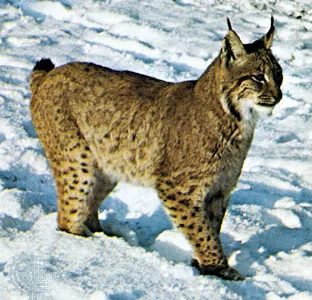
They look like miniature mountain lions that got stuck in a snow globe.
If you’ve never seen one in the wild, you’ve probably seen the fur. It’s the same material that used to line expensive coats. Now that’s banned in most places, but the animal itself remains. It’s the lynx.
There are three main species. One lives in Europe. Another in Asia. The third is in northern North America. That last one is the Lynx canadensis. It’s distinct from its Eurasian cousins and the Spanish lynx found in Iberia.
Here is what makes them unique.
Built for Deep Snow
The lynx doesn’t just tolerate cold. It thrives in it.
Look at the feet. They are huge. Bigger than you’d expect for an animal that weighs only 20 to 45 pounds. Those paws act like natural snowshoes. They spread the weight so the cat doesn’t sink. The soles are hairy too. That provides traction on ice.
The legs are long. Tall. They lift the body above the drifts.
Standing about 24 inches high at the shoulder, they don’t need to crawl. They stride.
The tail is short. Only four to eight inches long. It’s a stub. You might miss it if you aren’t looking for it. The head is broad. The ears have black tufts at the tips. Those aren’t just for looks. They might help with hearing or communication. Scientists aren’t 100% sure. But they are iconic.
Camouflage and Coat
The coat is tawny to cream. It’s mottled with brown and black spots. It’s not just pretty. It’s camouflage. In the dappled light of a northern forest, it disappears.
In winter, the fur gets dense. Soft. Thick. It traps heat.
That’s why hunters used to kill them. Not for food. For fashion. The trim was prized. Now, it’s mostly about survival in the freezing dark.
Silent Stalkers
Lynx are nocturnal. They hunt when it’s dark. They are silent. You won’t hear them coming.
Except during mating season. Then, it’s a different story. They make noise. Loud noise. It’s a rare breach of their usual quiet.
They live alone. Usually. Sometimes in small groups. But mostly, it’s a solo life.
They are good climbers. They swim well too. They aren’t afraid of water. If there’s prey there, they’ll go for it.
What They Eat
Birds. Small mammals. Mostly.
Sometimes, they go bigger. Deer. Young deer. It’s not their main course, but they’ll take it if they can.
Conservation Status
Not all lynx are doing fine.
Some populations are endangered. The Iberian lynx, for example, is critically endangered. Habitat loss. Lack of prey. Human conflict.
The North American lynx has it a bit easier, but it’s not safe everywhere. Tracking them is hard. They are shy. Silent. Masters of disappearing into the white and the wood.
We still know a lot about them. But there’s more to learn. Especially as the


